
Productscpzx


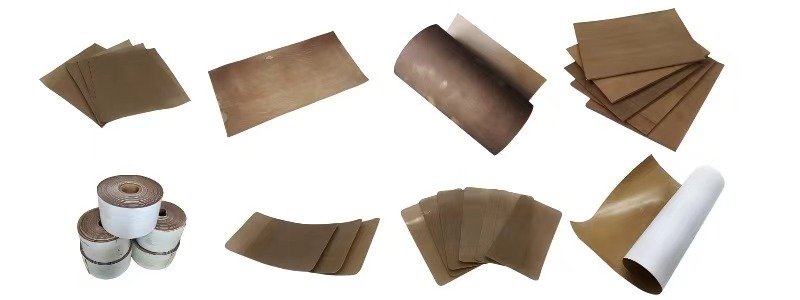
PTFE Molded/Skived Sheet/Film
Ⅰ、Features
Polytetrafluoroethylene sheet by suspension polymerization of PTFE resin molding. It has the best chemical resistance in known plastics and does not age. It has the best coefficient of friction in known solid materials and can be used at -180 ° C to +260 ° C without load.
Ⅱ、Specifications:

Ⅲ、Main Properties


Ⅳ、Usage:
Seals and lubricants for use in a variety of media, as well as electrical insulation for use at various frequencies. Capacitor media, wire insulation, electrical instrumentation insulation.
PTFE Single-Side Treated Sheet Product Introduction
PTFE single-side treated sheet is an innovative polytetrafluoroethylene (PTFE) composite material. Through special surface treatment processes, one side of the sheet gains bondable characteristics while the other side retains PTFE's inherent excellent properties. This unique "double-sided anisotropic" design perfectly solves the industry-wide challenge of PTFE's difficulty in bonding, providing irreplaceable application value in high-end sealing, electronics, electrical, and other fields.
Core Advantages
· Breakthrough Bonding Capability: Treated side peel strength reaches 15-25 N/cm, more than 20 times that of traditional PTFE.
· Precise Performance Zoning:
· Treated Side: Bondable, printable (Surface energy 50-60 mN/m)
· Untreated Side: Maintains ultra-low friction coefficient (0.05-0.10) and insulation properties.
· Eco-friendly Process Options: Three solutions available: sodium naphthalenide treatment, plasma treatment, laser etching.
Key Performance Indicators
| Performance | Parameter | Test Standard |
| Bond Strength | 15-25 N/cm (Epoxy adhesive) | ASTM D903 |
| Temperature Range | -200℃ ~ +260℃ | ASTM D794 |
| Surface Resistivity | Treated Side: 10³-10⁵ Ω·cm | ASTM D257 |
| Chemical Resistance | Resists 98% Sulfuric Acid (Untreated Side) | ASTM D543 |
Typical Applications
· Composite Sealing Systems: Treated side bonded to metal flange, untreated side acts as sealing surface.
· Electronic Packaging: Treated side for circuit bonding, untreated side provides insulation protection.
· Medical Devices: Treated side for sensor attachment, untreated side contacts biological tissue.
· Corrosion Protection Linings: Treated side bonded to tank body, untreated side resists medium corrosion.
Selection Guide
· Recommended Scenarios:
· ✅ Conditions requiring permanent bonding of PTFE with other materials.
· ✅ Composite requirements for both sealing and fixation.
· ✅ Insulation packaging for high-frequency devices.
· Scenarios for Cautious Use:
· ❌ Long-term contact with ketone solvents.
· ❌ Continuous high-temperature environments exceeding 260℃.
Key Performance Parameters
| Performance Indicator | Treated Side | Untreated Side |
| Contact Angle | 30-50° | 110-120° |
| Surface Energy | 50-60 mN/m | 18-20 mN/m |
| Peel Strength | 15-25 N/cm | Not Bondable |
| Resistivity | 10³-10⁵ Ω·cm | >10¹⁶ Ω·cm |
Product Specifications
| Parameter | Standard Range | Standard Range |
| Thickness | 0.5-10mm | 0.5-10mm 0 |
| Size | 1000×1000mm | ≤ 2000×3000mm |
| Treated Side Roughness | Ra 0.8-1.6μm | Ra 0.4-3.2μm |
| Color | Treated Side Dark Brown | Laser Marking Available |
Basic Characteristics Comparison
| Characteristic | Treated Side | Untreated Side | Test Standard |
| Surface Energy | 50-60 mN/m | 18-20 mN/m | ASTM D7490 |
| Water Contact Angle | 30-50° | 110-120° | ISO 19403 |
| Peel Strength (Epoxy) | 15-25 N/cm | < 1 N/cm | ASTM D903 |
| Surface Resistivity | 10³-10⁵ Ω·cm | >10¹⁶ Ω·cm | ASTM D257 |
Physical Properties
| Parameter | Value Range | Test Condition |
| Thickness | 0.5-10mm (±0.1mm) | Micrometer Measurement |
| Density | 2.14-2.20 g/cm³ | ASTM D792 |
| Heat Deflection Temperature | 55℃ (0.45MPa) | ASTM D648 |
| Coefficient of Linear Expansion | 10×10⁻⁵/℃ | -50℃ ~ +150℃ |
Bonding Performance Data
| Adhesive Type | Shear Strength (MPa) | Curing Condition | Temperature Range |
| Epoxy Resin | 8-12 | 80℃×2h or 25℃×24h | -40 ~ +150℃ |
| Silicone Adhesive | 3-5 | 25℃×72h | -60 ~ +200℃ |
| Polyurethane Adhesive | 5-7 | 60℃×4h | 60℃×4h |
Machining Parameters Guide
| Process | Recommended Parameter | Precautions |
| Laser Cutting | Power 50W, Speed 5mm/s | Nitrogen protection against oxidation |
| Drilling | Speed 800rpm, Feed 0.1mm/rev | Pre-cool to -10℃ |
| Thermoforming | 180-200℃,Pressure 0.5MPa | Requires special mold |
| Surface Cleaning | Isopropanol Ultrasonic 5min | Do not use ketone solvents |
Certification Standards
| Certification Type | Standard Number | Applicable Field |
| Food Grade | FDA 21 CFR 177.1550 | Food Processing Equipment |
| Medical Device | ISO 10993-5 | In Vitro Diagnostic Equipment |
| In Vitro Diagnostic Equipment | UL 94 V-0 | Electronics & Electrical |
| Environmental | RoHS 2.0 | Products Exported to EU |
Storage & Usage Specifications
| Item | Requirement | Failure Manifestation |
| Storage Temperature | 15-25℃ | Treated side activity衰减 |
| Relative Humidity | < 60% RH | Surface Oxidation |
| Stacking Height | ≤ 500mm | Sheet Deformation |
| Shelf Life | Sodium Naphthalenide: 3 Months | Bond Strength Decreases 50% |
| Plasma Treatment:7 Days | Surface Energy Decays to 35 mN/m |
Application Selection Reference
| Application Scenario | Recommended Treatment Method | Alternative Solution |
| Chemical Equipment Lining | Sodium Naphthalenide + Epoxy Bonding | Bolted Mechanical Fixation |
| Flexible Circuit Substrate | Plasma Treatment | PI Film Lamination |
| Medical Sensor Carrier | Laser Patterning | PEEK Material |
| Corrosion-Resistant Signage | Sodium Naphthalenide + UV Printing | Ceramic Etching |


