
Productscpzx

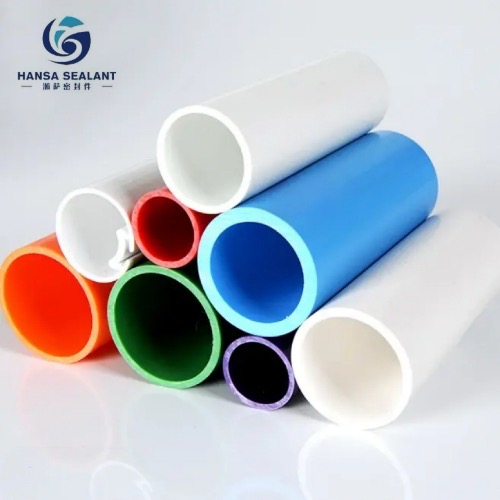
Typical Application Fields
| Application Field | Specific Use | Key Performance Requirements | Common Sizes (DN) |
| Building Construction | Indoor/outdoor water supply & drainage pipes | Sanitary/non-toxic, pressure-rated, corrosion resistant | DN20 – DN400 |
| Municipal Engineering | Sewer, stormwater, utility conduit pipes | High ring stiffness, corrosion resistant, long life | DN110 – DN1000 |
| Power & Telecommunications | Cable conduit, fiber optic duct | Good insulation, flame retardant, easy laying | DN16 – DN200 |
| Agricultural Irrigation | Water supply pipes, drip irrigation pipes | Weather resistant, UV resistant, low cost | DN20 – DN250 |
| Industrial Piping | Chemical drain pipes, ventilation ducts | Chemical corrosion resistant, custom formulations | DN50 – DN500 |
| Medical Gas | Hospital gas delivery pipes (special cert. req.) | High cleanliness, low leaching, flame retardant | DN15 – DN100 |
Technological Frontiers
1. High-Performance Material Modification
PVC-M Pipes: Impact-modified, impact strength increased 5-10 times, used in seismic zones.
PVC-O Pipes: Biaxially oriented, strength doubled, pressure rating doubled.
PVC-C Pipes: Chlorinated modification, temperature resistant up to 95°C, for hot water systems.
2. Green & Environmental Technology
Lead-Free Stabilizers: Full replacement of lead salts with eco-friendly stabilizers (e.g., Ca/Zn, organic tin).
Low-Smoke Flame-Retardant PVC: High oxygen index (>40), low smoke & toxicity, for critical locations.
High-Value Recyclate Use: Controlled degradation & recycling technology, recyclate content up to 30%.
3. Smart Piping Systems
PVC Pipes with Integrated Sensing Fiber: Distributed sensing for real-time leak/deformation monitoring.
RFID-Tagged Pipes: Chip embedded in each pipe for full lifecycle management.
Self-Healing PVC Pipes: Microcapsule technology for automatic micro-crack repair.
PVC Pipe Types & Performance Comparison
| Pipe Type | Main Characteristics | Long-Term Service Temp | Nominal Pressure Rating | Primary Applications |
| PVC-U | High rigidity, low cost, most widely used | 0-45°C (cold water) | PN0.6 – PN1.6 | Building water supply/drainage, municipal drainage |
| PVC-P | Flexible, easy to bend, flame retardant | -5°C ~ +65°C | Non-pressure rated | Wire conduit, ventilation hose |
| PVC-C | Heat resistant, corrosion resistant, high strength | 0-95°C (hot water) | PN1.0 – PN2.0 | Hot water pipes, chemical piping |
| PVC-M | High toughness, impact resistant, water hammer resistant | 0-45°C | PN0.8 – PN1.6 | Seismic zones, rural water supply |
| PVC-O | Ultra-high strength, lightweight, fatigue resistant | 0-45°C | PN1.6 – PN2.5 | High-pressure water transmission, municipal mains |
Key Performance Parameters Table (PVC-U Water Supply Pipe Example)
| Performance Indicator | National Standard Requirement | Test Method | Actual High-Quality Product Level |
| Density (g/cm³) | ≤1.55 | GB/T 1033 | 1.40 – 1.50 |
| Tensile Yield Strength (MPa) | ≥40 | GB/T 8804 | 45 – 55 |
| Vicat Softening Temperature (°C) | ≥80 | GB/T 8802 | 82 – 85 |
| Drop Weight Impact Test (0°C) | TIR ≤10% | GB/T 14152 | TIR ≤5% |
| Hydrostatic Pressure Test (20°C, 1h) | No rupture/leakage | GB/T 6111 | Passes at 2x PN pressure |
| Longitudinal Reversion (%) | ≤5 | GB/T 6671 | ≤3 |
| Lead Content (mg/kg) | ≤5 (potable water) | GB/T 17219 | ≤1 (lead-free formula) |
Chemical Resistance Table
| Chemical Medium | Concentration | Temperature | PVC-U Compatibility | Application Advice |
| Hydrochloric Acid | ≤30% | Room Temp. | Excellent | Suitable for long-term use |
| Sulfuric Acid | ≤70% | Room Temp. | Excellent | Suitable for long-term use |
| Nitric Acid | ≤50% | Room Temp. | Good | Short-term use; avoid concentrated acid |
| Sodium Hydroxide | ≤40% | Room Temp. | Excellent | Suitable for long-term use |
| Brine/Salt Water | Saturated | Room Temp. | Room Temp. | Suitable for seawater transport |
| Gasoline, Kerosene | - | Room Temp. | Moderate | Short-term contact; avoid long-term immersion |
| Ethanol | - | Room Temp. | Excellent | Suitable for long-term use |
| Benzene, Toluene | - | Room Temp. | Poor | Avoid contact; causes swelling/dissolution |
| Chlorine (wet) | - | Room Temp. | Moderate | Short-term use possible; requires evaluation |
Future Development Trends
1. Higher Performance: Development towards higher pressure ratings (>PN2.5), better impact resistance.
2. Higher Functionality: Integration of smart and health functions like sensing, self-healing, antibacterial properties.
3. Greener Solutions: Full lead-free coverage, application of bio-based/renewable PVC feedstocks, closed-loop recycling.
4. Standardization & Modularization: Unified interfaces for prefabricated construction and fast installation.
5. Digital Management: Unique identification (QR code/RFID) per pipe for full lifecycle digital management.
6. Large-Diameter & Deep Burial Applications: Material and structural innovation to challenge DN1200+ large-diameter, deep-buried municipal mains.
PVC pipes, with their mature technology, excellent comprehensive performance, significant economic benefits, and proven long-term service experience, have long held a dominant position in the global piping market. As environmental requirements increase and technology advances, PVC pipes continue to evolve towards greater safety, durability, intelligence, and sustainability, solidifying their application foundation in construction, municipal, industrial, and agricultural sectors.


