
Productscpzx

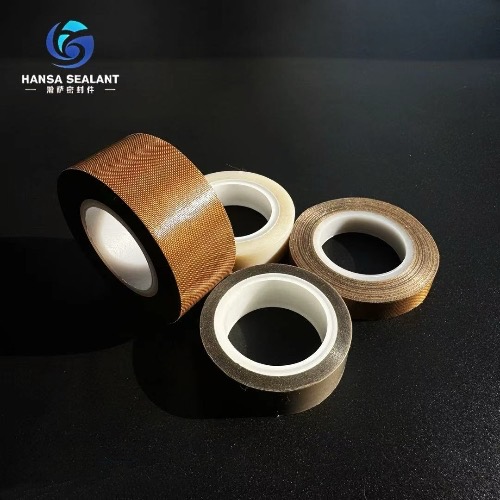
Diverse Base Materials: Options include fiberglass cloth, Polyimide (PI), Polytetrafluoroethylene (PTFE), etc.
Colors & Base Material Types
| Base Material Type | Continuous Temp | Short-Term Peak Temp | Color(s) | Key Characteristics | Key Characteristics |
| Fiberglass Cloth | 200°C | 260°C | White/Natural | High strength, wear-resistant, cost-effective | Pipe wrapping, insulation layer fixing |
| Polyimide Film | 260°C | 300°C | Amber/Gold | High insulation, dimensional stability, flexible | Motor insulation, FPC reinforcement |
| Aramid Fiber Cloth | 220°C | 250°C | Yellow/Natural | High strength, cut-resistant, excellent flame retardancy | Aerospace, protective garment seams |
| PTFE Film | 260°C | 300°C | White/Brown | Non-stick, low friction, excellent chemical resistance | Heat sealer belts, release layers |
| Aluminum Foil Composite | 150°C | 180°C | Silver | Heat reflection, EMI shielding | Thermal management systems, EMI shielding |
Typical Application Fields
| Application Field | Specific Product/Scenario | Recommended Base/Adhesive Type | Functional Requirement |
| Electronics & Electrical | Transformer inter-layer insulation, motor coil fixing, PCB wave soldering masking | Polyimide tape, Fiberglass cloth tape | Polyimide tape, Fiberglass cloth tape |
| Automotive Manufacturing | Wire harness bundling & protection, engine bay heat shielding, exhaust pipe wrapping | Fiberglass cloth with rubber adhesive, PET composite tape | Oil resistance, high-temp vibration resistance, flame retardancy |
| Aerospace | Cable bundling, thermal blanket fixing, engine area cable protection | Aramid cloth-based, Polyimide tape | Extreme temperature resistance, lightweight, high reliability |
| Industrial Manufacturing | High-temperature spray masking, hot pipe wrapping, oven sealing | PTFE tape, Fiberglass cloth tape | Chemical splash resistance, heat insulation, easy release |
| Home Appliance Industry | Internal cable fixing for ovens, microwaves; heating element insulation | Fiberglass cloth tape | Food-grade safety, long-term thermal aging resistance |
| New Energy | Lithium battery pack insulation & fixing, solar panel junction box sealing | Polyimide tape, modified acrylic adhesive | High insulation, electrolyte resistance, weather resistance |
Technology Frontiers
1. Functional Integration
Thermally Conductive & Insulating Tape: Filled with boron nitride or alumina, achieving thermal conductivity of 1-3 W/(m·K) while maintaining high insulation.
Conductive Tape: Filled with silver powder or carbon nanotubes, enabling EMI shielding or grounding at high temperatures.
Phase Change Buffer Tape: Contains phase change materials to absorb/release heat within specific temperature ranges, protecting sensitive components.
2. Eco-Friendliness & Sustainability
Solvent-Free Coating: Using 100% solid silicone or UV-curable adhesives to reduce VOC emissions.
Bio-Based Adhesives: Developing high-temperature-resistant adhesives derived from polylactic acid (PLA).
Easy-Recycle Design: Base material and adhesive layer are easily separable to promote recycling.
3. Smart Applications
Temperature-Indicating Tape: Changes color with temperature, visually indicating if an area has experienced over-temperature.
Stress-Sensing Tape: Embedded with micro-sensors to monitor stress/strain at the bond site.
Key Performance Parameters Table (Example: Typical Fiberglass Cloth Silicone Tape)
| Performance Indicator | Test Condition/Value | Test Standard |
| Thickness | 0.18 ± 0.02 mm | ASTM D3652 |
| Basis Weight | 220 g/m² | ASTM D3776 |
| 180° Peel Strength (to Stainless Steel) | Initial: ≥ 25 N/25mm; After 260°C aging: ≥ 15 N/25mm | ASTM D3330 |
| Continuous Service Temperature | -60°C to +260°C | — |
| Short-Term Withstand Temperature | Up to 300°C (30 minutes) | — |
| Dielectric Strength | ≥ 7 kV/mm | ASTM D149 |
| Volume Resistivity | ≥ 1.0 x 10¹⁴ Ω·cm | ASTM D257 |
| ASTM D257 | UL94 V-0 | UL 94 |
| Solvent Resistance (Toluene, 24h) | Adhesion Retention ≥ 80% | In-house method |
Application Cases
| Project/Product | Application Scenario | Tape Type Used | Solution & Outcome |
| NEV Battery Pack | Insulation & fixation between cells | Flame-retardant Polyimide film tape | Meets V0 flame rating, resists electrolyte corrosion, provides critical insulation during thermal runaway, enhancing pack safety. |
| Industrial Oven Conveyor Belt Splice | High-temp conveyor belt joining & repair | Extra-thick fiberglass cloth silicone tape | Withstands 300°C, replaces traditional metal fasteners, provides smooth seamless joints, reduces product damage, extends belt life. |
| Large Power Transformer | Coil inter-layer insulation & bundling | High dielectric strength Polyimide tape | Maintains stable insulation under long-term high temp (120°C) and strong electromagnetic fields, ensuring reliable long-term operation. |
| Commercial Aircraft Engine Area | Fireproof protection for cable bundles | Aramid cloth silicone tape | Meets aviation standards (e.g., DO-160), provides fireproof and abrasion protection in extreme temp/vibration, ensuring flight safety. |
| SMT Reflow Process | PCB wave soldering masking | Polyimide high-temp masking tape | Precisely masks areas like gold fingers, withstands solder temps above 260°C, leaves no residue after soldering, protecting precision circuits. |
Industry Solutions
| Industry | Core Challenges | Recommended Tape Solution | Application Points & Value |
| Power Battery Manufacturing | Thermal runaway risk, electrolyte leakage corrosion, need for lightweighting | Ultra-thin Polyimide tape, flame-retardant fiberglass cloth tape | Provides reliable insulation & fixation between cells, V0 rating slows fire spread, lightweighting increases energy density. |
| Special Wire & Cable | Operation in high-temp environments, need for flame retardancy and oil resistance | Fiberglass cloth rubber tape, PTFE film tape | Used for insulation sealing and bundling at cable terminals, withstands harsh environments like engine bays, extends cable bundle life. |
| Industrial Insulation Engineering | Heat loss from hot pipes, burn risk, traditional wraps loosen easily | Aluminum foil composite fiberglass tape, thick insulation pin fixing tape | Reflects heat, secures insulation wool, provides durable adhesion, reduces energy loss, ensures safety. |
| Flexible Printed Circuit (FPC) | Reinforcement areas must withstand reflow temps, maintain flexibility | High-temp Polyimide reinforcement tape (conductive adhesive optional) | Provides support at key FPC areas, withstands multiple reflow cycles, does not affect bending performance. |
| Home Baking Appliances | Long-term internal high temps, require food contact safety, cost-sensitive | Food-grade certified fiberglass cloth tape | Secures internal heating elements & wire harnesses, no harmful substance release, meets global safety certs (e.g., UL, CE). |
Technology Comparison Guide
| Tape Type | Base Material/Adhesive Combination | Max Temp Resistance | Key Advantages | Typical Application Guidance |
| Standard Fiberglass Silicone Tape | Fiberglass cloth / Silicone PSA | 260°C | Cost-effective, flexible, versatile | General high-temp bundling, insulation material fixing, pipe wrapping |
| High-Performance Polyimide Tape | Polyimide film / Modified silicone or acrylic PSA | 300°C | Superior electrical insulation, excellent dimensional stability, ultra-thin | Precision electronics insulation, FPC reinforcement, high-temp masking |
| Aramid Cloth-Based Tape | Aramid cloth / Silicone or rubber PSA | 250°C | Exceptional strength, cut-resistant, excellent flame retardancy | Aerospace, military, protective gear |
| PTFE Non-Stick Tape | PTFE film / Silicone or acrylic PSA | 300°C | Excellent non-stick properties, best chemical resistance | Heat sealer belts, release layers, areas with strong chemical exposure |
| Rubber-Based High-Temp Tape | Cloth or film base / Synthetic rubber PSA | 150°C | High initial tack, good oil resistance, noise/vibration damping | Automotive interior fixing, mid-temp wire harness bundling, sound insulation |
Design Selection Guide
| Design Objective | Recommended Tape Characteristics | Base/Adhesive Suggestions | Key Considerations |
| Maximum Temperature | Continuous use >250°C | Polyimide film silicone tape, PTFE tape | Confirm short-term peak temperature & duration; consider adhesion retention under thermal cycling. |
| Strong Electrical Insulation | Dielectric strength >10kV/mm | Polyimide tape, high-quality fiberglass cloth tape | Test insulation performance at actual operating temperature; mind creepage distance requirements. |
| High Mechanical Strength | Tensile strength >100 N/cm | Aramid cloth tape, thick fiberglass cloth tape | Evaluate dynamic shear and peel forces; consider backer abrasion resistance. |
| Chemical Corrosion Resistance | Resists specific solvents or acids/alkalis | PTFE tape, specially formulated silicone tape | Identify chemical type, concentration, and contact mode; perform compatibility tests. |
| Precision Device Application | Uniform thickness, no silicone oil migration | Silicone-free Polyimide tape, ultra-thin designs | Control thickness tolerance; avoid silicone contamination of sensitive optical or electrical contacts. |
| Outdoor Weather Resistance | UV aging resistance, moisture resistance | Weather-treated fiberglass or polyester film tape | Select hydrolysis-resistant adhesive; consider temperature fluctuations and cumulative UV exposure. |
Future Development Trends
1. Extreme Environment Adaptability: Developing new polymer bases and ceramic-based adhesives resistant to temperatures exceeding 400°C or even 500°C.
2. Green Manufacturing: Full lifecycle environmental focus, from bio-based materials to designs that are biodegradable or easy to recycle.
3. Multifunctional Integration: Directly integrating functions like sensing or energy harvesting (thermoelectric) into the tape structure.
4. Digitalization & Intelligence: Incorporating RFID or printed electronics, enabling tapes with identification, process tracking, or condition monitoring capabilities.
5. Customization & Rapid Response: Utilizing big data and AI to quickly recommend or customize tape formulations based on specific user conditions (temperature profile, media, stress).
Conclusion
High-temperature cloth tape is a "critical auxiliary material" in modern industry, especially in high-end manufacturing and strategic emerging industries. It is more than simple bonding and fixing; it is a vital line of defense ensuring the safe, reliable, and long-term operation of equipment in extreme environments. From the battery safety of new energy vehicles to the reliable flight of aerospace craft, from microelectronics precision manufacturing to heat insulation and energy savings in heavy industry, the role of high-temperature cloth tape is indispensable. With advancements in material science, it continues to evolve towards higher performance, greater intelligence, and enhanced environmental friendliness.


