
Productscpzx

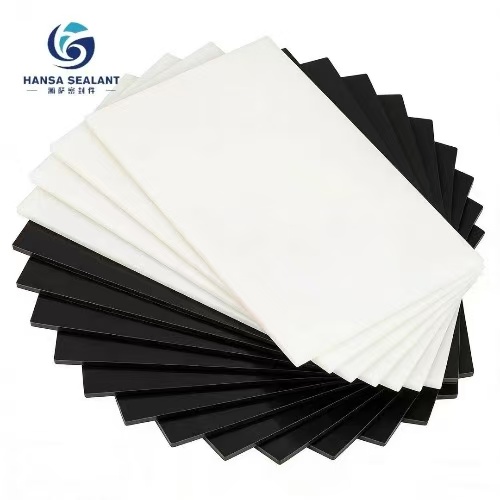
Material Types & Specification System
| Type | Thickness Range (mm) | Width Range (mm) | Length Range (mm) | Surface Finish | Key Characteristics |
| Standard PP Sheet | 2-50 | 1000-2000 | 2000-4000 | Glossy/Matte | General purpose, cost-effective |
| PPH Sheet (Homopolymer) | 5-100 | 1500-2500 | 3000-6000 | Glossy | High rigidity, good temperature resistance |
| PPB Sheet (Block Copolymer) | PPB Sheet (Block Copolymer) | PPB Sheet (Block Copolymer) | 2000-4000 | Glossy | High toughness, good low-temperature impact resistance |
| PPR Sheet (Random Copolymer) | 2-20 | 1000-2000 | 2000-4000 | Glossy | Transparent/Semi-transparent, high impact |
| Glass Fiber Reinforced PP Sheet | 3-30 | 1000-2000 | 2000-4000 | Glossy/Textured | High strength, low thermal expansion |
| Flame Retardant PP Sheet | 2-20 | 1000-2000 | 2000-4000 | Glossy | UL94 V-0/V-2 rated |
| Anti-Static PP Sheet | 3-30 | 1000-2000 | 2000-4000 | Glossy | Surface resistivity 10⁶-10⁹ Ω |
Technical Parameters & Performance Indicators
Physical & Mechanical Properties
| Performance Indicator | Standard PP Sheet | PPH Sheet | PPB Sheet | PPB Sheet |
| Density (g/cm³) | 0.90-0.91 | 0.90-0.91 | 0.90-0.91 | ISO 1183 |
| Tensile Strength (MPa) | 25-30 | 30-35 | 25-28 | ISO 527 |
| Elongation at Break (%) | >100 | >100 | >200 | ISO 527 |
| Flexural Strength (MPa) | 40-45 | 45-50 | 45-50 | ISO 178 |
| Flexural Modulus (MPa) | 1200-1400 | 1300-1500 | 1000-1200 | 1000-1200 | |
| Notched Impact Strength (kJ/m²) | 3-5 | 3-4 | 8-12 | ISO 180/ISO 179 |
| Rockwell Hardness (R Scale) | 85-95 | 95-105 | 80-90 | ISO 2039-2 |
Thermal & Electrical Properties
| Performance Indicator | Standard PP Sheet | PPH Sheet | PPB Sheet | Test Standard |
| Heat Deflection Temp. (0.45MPa, °C) | 100-105 | 105-110 | 95-100 | ISO 75-2 |
| Vicat Softening Point (°C) | 150-155 | 155-160 | 155-160 | ISO 306 |
| Continuous Service Temperature (°C) | 80-100 | 90-110 | 80-95 | — |
| Coefficient of Linear Thermal Expansion (10⁻⁵/K) | 11-13 | 10-12 | 12-14 | ISO 11359-2 |
| Volume Resistivity (Ω·cm) | >10¹⁶ | >10¹⁶ | >10¹⁶ | IEC 60093 |
| Dielectric Strength (kV/mm) | 25-30 | 25-30 | 25-30 | IEC 60243-1 |
Typical Application Fields
| Application Field | Specific Uses | Specific Uses | Specific Uses |
| Chemical Corrosion Protection | Electrolysis tank liners, reactor lining plates, acid mist scrubbers | PPH Sheet, 8-20mm | Resistance to specific media, weld strength, resistance to thermal deformation |
| Environmental & Water Treatment | Wastewater treatment tanks, scraper blades for settling tanks, biogas tank seals | PP Sheet, 10-30mm | Weather resistance, impact resistance, microbial resistance |
| Food & Pharmaceutical | Work surfaces, containers, conveyor side guides, cleanroom wall panels | Food-Grade PP Sheet, 5-15mm | FDA compliance, easy to clean, contamination-free |
| Electronics & Electrical | Plating tanks, pickling lines, insulating boards, test benches | Plating tanks, pickling lines, insulating boards, test benches | Insulation/Anti-static, flame retardancy, dimensional stability |
| Advertising & Printing | Screen printing base plates, UV printing substrates, display backboards | Glossy PP Sheet, 3-10mm | Flat surface, good adhesion, warpage-free |
| Automotive Manufacturing | Battery trays, interior part molds, pickling fixtures | Glass Fiber Reinforced PP Sheet, 5-15mm | High strength & rigidity, dimensional stability, chemical resistance |
| Laboratories | Fume hood liners, reagent racks, corrosion-resistant workbenches | Chemically Pure PP Sheet, 8-15mm | Solvent resistance, easy machining, no leaching |
Chemical Resistance Reference Table
| Chemical Medium | Concentration | Resistance Rating (23°C) | Suggested Max. Temp. | Notes |
| Sulfuric Acid | ≤70% | Excellent | 60°C | Not resistant to >90% concentration |
| Hydrochloric Acid | All Concentrations | Excellent | 80°C | Long-term use recommended <40°C |
| Sodium Hydroxide | ≤50% | Excellent | 100°C | Slight swelling possible with concentrated alkali at high temp. |
| Ammonia Solution | ≤30% | Excellent | 60°C | — |
| Ethanol | Pure | Excellent | 60°C | — |
| Acetone | Pure | Good | 40°C | May cause slight swelling; avoid prolonged immersion |
| Sodium Hypochlorite | Sodium Hypochlorite | Good | 40°C | Avoid combined UV exposure |
| Nitric Acid | ≤30% | Fair | 23°C | Not resistant to >30% or at elevated temperatures |
Machining & Installation Guide
1. Cutting & Machining
Mechanical Cutting: Circular saws, band saws, jigsaws are all suitable; blades with more teeth are recommended.
Parameter Suggestions: Cutting speed 20-40 m/min, moderate feed rate to avoid overheating.
Laser Cutting: CO₂ lasers can be used but may create a melted edge; parameters need optimization.
2. Welding Processes
| Welding Method | Suitable Sheet ThicknessKey Process Points | Key Process Points | Strength Factor |
| Hot Gas Welding | 2-15mm | Welding rod same material as base; Temp: 250-280°C | 0.6-0.8 |
| Hot Plate Welding | 5-40mm | Heating plate temp: 220-240°C; Pressure: 0.15-0.3 MPa | 0.8-0.9 |
| Extrusion Welding | 8-60mm | Fast, suitable for large welds on thick sheet | 0.7-0.8 |
Strength factor relative to parent material strength.
3. Mechanical Joining
Bolting: Pre-drill hole 1-2mm larger than bolt diameter; use washers to distribute stress.
Bonding: Surface requires flame or corona treatment; use PP-specific adhesives.
Insert Molding: Metal threaded inserts can be embedded to improve connection strength.
Selection Decision Matrix
| Application Scenario | Primary Performance Requirement | Recommended Sheet Type | Thickness Suggestion | Machining Key Points |
| Strong Acid Environment Tanks | Corrosion Resistance, Weldability | PPH Sheet | 10-20mm | Double-sided welding, rounded corners |
| Food Processing Surfaces | Hygiene & Safety, Easy Cleaning | Food-Grade PP Sheet | 8-15mm | Rounded edges, seamless joints |
| Electroplating Production Lines | Temperature Resistance, Dimensional Stability | Glass Fiber Reinforced PP Sheet | 12-25mm | Stiffener design to prevent warpage |
| Outdoor Weather-Resistant Structures | UV & Impact Resistance | Copolymer PP + Anti-aging Additives | 8-15mm | Avoid direct sunlight, use light colors |
| Anti-Static Work Areas | Surface Resistivity Control | Anti-Static PP Sheet | 5-10mm | Grounding, regular testing |
| Temporary Corrosion Linings | Cost-Effectiveness, Easy Installation | Standard PP Sheet | 5-8mm | Mechanical fastening, sealed joints |
Industry Custom Solutions
1. Semiconductor Industry
Requirements: Ultra-high purity, low extractables, resistance to mixed acids.
Solution: Dedicated clean-grade PP sheets, metal ion content <1 ppb.
Application: Wet process tanks, wafer storage/carrier boxes, piping systems.
2. Lithium Battery Manufacturing
Requirements: Electrolyte resistance, flame retardancy, dimensional stability.
Solution: Flame retardant V0-grade PP sheet, resistant to LiPF₆ electrolyte.
Application: Filling fixtures, formation trays, testing jigs.
3. Seawater Desalination
Requirements: Seawater corrosion resistance, anti-fouling, long service life.
Solution: Anti-aging PP sheet with anti-fouling additives.
Application: Pre-treatment tanks, membrane housing supports, pipe linings.
4. Photovoltaic Industry
Requirements: Acid/alkali resistance, insulation, weather resistance.
Solution: Reinforced PP sheet with UV-resistant surface treatment.
Application: Wet etching tanks, cleaning equipment, insulating components for mounting structures.
Storage & Maintenance
Storage Conditions:
Environment: Store indoors, avoid direct sunlight.
Temperature: -10°C to 40°C.
Stacking: Lay flat on level ground; stack height not exceeding 1.5m.
Shelf Life: Best used within 12 months of production.
Maintenance & Care:
Cleaning: Wipe with neutral detergent; avoid strong solvents.
Inspection: Regularly check surface condition and connection points.
Repair: Minor damage can be welded; large areas may require replacement.
Protection: Avoid impact from sharp objects; add supports in high-temperature areas.
Development Trends
Technological Directions:
1. High-Performance: Development of ultra-high molecular weight PP sheets with 3-5x improved impact strength.
2. Functional Integration: Multi-functional composite sheets with conductivity/thermal conductivity/antibacterial properties.
3. Green Manufacturing: Bio-based PP sheets, reducing carbon footprint by over 30%.
4. Intelligent Manufacturing: Online quality monitoring, controlling thickness tolerance within ±0.1mm.
Market & Application Expansion:
1. New Energy Vehicles: Battery pack housings, charging pile insulating components.
2. Marine Engineering: Deep-sea aquaculture cages, seawater pump liners.
3. Medical Equipment: Sterilizable medical instrument trays, diagnostic equipment parts.
4. 5G Communication: Antenna radomes, base station insulating components.
Conclusion
As one of the most important thermoplastic sheets, PP Sheet plays an indispensable role in critical fields such as industrial corrosion protection, environmental water treatment, food & pharmaceutical, and electronics & electrical, thanks to its outstanding chemical corrosion resistance, good mechanical properties, excellent hygiene & safety, and remarkable cost-effectiveness. With advancements in material modification technology and evolving application demands, PP Sheet is rapidly developing towards higher performance, greater functionality, and enhanced environmental sustainability. Correct selection, standardized machining, and proper maintenance are key to ensuring the long-term, reliable service of PP Sheet. In the future, PP Sheet will continue to expand its applications in high-end manufacturing and emerging industries.


