
Productscpzx

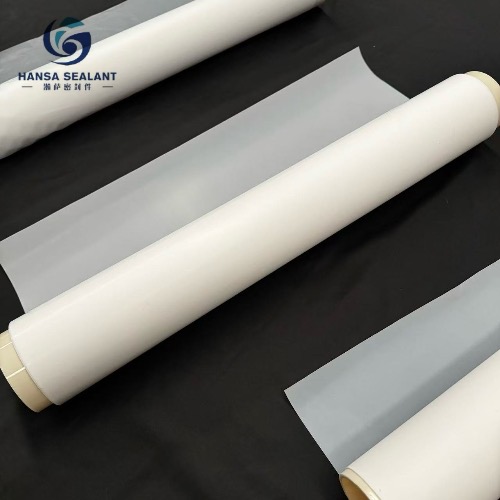
Material Types and Specification System
| Type | Thickness Range (μm) | Width Range (mm) | Production Method | Microstructure | Microstructure |
| Skived Film | 20-1000 | 50-1000 | Compression Sintering + Skiving | Dense, Non-porous | High Density, High Mechanical Strength, Good Electrical Insulation |
| Oriented Film | 10-200 | 10-1000 | Biaxial Stretching | Oriented Microporous | Anisotropic, High Tensile Strength, Controllable Breathability |
| Expanded Film (ePTFE) | 10-500 | 10-1500 | Expanded Stretching | 3D Network Porous | Strong & Flexible, Breathable & Waterproof, Composite-ready |
| Colored Film | 30-300 | 100-1000 | Pigment Addition | Dense/Porous | For Identification, Good Color Fastness at High Temperatures |
| Composite Film | 15-1000 | 50-2000 | Lamination with Other Materials | Multilayer Structure | Integrated Functions, Improved Processability |
| Microporous Filter Film | 50-200 | 100-1000 | Special Stretching Process | Controlled Pore Size | Filtration Precision 0.1-10μm |
Technical Parameters and Performance Indicators
Physical and Mechanical Properties
| Performance Indicator | Skived Film | Oriented Film | Expanded Film (ePTFE) | Test Standard |
| Density (g/cm³) | 2.15-2.20 | 1.2-2.0 | 0.2-1.2 | GB/T 1033 |
| Tensile Strength (MPa) MD/TD | 20-40 / 20-40 | 30-80 / 10-30 | 10-50 / 5-25 | GB/T 1040 |
| Elongation at Break (%) MD/TD | 200-400 / 200-400 | 50-200 / 200-500 | 100-400 / 100-400 | GB/T 1040 |
| Tear Strength (N/mm) | 40-100 | 20-80 | 10-60 | GB/T 16578 |
| Air Permeability (L/m²·s) | 0 | 10-1000 | 1-10000 | GB/T 5453 |
Thermal and Electrical Properties
| Performance Indicator | Skived Film | Oriented Film | ePTFE Film | Test Standard |
| Melting Point (°C) | 327 | 327 | 327 | GB/T 19466 |
| Continuous Service Temperature (°C) | -200 to +260 | -200 to +260 | -200 to +260 | — |
| Thermal Shrinkage (% at 260°C×30min) | ≤3 | ≤5 | ≤8 | Internal Method |
| Volume Resistivity (Ω·cm) | >10¹⁸ | >10¹⁷ | >10¹⁶ | GB/T 1410 |
| Dielectric Strength (kV/mm) | 60-100 | 40-80 | 10-50 | GB/T 1408 |
| Dielectric Constant (1MHz) | 2.0-2.1 | 1.3-2.0 | 1.1-1.8 | GB/T 1409 |
Surface and Interfacial Properties
| Performance Indicator | Value Range | Test Method |
| Water Contact Angle (°) | 105-115 | Sessile Drop Method |
| Surface Tension (dynes/cm) | 18.5 | Critical Surface Tension Method |
| Dynamic Friction Coefficient (against steel) | 0.04-0.10 | Friction Tester |
| Peel Strength (N/25mm) | 0.5-5.0 (after treatment) | GB/T 2792 |
Typical Application Fields
| Application Field | Specific Uses | Recommended Type / Thickness | Key Requirements |
| Sealing Applications | Flange Gaskets, Valve Seals, Pump Seals | Skived Film / Expanded Film 0.1-1.0mm | Compression Resilience, Creep Resistance, Media Resistance |
| Filtration Applications | High-Temp Flue Gas Filtration, Chemical Filtration, Air Dust Removal | ePTFE Laminated Filter Media 50-200μm | Filtration Precision, Air Permeability, Temperature Resistance |
| Electrical Insulation | High-Temp Cable Insulation, Transformer Interlayer Insulation, Capacitor Film | Oriented Film / Skived Film 25-100μm | High Dielectric Strength, Low Loss, Corona Resistance |
| Non-Stick Applications | Cookware Non-Stick Coating, Mold Release Layers, Roller Covering | Skived Film 0.05-0.5mm | Smooth Surface, High Temp Resistance, Non-Migratory |
| Medical Applications | Artificial Blood Vessels, Protective Clothing, Medical Breathable Membranes | ePTFE Film 10-100μm | Biocompatibility, Breathable & Bacteria-proof, Sterilizable |
| Aerospace & Aviation | Spacesuit Materials, Radomes, High-Temp Resistant Cables | Composite Reinforced Film 50-300μm | Extreme Temperature Adaptability, Radiation Resistance, High Reliability |
| Construction Applications | Waterproof & Breathable Membranes, Membrane Structure Materials, Roof Waterproofing | ePTFE Film 0.1-0.5mm | Weather Resistance, Breathable & Waterproof, Anti-Aging |
Processing and Lamination Guidelines
1. Cutting and Slitting
- Tool Selection: Sharp carbide tools with a blade angle of 15-30°.
- Cutting Methods: Shearing, die-cutting, laser cutting (requires specific parameters).
- Slitting Key Points: Precise tension control to prevent stretching deformation.
- Cleanliness Requirements: Clean cutting environment to avoid contaminating the film surface.
2. Surface Treatment (to Improve Adhesion)
| Treatment Method | Principle | Effect Duration | Applicable Film Types |
| Sodium-Naphthalene Treatment | Chemical Etching of Surface | Permanent | Skived Film, Oriented Film |
| Plasma Treatment | Surface Activation | Hours to Days | All Types |
| Radiation Grafting | Introducing Polar Groups onto Surface | Permanent | All Types |
| Primer Treatment | Coating with Special Primers | Depends on Primer | All Types |
3. Lamination Processing
- Hot Press Lamination: Temperature 330-380°C, Pressure 1-10 MPa, Time 30-300s.
- Adhesive Bonding: Requires special adhesives for fluoroplastics (e.g., fluororubber adhesives).
- Melt Lamination: Co-lamination with thermoplastic fluoropolymers (e.g., PFA, FEP).
- Sewing/Welding: Used in special cases, requires specialized equipment.
Selection Decision Matrix
| Application Scenario | Primary Performance Requirement | Recommended Film Type | Thickness Suggestion | Processing Key Points |
| High Temp & High Pressure Sealing | Creep Resistance, Media Resistance, Resilience | Filled Expanded PTFE Film | 0.5-3.0mm | High cutting precision, flat surface |
| High-Efficiency Filtration | Filtration Precision, Air Permeability, Dust Release | ePTFE Laminated Filter Media | 50-200μm | Strong lamination to substrate, uniform pore size. |
| High-Frequency Circuit Substrate | Low Dielectric Constant, Low Loss, Dimensional Stability | Oriented PTFE Film | 25-100μm | Clean copper foil lamination, no contamination. |
| Medical Devices | Biocompatibility, Breathability, Sterilizability | ePTFE Film | 10-100μm | Cleanroom processing, pyrogen-free. |
| Building Waterproofing | Weather Resistance, Breathable & Waterproof, Anti-Aging | ePTFE Construction Membrane | 0.2-0.5mm | High welding strength, proper joint treatment. |
| Release Applications | Non-Stick Property, Temperature Resistance, Smooth Surface | Skived PTFE Film | 0.05-0.3mm | Scratch-free surface, tight adhesion. |
| Corrosion Lining | Comprehensive Corrosion Resistance, Impermeability, Ease of Installation | Composite Reinforced PTFE Film | 0.5-2.0mm | Proper seam treatment, no pinholes. |
Industry Customized Solutions
1. Environmental Protection & Dust Removal Industry
- Requirements: High-temperature flue gas filtration, efficient dust release, long service life.
- Solution: ePTFE laminated filter bags with pore sizes of 0.3-3μm.
- Applications: Waste incineration, cement kilns, steel sintering flue gas dust removal.
2. 5G Communication Industry
- Requirements: High-frequency low loss, dimensional stability, weather resistance.
- Solution: Ceramic-filled PTFE composite film with controllable dielectric constant.
- Applications: Base station antennas, high-frequency circuit boards, microwave devices.
3. New Energy Battery Industry
- Requirements: Electrolyte resistance, insulation, breathable & explosion-proof.
- Solution: Multi-layer composite PTFE film combining barrier and breathability functions.
- Applications: Lithium battery separators, fuel cell proton exchange membrane substrates.
4. Semiconductor Manufacturing
- Requirements: Ultra-high purity, low extractables, resistance to high-purity chemicals.
- Solution: Electronic grade PTFE film with metal ion content <1 ppb.
- Applications: Wet process tank linings, high-purity chemical delivery pipelines.
5. Biomedical Industry
- Requirements: Sterilizability, cytocompatibility, controlled permeability.
- Solution: ePTFE films with graded pore sizes, surface bio-modified.
- Applications: Tissue engineering scaffolds, drug-controlled release membranes, blood filtration.
Storage and Maintenance
Storage Conditions
- Environment: Store indoors away from light, heat sources, and chemicals.
- Temperature: Room temperature is ideal; avoid prolonged storage above 40°C.
- Stacking: Store flat or rolled, avoid heavy pressure and sharp folding.
- Shelf Life: Theoretically indefinite, but use within 5 years is recommended.
Usage and Maintenance
- Cleaning Methods: Wipe with solvents like alcohol or acetone; avoid mechanical scratching.
- Performance Inspection: Periodically check thickness, strength, and surface condition.
- Repair Possibility: Small area damage can be patched by welding or bonding; large areas need replacement.
- Life Assessment: Under normal operating conditions, service life can reach 10-30 years.
Development Trends
Technical Development Directions
1. High Performance: Development of nano-enhanced PTFE films, increasing strength by 2-3 times.
2. Functional Composites :Multi-functional PTFE composite films with conductivity/thermal conductivity/antibacterial properties.
3. Controlled Microstructure: Gradient films with precisely controlled pore size and porosity.
4. Green Processing: Reducing processing aids, developing water-based treatment processes.
Market Application Expansion
1. Hydrogen Energy Industry: Fuel cell proton exchange membranes, hydrogen purification membranes.
2. Marine Engineering: Seawater desalination membranes, marine anti-corrosion membranes.
3. Wearable Devices: Flexible electronic substrates, waterproof and breathable fabrics.
4. Internet of Things (IoT): 5G/6G high-frequency materials, sensor protection films.
As the thin-film form of the "Plastic King," PTFE film plays an irreplaceable role in demanding environments such as high-end sealing, efficient filtration, electrical insulation, medical implants, and aerospace applications, thanks to its ultimate chemical stability, ultra-wide temperature range, unique non-stick characteristics, and excellent electrical insulation properties. With advancements in materials science and the development of high-end manufacturing, PTFE film is evolving towards higher performance, finer structures, and more integrated functionalities. Correct type selection and matching, professional processing, and standardized maintenance are key to ensuring optimal performance of PTFE film. In the future, PTFE film is destined to open up broader application prospects in strategic emerging industries such as new energy, electronic information, and biomedicine.


