
Productscpzx

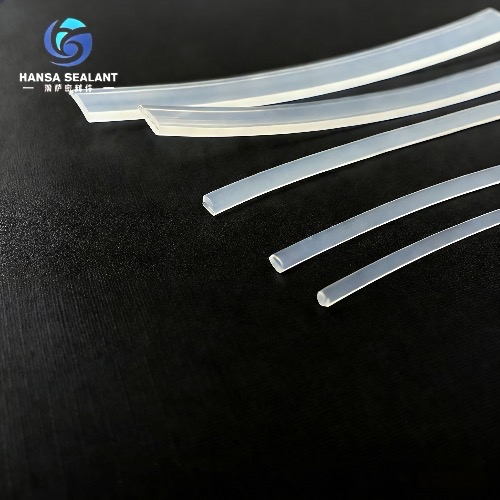
Specification System & Types
| Type | Cross-Section | Diameter/Spec (mm) | Packaging | Color | Primary Applications |
| Standard Round Rod | Solid Circle | 1.6, 2.0, 2.4, 3.0, 4.0 | Coil/Spool | Translucent/Off-white | Manual hot air gun filling for repairing PFA linings in tanks, vessels, and pipelines |
| Flat Rod | Rectangle | 1.5x3, 2x4 | Straight/Coil | Translucent | Wide-gap filling, rapid build-up welding, automated orbital welding systems |
| Triangular Rod | Triangle | 3.0-5.0 | Straight | Translucent | Fillet welds, root pass backing welding for better penetration control |
| High-Purity Rod | Round/Flat | Customizable | Vacuum/N₂ Sealed | Transparent (Extreme Cleanliness) | Lining welding for semiconductor wet processing equipment, ultrapure water pipes, pharmaceutical bioreactors |
Technical Parameters & Performance Indicators
Physical & Mechanical Properties (Typical Values, Based on Virgin PFA)
| Property | Typical Value | Test Standard |
| Density (g/cm³) | 2.12 - 2.17 | ISO 1183 |
| Melting Point (°C) | 300 - 310 | ISO 11357 |
| Melt Flow Rate (g/10min) | 2 - 15 (Grade dependent) | ISO 1133 |
| Tensile Strength (MPa) | ≥ 25 | ISO 527 |
| Elongation at Break (%) | ≥ 300 | ISO 527 |
| Shore Hardness (D) | 55 - 60 | ISO 868 |
| Flexural Modulus (MPa) | 600 - 700 | ISO 178 |
Thermal & Environmental Performance
| Property | Typical Value/Range | Test Standard |
| Continuous Service Temp (°C) | -200 ~ +260 | UL 746B |
| Heat Deflection Temp (°C, 0.46MPa) | 75 - 80 | ISO 75 |
| Thermal Conductivity (W/m·K) | 0.19 - 0.22 | ASTM C177 |
| Flammability Rating | V-0 (UL94) | UL 94 |
| Limiting Oxygen Index (%) | > 95 | ISO 4589 |
Typical Application Fields
| Application Field | Specific Uses | Key Requirements |
| Semiconductor/Electronics | Repair and jointing of high-purity wet cleaning baths, etching equipment linings, chemical delivery piping systems | Extreme cleanliness, resistance to strong acids/bases, low metal ion leaching |
| Chemical Processing | Welding repair of steel-lined PFA tanks, reactors, column linings; anti-corrosion overlay on valves and flange sealing surfaces | Resistance to high-temperature oxidation, universal corrosion resistance, permeation resistance |
| Pharmaceutical/Bioengineering | Welding PFA linings for bioreactors, purified water/water-for-injection systems, aseptic storage tanks | FDA/USP Class VI compliance, non-cytotoxic, easy to clean |
| Environmental/New Energy | Anti-corrosion linings for hazardous waste incineration systems; non-stick coating repair for guide rollers in battery separator production lines | High-temperature stability, non-stick properties, flue gas corrosion resistance |
| Wire & Cable | Defect repair in insulation of high-temperature aerospace wires, computer cables; auxiliary material for foamed insulation in coaxial cables | Stable dielectric properties, resistance to thermal aging |
Welding Process Guide
1. Equipment Selection:
- Hot Gas Welder: Requires high-power (≥1600W) industrial-grade welders capable of 400°C-600°C outlet temperatures. Standard PVC/PP welders cannot meet PFA melting point requirements.
- Extrusion Welder: Used for large-scale, high-efficiency welding of tank linings; rods are fed into the plasticizing chamber.
2. Process Essentials:
- Surface Treatment: The welding area on the parent material must be degreased, and plasma/corona surface activation or sodium etching is strongly recommended. This breaks the C-F bond inertia and is a critical prerequisite for achieving reliable welds.
- Temperature Control: Hot air temperature is typically set between 450°C-550°C. The rod feed rate must match the melting rate to avoid overheating (carbonization) or underheating (cold welding).
- Stress Relief: For complex structures or thick-walled parts, annealing at 120°C-150°C is recommended to eliminate residual welding stress.
3. Quality Inspection: Common methods include high-frequency spark testing, visual translucency inspection (quality welds appear transparent and homogeneous), and solvent immersion testing.
Selection Decision Matrix
| Application Scenario | Primary Performance Requirement | Recommended Rod Type | Rod Diameter | Process Coordination |
| Semiconductor Wet Bench Repair | Ultra-high purity, resistance to strong oxidizing acids | High-Purity Round Rod | 2.0-3.0 mm | Cleanroom welding, nitrogen shielding |
| Chemical Pipeline Long Seam Welding | High efficiency, high deposition rate | Flat/Round Rod | 4.0 mm | Orbital automatic hot gas welder |
| Large Tank Bottom Surfacing | High bond strength to substrate, dense & pore-free | Extrusion Welding Rod | 3-4 mm | Hot extrusion welder with preheating |
| Precision Valve Seal Surface Repair | Dimensional accuracy, smooth surface | Triangular/Micro Round Rod | 1.6-2.0 mm | Micro-welding under microscope assistance |
Storage & Maintenance
- Storage Conditions: Store in a cool, dry, clean environment away from dust contamination. Avoid direct sunlight or proximity to high-temperature heat sources (>50°C).
- Pre-Use Treatment: If stored in environments with large temperature fluctuations or humidity, drying in an oven at 80°C for 1-2 hours before use is recommended to remove surface moisture and prevent bubbles during welding.
- Shelf Life: PFA is inert and has no strict shelf life limit, but sealed packaging must be maintained to prevent oil or grease contamination.
Development Trends
1. Lower Melting Point & High-Speed Welding: Developing modified PFA rods with lower melting points (250°C-280°C) to reduce welding energy consumption, increase welding speed, and minimize thermal damage to the base material.
2. Reinforced/Composite Wires: PFA welding wires incorporating short carbon fibers or perfluoropolyether (PFPE) for specialized applications requiring wear resistance, self-lubrication, or enhanced thermal conductivity.
3. Digitization & Automation: Developing transparent PFA welding wires specifically for laser transmission welding, in coordination with robotic welding systems, enabling high-cleanliness, non-contact, low-damage precision welding for semiconductor components.
4. Bio-based & Circular Economy: Exploring bio-based fluoromonomer routes; advancing high-purity recovery and re-pelletizing of PFA scrap and used linings for remanufacturing into welding rods for non-critical layers, reducing total lifecycle costs.
Summary
If PE foam board is the "effortlessly light" flexible cornerstone of modern packaging and insulation, then the PFA welding rod is the "fusion lifeline" ensuring fluid purity and equipment durability in harsh industrial environments. It is not merely a tool for assembling fluoroplastic sheets into high-value equipment, but the ultimate defense line enabling zero leakage, zero contamination, and extreme-condition resistance for high-end manufacturing sectors like semiconductors, pharmaceuticals, and new energy. As semiconductor processes advance toward 3 nanometers and new energy battery densities continue to rise, the application of PFA welding rods has evolved from passive repair and maintenance to proactive integration into high-end equipment design, becoming a critical detail that measures the reliability of high-purity fluid control systems.


