
Productscpzx

Material Types and Specification System
Type
Structural Features
Common Thickness Range (mm)
Width/Size (mm)
Main Production Method
Main Application Scenarios
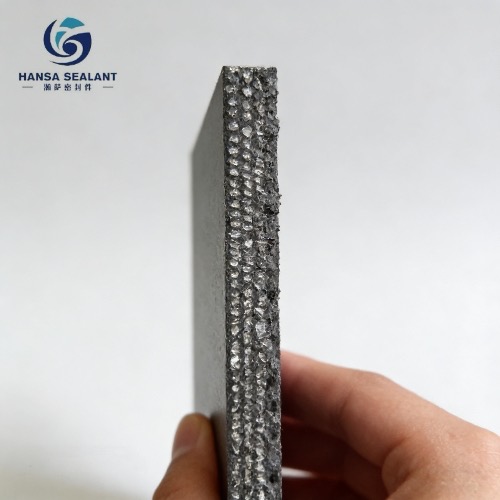
Tanged Metal Composite
0.1-0.25mm metal core, perforated & mechanically interlocked with graphite
0.8 - 3.2
1000×1000, 1500×1500, 1524×1524
Tanged Roller Compounding
Chemical reactors, high-pressure valves, engine head gaskets
Flat Sheet Composite
0.05mm metal foil bonded with graphite via adhesive
0.8 - 3.2
1000×1000, 1500×1500
Lamination Bonding
Power plant condensers, low-pressure flanges, instrument connections
Wire Mesh Reinforced
Stainless/carbon steel woven mesh embedded in graphite matrix
1.5 - 4.0
1000×1500 (custom)
Compression Composite
Heat exchangers, marine piping, vibration-prone seals
Non-metal Composite
Reinforcement layer like fiberglass cloth/polyester film
1.0 - 3.0
1000×1200 (custom)
Adhesive Lamination
Electronic/electrical insulation gaskets, low conductivity seals
Multi-layer High-Pressure Laminates
Alternating layers of stainless steel foil and high-purity graphite
1.5 - 6.0 (custom)
1500×1500 (custom)
Proprietary Fusion Lamination
Refinery high-pressure flanges, NPP reactor coolant pumps, high-pressure HX
Fine Flake Graphite Composite
Phenolic resin bonded fine flake graphite, slurry/lay-up molded
1.0 - 5.0
Custom
Slurry + Hot Press / Lay-up + Hot Press
Low-cost sealing gaskets, automotive parts, general industry
Technical Parameters and Performance Indicators
Physical & Mechanical Properties
Property
Typical Value/Range
Standard/Reference
Density (g/cm³)
1.0 - 2.1 (post-composite)
GB/T 3521-2023
Tensile Strength (MPa)
4.0 - 15.0 (depends on reinforcement)
ASTM F152
Compressibility (%)
15 - 55
ASTM F36
Recovery (%)
9 - 20
ASTM F36
Stress Relaxation (%)
≤ 10
DIN 52913
Ash Content (%)
≤ 1.0 - 2.0
GB/T 3521
Sulfur Content (ppm)
≤ 1200 (lower for nuclear grade)
GB/T 43887-2024
Chlorine Content (ppm)
≤ 30 - 50
GB/T 43887-2024
Thermal & Electrical Properties
Property
Typical Value/Range
Standard/Reference
Service Temp (Air, °C)
-200 to 650
—
Service Temp (Non-oxidizing, °C)
-240 to 3000
—
Thermal Weight Loss (450°C, %)
≤ 0.5 - 1.0
ISO 1887
Thermal Weight Loss (600°C, %)
≤ 10 - 20
ISO 1887
Thermal Conductivity (∥, W/m·K)
25 - 150
ISO 22007
Thermal Conductivity (⊥, W/m·K)
5 - 10
ISO 22007
Volume Resistivity (μΩ·m)
5 - 10 (High-density conductive type)
GB/T 24525
Saturated Water Absorption (%)
< 2.0
ASTM D570
Typical Application Areas
Application Field
Specific Uses
Recommended Type
Key Requirements
Petroleum Refining
High-temp/pressure flanges, reactor manways, HX, valve packing
Tanged SS Composite, Multi-layer HP Laminate
Resists hydrocarbons, creep resistant @600℃, high recovery
Nuclear Power
NPP main pump seals, fuel transfer systems, boron shielding layers
Nuclear Grade Flexible Graphite Composite (Low S/Cl/Boron)
Radiation resistance, ultra-low leachables, neutron absorption
Automotive Industry
Head gaskets, intake/exhaust manifold gaskets, EGR cooler seals
Tanged Tin-plated Steel/Carbon Steel Composite
Resists high-temp combustion gas, vibration fatigue resistance
Chemical & Metallurgy
Strong corrosive media tanks, pickling line flanges, electrolytic cell seals
Flat SS Composite, Wire Mesh Reinforced
Full pH resistance, long-term temp resistance, non-stick
Electronics/Electrical
Thermal conductive insulation gaskets, EMI shielding gaskets
Fiberglass/Polyester Reinforced Composite
High thermal conductivity, low electrical conductivity, tight tolerances
Aerospace & Marine
Fuel system seals, seawater line gaskets, exhaust systems
Wire Mesh Reinforced/Tanged Composite
Salt spray resistance, thermal shock resistance, flame retardant
General Industry
Compressors, refrigeration units, vacuum pumps, sight glass seals
General Purpose Graphite Composite
Low leakage rate, easy install/removal, cost-effective
Processing, Joining & Installation Guide
1. Machining
Cutting: Use waterjet, circular shear, oscillating knife, or laser cutting (control HAZ). Die cutting recommended for batch gasket production; die clearance recommended at 5%-8% of sheet thickness.
Drilling/Hole-making: Use HSS drills, 118° point angle, cooling with compressed air to avoid dust clogging. For edge-wrapped sheets, drill before edging or use a trepanning tool.
2. Edging & Sealing Enhancement
Metal Edging: 304/316 stainless steel strip (0.1-0.2mm) completely covers the inner/outer edge using specialized edging machine. Prevents medium erosion of gasket body, improves pressure rating, and facilitates installation positioning.
Edging Form Selection: Inner edge wrap for strong corrosive media; Outer edge wrap for anti-stick high-viscosity media; Inner/Outer edge wrap for vacuum or pressure-fluctuating conditions.
3. Installation Key Points
Flange Face Preparation: Ensure flange face has no radial scratches, surface roughness Ra 3.2-6.3μm. Applying liquid sealant on graphite surface is strictly prohibited.
Bolt Pre-tensioning: Recommended to use torque wrench, tighten in 2-3 symmetrical passes. Graphite composite plate has very low cold flow tendency, but over-compression damages reinforcement skeleton; recommended pre-tightening stress: 30-50 MPa.
Static Electricity Protection: Pure graphite component is conductive. For flanges handling flammable media, ensure flange cross-bonding to prevent static accumulation due to gasket resistivity fluctuations.
Selection Decision Matrix
Application Scenario
Primary Performance Requirement
Recommended Plate Type
Key Considerations
High-temp/pressure Steam Lines
Ultra-low leakage rate, thermal shock resistance
Multi-layer Stainless Steel HP Laminate (RGS-HP Grade)
Verify temp ≥ 550℃, pressure class matches PN40
Strong Corrosive Chemical Plants
Full chemical resistance, high purity
Flat SS Composite Plate (316L Foil)
Prefer inner/outer edge wrap to avoid end-grain penetration
Engine Cylinder Seals
High-frequency vibration resistance, combustion gas resistance
Tanged Tin-plated Steel Composite Plate
Thickness tolerance ±0.05mm, density ≥ 1.2 g/cm³
NPP Nuclear Island Seals
Ultra-low sulfur/chlorine, radiation resistance
Nuclear Grade Flexible Graphite Composite Plate
Must comply with GB/T 43887-2024 nuclear grade standard
Must comply with GB/T 43887-2024 nuclear grade standard
Economy, ease of processing
Fine Flake Graphite Composite Plate
Control phenolic resin content to avoid high-temp embrittlement
Electronics Thermal Management
High thermal conductivity, electrical insulation
Fiberglass Reinforced Graphite Composite Plate
Thermal path design must differentiate in-plane vs through-plane
Industry Customized Solutions
High-Pressure Flange Seals for Integrated Refining Units
Requirement: Catalytic cracking, hydrocracking units; operating temp 500-650℃, pressure 10-25 MPa; media containing H₂S, H₂.
Solution: Multi-layer Stainless Steel/Graphite High-Pressure Laminate (Flexicarb® RGS-HP Grade); laminate structure effectively prevents high-pressure extrusion; bonded interfaces reduce permeation leakage.
Application: Hydrotreater reactor manways, high-pressure heat exchanger channel covers.
Sealing Systems for Generation IV Nuclear Reactors
Requirement: High-temperature gas-cooled reactors (HTGR), Helium medium, temp 800-950℃, neutron radiation resistance, ppt-level impurity leachables.
Solution: Boron-containing isostatically pressed graphite composite plate; matrix density ≥ 1.85 g/cm³; boron distribution uniformity ±0.3%; combines sealing and shielding functions.
Application: Control rod drive mechanism seals, fuel handling system seals.
Bipolar Plates for Hydrogen Fuel Cells
Requirement: High electrical conductivity (≥ 100 S/cm), ultra-low gas permeability (He leakage rate < 10⁻⁶ mbar·L/s), resistance to acidic wet environment.
Solution: High-density compression molded graphite plate (density 1.7-1.9 g/cm³); precision micro-channel machining; surface roughness Ra ≤ 3.2μm.
Application: PEM fuel cell stacks, flow battery stacks.
Salt Spray Resistant Seals for Marine & Offshore
Requirement: Seawater cooling systems, ballast tanks; resistance to chloride ion stress corrosion cracking (SCC).
Solution: 316L tanged sheet composite with HDS101 grade flexible graphite; full wrap edging using same material.
Application: Plate heat exchanger seals, stern tube seals.
Storage & Maintenance
Storage Conditions
Environment: Clean, dry, ventilated warehouse; relative humidity < 60%. Avoid mixing storage with oils/chemicals. Strictly prohibit outdoor storage; prevent water ingress causing graphite layer moisture absorption and metal insert rusting.
Stacking: Store flat on level pallets; stack height ≤ 0.8m. Die-cut finished gaskets are recommended for hanging storage or flat layered storage to avoid compression deformation.
Shelf Life: "First-in, first-out" recommended. If storage period exceeds 2 years, retest compressibility, recovery, sulfur, and chlorine content.
Usage & Maintenance
Cleaning: Residue on disassembled gaskets can be wiped with brass brush or alcohol. Soaking metal-edged graphite gaskets in strong acid/alkali for cleaning is prohibited.
Repair: Minor surface indentation may allow reuse (non-metal reinforced type only). Must replace if metal undergoes plastic deformation, or graphite layer shows severe powdering or delamination.
Oxidation Inspection: Under long-term high-temperature operation, inspect gasket edges per cycle for white oxidation powder (graphite oxidation product). Immediate replacement required if edge oxidation depth > 1.5mm or penetrates to metal insert.
Torque Re-tightening: For high-temperature flanges, torque re-tightening at ambient temperature is recommended 24-48 hours after startup to compensate for preload loss due to thermal expansion.
Development Trends
Technological Development Directions
Ultra-Purification & Nuclear Grade: Control of corrosive impurities (S, Cl, F) towards ppm levels and below to meet stringent requirements of nuclear power and semiconductor epitaxial equipment.
Multi-layer Structures & Functional Composites: Evolution from single-layer tanged sheets to multi-layer heterogeneous laminate structures, achieving unification of high-pressure resistance and micro-leakage sealing; development of multifunctional integrated composite plates (thermal/electrical conductivity, EMI shielding).
Low-Carbon & Low-Cost Manufacturing: Promote fine flake graphite lay-up molding process as alternative to pure flexible graphite coil composite, reducing raw material costs and graphitization energy consumption; research recycling technology for waste graphite seals.
Precision Forming & Near-Net Shape: Isostatic pressing graphite composite plate near-net shaping technology to reduce machining loss; micron-level micro-channel precision engraving technology to meet accuracy requirements for fuel cell bipolar plates.
Market Application Expansion
Hydrogen Full Industry Chain: Upstream electrolyzer hydrogen production seals, midstream storage/transport bottle valve linings, downstream fuel cell bipolar plates.
Semiconductor Thermal Management: Single crystal silicon ingot growth furnace insulation shields, ion implanter shielding components; replacing imported isostatic graphite.
Data Center Liquid Cooling: Immersion cooling fluid seals, high thermal conductivity cold plate interface materials.
Aerospace Thermal Protection: High thermal conductivity/low density composite plates for airborne electronic equipment heat dissipation, engine heat shields.
Graphite composite plate achieves a classic composite logic of "metal imparts strength + graphite imparts sealing and corrosion resistance," enabling its transition from traditional asbestos sealing materials to high-end static and dynamic sealing systems. As a non-replaceable fundamental sealing component for high-temperature and high-pressure conditions, it continues to play a core "industrial articular cartilage" role in key fields such as petrochemical equipment, nuclear island primary circuits, and new energy vehicle powertrain systems. Correct composite structure selection, precise edge protection, and standardized installation pre-tensioning are the three pillars ensuring its full lifecycle sealing reliability. Amid the global wave of energy transition and equipment high-end advancement, graphite composite plate is upgrading from a单纯 sealing gasket material to a multifunctional engineering plate integrating thermal management, conductive transmission, and nuclear shielding capabilities.


