
Productscpzx

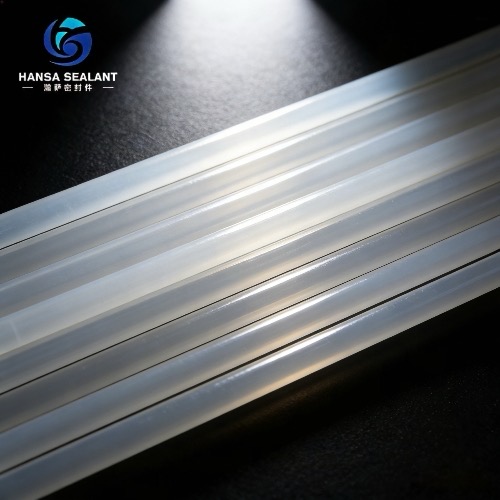
Material Types and Specification System
| Type | Molecular Weight / Crystallinity Characteristics | Typical Diameter Range (mm) | Length (mm) | Primary Production Method | Primary Application Areas |
| General Purpose | Standard molecular weight, Crystallinity 35-50% | Φ6 – Φ200 | 1000 / 2000 | Compression/Extrusion | General seals, insulators, structural components |
| High Purity | Ultra-low ionic residues, no processing aids | Φ10 – Φ150 | Custom (≤1000) | Isothermal Molding | Semiconductor etch rings, high-purity fluid fittings |
| Optical Grade | High transparency, birefringence controlled | Φ20 – Φ100 | 500 (Block) | Isothermal Pressing | IR windows, sight glasses, precision lenses |
| Cryogenic Grade | Optimized low-toughness, Low glass transition temp. (Tg) | Φ15 – Φ120 | 1000 | Extrusion + Annealing | LNG valve components, Superconducting magnet supports |
| Antistatic/Conductive | Carbon fiber/CNT filled, Surface resistivity 10³-10⁶ Ω | Φ10 – Φ100 | 1000 | Compression Molding | Compression Molding |
Technical Parameters & Performance Indicators
Physical & Mechanical Properties
| Property | Typical Value/Range | Standard/Reference |
| Density (g/cm³) | 2.10 – 2.15 | ASTM D792 |
| Tensile Strength (MPa) | 35 – 50 | ASTM D638 |
| Elongation at Break (%) | 15 – 40 | ASTM D638 |
| Flexural Strength (MPa) | 60 – 85 | ASTM D790 |
| Compressive Strength (10% def.) | 70 – 100 | ASTM D695 |
| Rockwell Hardness | R110 – R120 / Shore D 75-85 | ASTM D785 / D2240 |
| Notched Impact Strength (J/m) | 150 – 250 | ASTM D256 |
| Water Absorption (24h, %) | < 0.01 | ASTM D570 |
Thermal & Electrical Properties
| Property | Typical Value/Range | Standard/Reference |
| Melting Point (℃) | 210 – 215 | DSC |
| Glass Transition Temp. (Tg, ℃) | 70 – 80 | DMA |
| Continuous Service Temp. (Air, ℃) | -240 to 150 | — |
| Short-Term Service Temp. (Peak, ℃) | 175 – 200 | — |
| CTE (10⁻⁵/K) | 4.0 – 7.0 | ASTM E831 |
| Thermal Conductivity (W/m·K) | 0.19 – 0.22 | ASTM C177 |
| Dielectric Strength (kV/mm) | 18 – 22 | ASTM D149 |
| Volume Resistivity (Ω·cm) | > 10¹⁶ | ASTM D257 |
| Dielectric Constant (1MHz) | 2.3 – 2.5 | ASTM D150 |
| Dissipation Factor (1MHz) | 0.005 – 0.010 | ASTM D150 |
Barrier & Optical Properties
| Property | Typical Value/Range | Standard/Reference |
| Water Vapor Transmission Rate (g·mm/m²·day) | < 0.1 (38℃, 90%RH) | ASTM F1249 |
| Nitrogen Permeability (cm³·mm/m²·day·atm) | 0.03 – 0.10 | ASTM D1434 |
| Oxygen Permeability (same unit) | 0.10 – 0.30 | ASTM D3985 |
| Visible Light Transmittance (%, 3mm) | 90 – 92 | ASTM D1003 |
| Haze (%, 3mm) | 1.5 – 3.0 | ASTM D1003 |
| Refractive Index (nd) | 1.425 – 1.435 | ISO 489 |
Typical Application Areas
| Application Field | Specific Applications | Recommended Type | Key Requirements |
| Semiconductor | Etch rings, Wafer boats, Nozzles, CMP retaining rings | High Purity | Low metal ions, Plasma resistance |
| Cryogenics | LNG valve stem bushings, LH2 seal seats, Magnet spacers | Cryogenic Grade | No embrittlement at -196°C, Low thermal conductivity |
| Aerospace | O₂ system seals, Fuel pump insulators, Radome components | General/Antistatic | High/low temp cycling, Flame retardant |
| Nuclear | Centrifuge insulators, Valve liners, Glovebox windows | High Purity | Radiation resistance (≤10⁵Gy), Low extractables |
| Medical | Cryosurgery tool tips, Fluidic fittings, X-ray windows | Optical/High Purity | Biocompatibility, Gamma/EO sterilization |
| Optics | IR camera windows, LIDAR lenses, Cryostat viewports | Optical Grade | Mid-IR transmission, Thermal shock resistance |
| Chemical/General | Pump liners, Sight glasses, HV insulation washers | General Purpose | Chemical resistance, Dimensional stability |
Machining, Joining & Installation Guidelines
1. Machining
- Turning/Milling: Use carbide tools (K10/K20), rake angle 10°-15°, relief angle 8°-12°. Cutting speed: 80-150 m/min, feed rate: 0.05-0.15 mm/rev. Adequate cooling required to prevent localized overheating and stress cracking.
- Drilling: Use HSS drills, point angle 90°-100°. Employ peck drilling (depth increments ≤1mm) with compressed air chip evacuation. Keep spindle rotating during retraction to prevent chip wrapping.
- Threading: Thread milling recommended over tapping. PCTFE has low cold flow tendency, but internal thread strength is ~60% of aluminum; thread engagement depth should be increased by 20%.
2. Joining & Assembly
- Heat Insertion: Metal inserts can be preheated to 120-150°C and pressed in; upon cooling, a strong interference fit is achieved with pull-out strength 3x higher than cold pressing.
- Ultrasonic Welding: Suitable for joining same-material PCTFE components. Amplitude: 40-60μm, Pressure: 0.2-0.4 MPa.
- Solvent Bonding: Only recommended using specific fluorinated solvents (e.g., Perfluorodecalin) for surface activation prior to epoxy adhesive. Cyanoacrylates generally ineffective.
3. Heat Treatment & Stress Relief
- Annealing recommended after rough machining: Heat to 140-150°C (≤10°C/h), hold for 2-4 hours (+1 hour per 10mm thickness), furnace cool to <60°C before removal.
- Annealing can eliminate >70% of internal stress, significantly reducing risk of cracking during cryogenic service.
4. Installation
- For vacuum or cryogenic applications, mating surface roughness should be Ra 0.8-1.6μm. Apply specialized fluorine-based grease during assembly; avoid dry running.
- Bolt torque should be limited to 70-80% of recommended values. PCTFE compression rate is approx. 4-7%; over-compression can cause seal cold flow or insert loosening.
Selection Decision Matrix
| Application Scenario | Primary Performance Requirement | Recommended Rod Grade | Key Considerations |
| LN₂/LH₂ Sealing Systems | Toughness at -196°C, Low thermal conductivity | Cryogenic Grade | Verify cryogenic impact strength, Control interference |
| Semiconductor Wet Etch | Ultra-low metals, Resistance to strong acids/oxidizers | High Purity Grade | Request ICP-MS ionic extractables report |
| Mid-IR Optical Windows | >85% Transmission at 3-5μm, Low birefringence | Optical Grade | Birefringence test, DLC anti-reflection coating |
| High Vacuum Viewports | Extremely low outgassing, Near-zero moisture permeation | High Purity/Optical Grade | TML<0.1%, CVCM<0.01% |
| Oxygen System Valve Components | LOX compatibility, Impact non-ignition | General Purpose (Natural) | Must pass ASTM D2512 LOX impact test |
| Antistatic Cleanroom Fixtures | Surface resistivity 10⁵-10⁹ Ω | Antistatic/Conductive | Carbon fill may increase particles; consider pure PCTFE encapsulation |
Industry Custom Solutions
1. 300mm Semiconductor Wafer Etch Ring
- Requirement: Resistance to CF₄/O₂/SF₆ aggressive etch gases, no particle shedding in plasma environment, dimensional tolerance ±0.02mm.
- Solution: Isostatically molded High Purity PCTFE blank, precision 5-axis CNC machined, surface roughness Ra≤0.4μm. Edge chamfer R0.1mm to reduce electric field concentration.
- Application: Components within dielectric etcher chambers, replacing imported Vespel® and PTFE solutions.
2. LH₂ Fuel Valve Seal System for Launch Vehicles
- Requirement: Maintains contact stress at -253°C, near-zero hydrogen permeability, compatible with LH₂/LOX.
- Solution: Custom cryogenic-modified PCTFE rod, cryogenically stabilized (-196°C×24h), surface fluorination treatment (F₂/N₂ mixture) post-machining.
- Application: Pre-cooling line valve seats, dynamic seal back-up rings in rocket engines.
3. Sampling Valve Sight Glass for Nuclear Fuel Reprocessing
- Requirement: Resistance to concentrated HNO₃ (≥8mol/L) and high radiation fields (cumulative dose 10⁶ Gy), transparent.
- Solution: 50mm thick Optical Grade PCTFE block, double-side polished to Ra≤0.05μm, edge encapsulated in 316L SS anti-radiation frame.
- Application: Liquid level observation of radioactive solutions inside Hot Cells.
4. Cryogenic Insulation Spacers for Superconducting Magnets
- Requirement: Thermal conductivity <0.1 W/m·K at 4.2K, compressive strength >80MPa, magnetic susceptibility ≤10⁻⁶ emu/g.
- Solution: Precision cut High Purity PCTFE rod, no metallic coatings to maintain inherent low magnetic susceptibility.
- Application: Coil supports in MRI, Tokamak devices.
Storage & Maintenance
Storage Conditions
- Environment: Protected from light, dry, clean warehouse. Temperature: 10-30°C, RH <60%. Do not store outdoors (UV causes surface discoloration and mechanical degradation).
- Placement: Large diameter rods supported horizontally (support spacing ≤500mm) to prevent long-term bending creep. Slender rods preferably suspended vertically.
- Shelf Life: Re-test tensile strength and water absorption after >5 years storage. PCTFE shows no significant aging, but prolonged compressive storage may cause minor bending creep.
Maintenance
- Cleaning: Semiconductor grade: Ultrasonic clean with IPA, rinse with DI water. General industrial: Neutral detergent, soft cloth. **Avoid** acetone, toluene, ketones, and aromatic hydrocarbons (risk of stress cracking).
- Repair: Superficial scratches (depth <0.1mm) can be removed via precision grinding/polishing to restore optical transparency. Deep cracks or fractures irreparable; replace component.
- Wear Inspection: For dynamic seals, inspect contact surface wear periodically. If wear rate >0.01mm/1000h, re-evaluate lubrication or consider material change.
- Periodic Annealing: For PCTFE components used continuously above 100°C, perform stress-relief annealing every 2-3 years to prevent delayed cracking.
Development Trends
Technical Development Directions
1. Purity Limit Breakthrough: Advancing towards ppt (10⁻¹²) level metal ion content to meet semiconductor equipment requirements for sub-10nm nodes.
2. Optical Functionalization: Development of NIR anti-reflection and laser wavelength (e.g., 10.6μm CO₂) absorbing PCTFE grades for photonics applications.
3. Bio-based & Recycling: Exploration of green synthesis routes for fluoromonomers; R&D into chemical depolymerization recycling of PCTFE waste.
4. Composite & Blending Modification: Nano-BN filled high thermal conductivity PCTFE (target >1.0 W/m·K); Uniformly dispersed CNT antistatic compounds.
Market Application Expansion
1. Quantum Computing: Support structures and sample holders for coaxial cables within dilution refrigerators, requiring ultra-low dielectric loss and magnetic susceptibility.
2. Hydrogen Energy Storage: Type IV hydrogen storage tank valve liners, leveraging PCTFE's lower hydrogen permeability and superior cryogenic toughness vs. PEEK.
3. Advanced Packaging: Release layer for Fan-Out Wafer Level Packaging (FOWLP) carriers, utilizing PCTFE's low surface energy and chemical resistance.
4. Deep Space Exploration: Cryogenic lenses for exoplanet detector optical systems, designed to withstand extreme space cold and radiation environments.
Conclusion
As a unique "rigid-yet-resilient" member of the fluoroplastic family, PCTFE rods have established an irreplaceable technological position in high-end manufacturing sectors such as semiconductor cryogenic processes, cryogenic engineering, nuclear industry, and infrared optics. This is built upon three core advantages: an exceptionally wide service temperature range, the highest mechanical strength among fluoroplastics, and ultimate moisture barrier properties. Its status as a "transparent fluoroplastic" is a rare attribute, driving its resurgence in functional optical devices. Driven by the dual imperatives of equipment localization and escalating extreme-condition demands, PCTFE is rapidly evolving from a traditional corrosion-resistant lining material towards cutting-edge applications in precision optics, quantum computing structures, and core hydrogen energy seals. Correct grade selection, precision machining with controlled internal stress, and lifecycle stress management constitute the three key technologies to unlock the full potential of PCTFE material.


