
Productscpzx

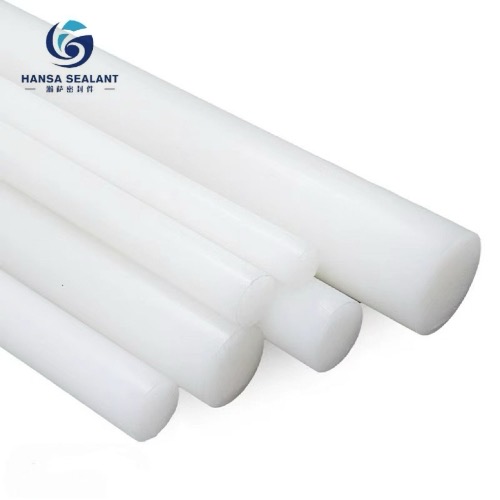
Material Types and Specification System
Type
Molecular Weight/Characteristics
Typical Diameter Range (mm)
Length (mm)
Main Production Method
Main Application Areas
General Grade (Natural)
Standard molecular weight, crystallinity 65-78%
Φ6 – Φ300
1000 / 2000
Extrusion
Chemical pumps/valves, pipe linings, seals, heat exchanger components
High Purity Grade
Ultra-low metal ion residue, no additives
Φ10 – Φ200
1000 / Custom
Extrusion (Clean environment)
Semiconductor wafer cleaning equipment, high-purity chemical delivery systems
Antistatic/Conductive Type
Carbon fiber/CNT filled, surface resistance 10³-10⁶ Ω
Φ10 – Φ150
1000
Extrusion/Compression
Explosion-proof tools, electronic production line fixtures, semiconductor trays
Food Grade/Medical Grade
Meets FDA/USDA/NSF standards, high purity
Φ6 – Φ200
1000
Extrusion
Food processing machinery, pharmaceutical equipment components
Piezoelectric Film Grade
High β-phase content, poled
Film
Rolls
Casting + Stretching + Poling
Hydrophones, pressure sensors, ultrasonic transducers
Technical Parameters and Performance Indicators
Physical & Mechanical Properties
Property
Typical Value/Range
Test Standard/Reference
Density (g/cm³)
1.77 – 1.80
ISO 1183 / ASTM D792
Tensile Strength (MPa)
45 – 55
ISO 527 / ASTM D638
Elongation at Break (%)
20 – 60
ISO 527 / ASTM D638
Tensile Modulus of Elasticity (MPa)
2300
ISO 527
Flexural Strength (MPa)
≥70
ISO 178
Compressive Strength (MPa)
≥90
ISO 604
Impact Strength (Notched, kJ/m²)
10
ISO 179
Ball Indentation Hardness (MPa)
105
ISO 2039-1
Water Absorption (24h, %)
0.02 – 0.05
ISO 62 / ASTM D570
Thermal & Electrical Properties
Property
Typical Value/Range
Test Standard/Reference
Melting Point (℃)
171 – 188
ISO 11357-3 / ASTM D3418
Long-term Service Temp (Air, ℃)
-40 to 150
—
Heat Deflection Temp (1.8MPa, ℃)
105 – 151
ISO 75
Coefficient of Linear Expansion (10⁻⁵/K)
12 – 15
DIN 53752
Thermal Conductivity (W/m·K)
0.19
DIN 52612
Dielectric Strength (kV/mm)
20 – 30
IEC 60243
Volume Resistivity (Ω·cm)
> 5×10¹⁴
IEC 60093
Dielectric Constant (1MHz)
7.5 – 8.0
IEC 60250
Dissipation Factor (1MHz)
0.015 – 0.020
IEC 60250
Comparative Tracking Index (CTI)
> 600
IEC 60112
Flammability Rating
V-0 (UL94)
UL 94
Limiting Oxygen Index (%)
44 – 46
ISO 4589
Typical Application Areas
Application Field
Specific Uses
Recommended Type
Key Requirements
Semiconductor
Wafer cleaning tanks, high-purity chemical delivery pipes, CMP components, LCD related equipment
High Purity Grade
Extremely low metal ion leaching, acid/alkali resistance, high-temperature resistance
Chemical Anti-Corrosion
Reactor linings, pump/valve bodies, pipe fittings, storage tanks, heat exchangers
General Grade
Chemical corrosion resistance, hydrolysis resistance, weldable
Water Treatment
Pure water system pipes, membrane module supports, ultrafiltration equipment components
General/High Purity
Chlorine oxidation resistance, anti-fouling, long-term stability
Food & Pharmaceutical
Food processing machinery, filling pump rotors, pharmaceutical equipment components
Food Grade
Compliant with FDA/USDA/NSF standards, non-toxic, odorless, easy to clean
Electronics & Electrical
Wire/cable jackets, coil bodies, high-voltage insulation components
General Grade
Insulation, flame retardancy
New Energy
Photovoltaic cell etching tanks, lithium battery separator coatings
General Grade
Chemical resistance, electrochemical stability
Aerospace
Aerospace foam core materials, specialty components
Specialized Grade
Lightweight, high strength, environmental resistance
Underwater Acoustics & Sensing
Hydrophones, pressure sensors, ultrasonic transducers
Piezoelectric Film Grade
Piezoelectric properties, flexibility
Processing, Joining, and Installation Guide
1. Machining
- Turning/Milling: Use high-speed steel or carbide tools; tools must be kept sharp. Recommended cutting speed 200-400 m/min, feed rate 0.1-0.2 mm/r. Adequate cooling is required to prevent local overheating above 150°C, which could cause material softening or thermal deformation.
- Drilling: Use carbide drills with a point angle of 118°. Use a peck drilling cycle for chip removal, maintaining a feed rate of 0.1-0.2 mm/r to prevent material tearing. The drilled hole diameter should be 0.1-0.2mm larger than the required final size to compensate for material shrinkage.
- Sawing: Band saws or circular saws are suitable. Use coarse, wide-set teeth for good chip clearance.
2. Joining and Assembly
- Hot Gas Welding: The most reliable method for joining PVDF rods. Use a hot air gun or extrusion welder with filler rods made of the same PVDF material, achieving weld strength over 90% of the parent material.
- Solvent Bonding: PVDF is inert to common solvents, making bonding difficult. Plasma surface activation treatment can be performed; peel strength of the treated bonding surface can reach 4.5 N/mm, meeting the assembly needs of complex structural parts.
- Mechanical Fastening: Bolts or screws can be used. Due to PVDF's high coefficient of thermal expansion, when used in conjunction with metal parts, a thermal expansion gap of 0.3%-0.5% should be reserved.
3. Heat Treatment and Stress Relief
- For large diameter or high-precision rods, annealing after rough machining is recommended: hold at 120-140°C in an oven for 2-4 hours (add 1 hour per 10mm of diameter), then cool slowly to room temperature in the oven. This helps eliminate internal stresses, preventing deformation or cracking during subsequent use.
4. Installation Points
- Thermal Expansion Compensation: PVDF has a relatively high coefficient of linear expansion (approx. 12-15×10⁻⁵/K). When used in conjunction with other materials, the difference in thermal expansion must be fully considered, and appropriate gaps should be reserved.
- Liner Installation: When used as a lining for steel equipment, ensure the inner wall of the steel shell is smooth and flat, and use reliable adhesive or anchoring structures to prevent liner delamination under negative pressure.
Selection Decision Matrix
| Application Scenario | Primary Performance Requirement | Recommended Grade | Key Considerations |
| Semiconductor Wet Etching Bath | Ultra-pure, resistant to strong acids/oxidants | High Purity Grade | Request ion leaching report from supplier; confirm no additives |
| Chemical High-Temp Acid Storage Tank | High-temperature resistance, chemical resistance | General Grade | Verify long-term service temperature ≤ 150°C; design for thermal expansion |
| Pure Water Delivery Pipe | Purity, hydrolysis resistance, bacteriostatic | High Purity Grade | Smooth inner wall; comply with hygiene standards |
| Outdoor Equipment Housing | Superb weather resistance, UV resistance | General Grade | Verify outdoor weathering performance; long-term color stability |
| Food Machinery Components | Food safety, easy to clean | Food Grade | Require FDA certification; pass food contact material tests |
| Underwater Acoustic Sensor | Piezoelectric properties, flexibility | Piezoelectric Film Grade | Confirm poling treatment; provide piezoelectric constant d₃₃ value |
Industry Customized Solutions
300mm Wafer Wet Cleaning Bath
Requirement: Resist strong acid/alkali cleaning solutions like SC1 (NH₄OH/H₂O₂) and SC2 (HCl/H₂O₂), no metal ion leaching, no deformation over long-term use.
Solution: Machine bath components from high-purity PVDF rods, polish all contact surfaces, use hot gas welding with PVDF filler rods for connections, ensuring no leakage and no leaching.
Application: Semiconductor wet cleaning equipment, meeting the requirements of ultra-pure water systems and chemical delivery.
Spray Pipes for Coal-Fired Power Plant Flue Gas Desulfurization (FGD) Systems
Requirement: Resist corrosion from high-temperature (60-80°C) dilute sulfuric acid slurry, resist abrasion, no aging during long-term outdoor use.
Solution: Machine nozzles and pipe components from PVDF rods. Utilizing PVDF's excellent weather resistance and chemical resistance, components can be installed outdoors without additional anti-corrosion coatings.
Application: Spray layers and circulation pipes in wet desulfurization towers.
Lithium Battery Slurry Preparation System
Requirement: Long-term stability in NMP (N-Methyl-2-pyrrolidone) solvent environment, no metal contamination, prevent slurry gelation.
Solution: All components such as valves and fittings are machined from high-purity PVDF rods, completely eliminating metal ion contamination.
Application: Cathode slurry preparation systems, NMP recovery lines.
Deep-Sea Detector Hydrophone
Requirement: Withstand deep-sea high pressure, resist seawater corrosion, high-sensitivity acoustic wave detection.
Solution: Use piezoelectric grade PVDF film, poled, to fabricate the sensitive element of the hydrophone, leveraging PVDF's piezoelectric properties and flexibility for underwater acoustic signal detection.
Application: Underwater acoustic measurement, underwater target detection.
Storage and Maintenance
Storage Conditions
Environment: Store in a cool, dry warehouse away from direct sunlight. Prolonged UV exposure, while not causing rapid degradation, may affect surface color.
Placement: Rods should be supported horizontally (support point spacing ≤ 500mm) to prevent bending deformation from long-term cantilevered storage. Slender rods are recommended to be hung vertically.
Shelf Life: PVDF is chemically stable with no significant aging during storage. However, for rods stored long-term (over 5 years), it is advisable to retest mechanical properties before critical use.
Usage and Maintenance
Cleaning: General dirt can be cleaned with mild detergent and a soft cloth. For stubborn stains, alcohol or isopropyl alcohol can be used. Avoid cleaning with ketone solvents such as acetone or methyl ethyl ketone, as these can cause swelling or even dissolution of the PVDF surface.
Repair: Superficial scratches can be repaired by sanding with fine-grit sandpaper or polishing. Deep cracks or through-penetration damage are usually irreparable; component replacement is recommended.
Welding Repair: For localized cracks in components, repair using hot gas welding with PVDF filler rods of the same material.
Wear Inspection: For dynamic seals or sliding components, regularly inspect the contact surface for wear. If the wear rate exceeds a threshold, evaluate lubrication conditions or replace the material.
Static Dissipation: PVDF components used in cleanrooms or explosive environments may accumulate static electricity due to friction. Use antistatic cleaners or choose antistatic modified grades.
Development Trends
Technology Development Directions
Pushing Purity Limits: Advancing towards ppt (10⁻¹²) level metal ion content to meet the ultimate purity requirements of semiconductor equipment for 3nm and below process nodes.
Copolymer Development and Application Expansion: Copolymers like PVDF-HFP (Hexafluoropropylene copolymer) and PVDF-CTFE (Chlorotrifluoroethylene copolymer) further optimize flexibility, low-temperature performance, and solubility, expanding applications in areas like gel electrolytes and flexible sensors.
Functional Compounding: Developing modified PVDF composites with enhanced properties such as high thermal conductivity (filled with graphene/BN), electromagnetic shielding (filled with CNT/graphene), and high dielectric constant to meet demands in high-end fields like 5G communication and new energy vehicles.
Piezoelectric Performance Optimization: Further improving the piezoelectric constant of PVDF through molecular design and polarization process optimization, expanding its applications in emerging fields such as energy harvesting and flexible electronics.
Market Application Expansion
Hydrogen Energy: Utilizing PVDF's chemical resistance and barrier properties to develop diaphragm frames for alkaline water electrolysis for hydrogen production, and liner materials for hydrogen storage tanks.
Solid-State Batteries: PVDF-based solid polymer electrolytes and composite solid electrolytes are hot research topics for high-safety, high-energy-density solid-state batteries.
Wearable Electronics: The flexibility and energy harvesting characteristics of PVDF piezoelectric films offer broad prospects in self-powered wearable sensors, flexible touch screens, etc.
Aerospace Lightweighting: PVDF foam materials, due to their light weight, high strength, and excellent environmental resistance, are used in aerospace sandwich structures.
Conclusion
As a model of "rigidity and toughness balance" within the fluoroplastic family, PVDF rod, with its ultimate purity, highest mechanical strength among fluoroplastics, excellent weather resistance, and unique piezoelectric functionality, has established an irreplaceable position in strategic emerging industries such as semiconductors, chemicals, new energy, and electronics. It serves as both the "pristine container" safeguarding wafer purity in semiconductor manufacturing and the "sturdy barrier" resisting strong acid erosion in chemical anti-corrosion applications, as well as the "sensitive nerve" perceiving weak signals in the field of underwater acoustic detection. Driven by the dual forces of domestic substitution and the upgrade of high-end manufacturing, PVDF is rapidly advancing from traditional anti-corrosion structural materials into cutting-edge fields like new energy, flexible electronics, and green hydrogen. Correct grade selection, precise processing technology control (especially thermal management and stress relief), and lifecycle maintenance management are the three key technologies to unlocking the potential of PVDF materials.


