
Productscpzx

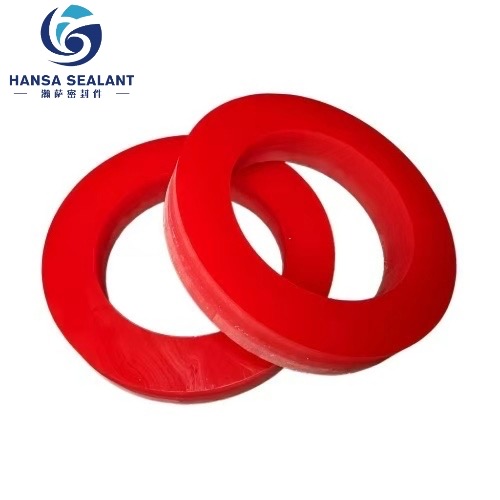
Introduction to Polyurethane (PU) Products
Polyurethane (PU) is a high-performance polymer material that can be formulated into various forms such as elastomers, foams, coatings, and adhesives by adjusting its composition. Its unique molecular structure provides the following core characteristics:
Core Advantages
Broad Hardness Range: Adjustable from Shore A 10A to D 80D, covering properties from rubber to plastic.
Exceptional Wear Resistance: Akron abrasion loss < 50 mm³, 3-5 times better than natural rubber.
High Elastic Recovery: Rebound resilience can exceed 60%, with excellent dynamic performance.
Environmental Adaptability: Oil and ozone resistant; some grades withstand low temperatures down to -40°C.
Processing Versatility: Supports various molding processes like injection molding, casting, spraying, and foaming.
Main Classifications
| Type | Characteristics | Typical Applications |
| TPU | Thermoplastic, recyclable | Phone cases, shoe soles, industrial rollers |
| CPU | Castable, ultra-high wear resistance | Mining screen panels, hydraulic seals |
| Flexible Foam | Open-cell structure, high resilience | Mattresses, automotive seats |
| Rigid Foam | Closed-cell structure, good insulation | Cold chain insulation, building thermal insulation |
Key Application Areas
Automotive Industry: Instrument panel skins (microcellular PU), damping blocks (high-resilience foam)
Electronics & Electrical: Cable sheathing (flame-retardant TPU), waterproof seals (weather-resistant CPU)
Medical & Health: Artificial blood vessels (medical-grade TPU), orthopedic braces (memory foam)
Building Energy Efficiency: Sprayed insulation (rigid foam), waterproof coatings (elastic PU)
Industrial Equipment: Conveyor belts (wear-resistant TPU), screening meshes (high-tear CPU)
Innovation & Development
Eco-friendly: Bio-based PU (castor oil feedstock) reduces carbon footprint by 30%.
Functional: Conductive TPU for flexible sensors; self-healing TPU extends product lifespan.
High-performance: High-temperature PU (resistant to 120°C) for engine compartments; ultra-wear-resistant CPU with 5x longer lifespan.
Selection Recommendations
Dynamic Components: Prioritize TPU (e.g., Shore 85A hardness, tensile strength >40 MPa).
Extreme Environments: Choose polyether-type CPU (hydrolysis resistant, suitable for damp conditions).
Cost-Sensitive Applications: Polyester-type TPU offers better cost-performance but slightly lower hydrolysis resistance.
PU materials are evolving towards higher performance, greater functionality, and enhanced environmental friendliness, with expanding applications in emerging fields like new energy vehicles and smart wearables. Due to their highly customizable properties, it is recommended to collaborate with professional suppliers to develop the optimal formulation based on specific working conditions.
Basic Performance Parameters Table
| Performance Indicator | TPU | CPU | Flexible Foam PU | Rigid Foam PU | Test Standard |
| Density (g/cm³) | 1.10 - 1.25 | 1.05 - 1.20 | 0.03 - 0.10 | 0.03 - 0.08 | ISO 1183 |
| Hardness (Shore) | 60A - 80D | 70A - 55D | 10A - 40A | - | ISO 868 |
| Tensile Strength (MPa) | 30 - 60 | 20 - 50 | 0.1 - 0.5 | 0.5 - 2 | ISO 527 |
| Elongation at Break (%) | 300 - 700 | 200 - 500 | 100 - 300 | 5 - 20 | ISO 527 |
| Tear Strength (kN/m) | 50 - 80 | 40 - 70 | - | - | ISO 34-1 |
| Compression Set (%) | 20 - 40 | 15 - 35 | 5 - 15 | 2 - 8 | ISO 1856 |
Processing Parameters Table
| Process Parameter | Injection Molding | Casting Molding | Foam Molding | Extrusion Molding |
| Temperature Range (°C) | 180 - 220 | 20 - 80 | 25 - 50 | 160 - 200 |
| Pressure (MPa) | 80 - 120 | 0.1 - 0.5 | 0.2 - 0.5 | 3 - 8 |
| Curing Time | 1 - 5 min | 4 - 24 h | 24 - 48 h | Instant |
| Mold Temperature (°C) | 30 - 60 | 25 - 80 | 40 - 60 | - |
| Shrinkage (%) | 0.8 - 1.5 | 0.5 - 1.2 | 1.0 - 2.5 | 1.5 - 3.0 |
Environmental Resistance Comparison Table
| Environmental Factor | TPU Performance | CPU Performance | Foam PU Performance |
| Oil Resistance | Resistant to mineral oil (ΔV < 5%, 70°C × 7d) | Resistant to hydraulic oil (ASTM D471) | Only rigid foam is oil-resistant |
| Hydrolysis Resistance | Strength retention > 80% at 85°C / 85% RH | Requires hydrolysis stabilizers | Flexible foam degrades easily |
| Low-Temperature Resistance | Remains elastic at -40°C | Hardens at -30°C | Rigid foam becomes brittle (< -20°C) |
| Outdoor Lifespan | 5-8 years (with UV stabilizers) | 3-5 years | 2-3 years (requires protective coating) |
Application Field Selection Table
| Application Field | Recommended Type | Typical Hardness | Key Requirements | Representative Products |
| Automotive Components | Microcellular TPU | 70A - 90A | Oil resistance, low VOC | Instrument panel skins |
| Industrial Sealing | CPU | 80A - 50D | High wear resistance, compression set resistance | Hydraulic seals |
| Electronic Accessories | Flame-Retardant TPU | 85A - 95A | UL94 V0, flex resistance | Data cable sheathing |
| Medical Supplies | Medical-Grade TPU | 75A - 85A | ISO 10993 certified | Artificial blood vessels |
| Building Insulation | Rigid Foam | - | Closed-cell content >90%, low thermal conductivity | External wall insulation panels |
Special Functional PU Parameters Table
| Type | Modification Method | Key Parameter | Typical Application |
| Conductive TPU | Carbon nanotubes / Carbon black | Surface resistivity 10³ - 10⁶ Ω | PVDF Sheet
|


