
Productscpzx

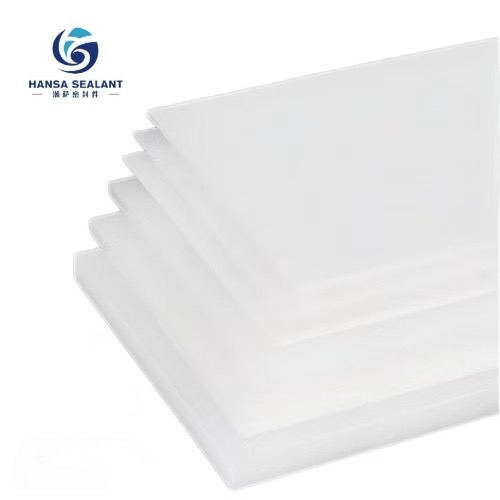
Professional Introduction to PVDF Sheet (Polyvinylidene Fluoride Sheet)
PVDF sheet is a high-performance engineering plastic sheet primarily made from polyvinylidene fluoride. It holds a significant position in the industrial field due to its excellent overall properties. This material possesses a unique molecular structure, endowing it with both the superior chemical stability of fluoroplastics and the good mechanical properties of engineering plastics.
Material Characteristics
The most notable features of PVDF sheet are its exceptional weather resistance and chemical stability. It can be used long-term within a temperature range of -40°C to 150°C, with an outdoor service life exceeding 20 years without significant aging. Its chemical corrosion resistance is particularly outstanding, enabling it to withstand most strong acids, strong alkalis, and organic solvents, including 98% concentrated sulfuric acid and 40% sodium hydroxide solution.
In terms of mechanical properties, PVDF sheet has a tensile strength of 40-50 MPa and a flexural strength of 60-70 MPa, combining good rigidity and toughness. It also exhibits excellent electrical insulation properties, with high volume resistivity and dielectric strength, making it an ideal insulating material. Furthermore, PVDF sheet achieves a UL94 V-0 flame retardant rating, demonstrating strong performance in fire safety.
Product Types
Based on different application needs, several specialized varieties of PVDF sheet have been developed. Standard PVDF sheet maintains the material's optimal chemical stability; glass fiber-reinforced PVDF sheet significantly improves mechanical strength through the addition of reinforcing materials; conductive PVDF sheet acquires anti-static functionality by incorporating special fillers; food-grade PVDF sheet undergoes special treatment to comply with strict food safety standards.
Application Fields
In the chemical industry, PVDF sheet is widely used as reactor linings, storage tank linings, and pipeline anti-corrosion materials, effectively solving equipment protection problems in highly corrosive environments. In the electronics and electrical industry, it is applied in semiconductor equipment components, ultrapure water systems, and other scenarios with extremely high material purity requirements. The construction sector utilizes its excellent weather resistance for use as curtain wall materials and roofing panels. Additionally, PVDF sheet plays an irreplaceable role in water treatment equipment and medical devices.
Processing and Installation
PVDF sheet can be processed using conventional thermoplastic processing methods. For thermoforming, it is recommended to control the temperature within the range of 170-200°C; welding can be performed using hot air welding or hot plate welding techniques; it is also suitable for various machining operations. During installation, it is important to allow for appropriate thermal expansion gaps. It is recommended to use stainless steel or PVDF-specific fasteners and avoid direct contact with sharp objects.
Market and Development
The current PVDF sheet market consists of both international brands and domestic manufacturers. International brands dominate in high-end application areas, while domestic products offer significant cost-performance advantages. With the rapid development of the new energy industry, the application of PVDF sheet in emerging fields such as lithium batteries and photovoltaics is growing rapidly. In the future, with advancements in material modification technology and optimization of production processes, PVDF sheet is expected to replace traditional materials in more fields, offering broad application prospects.
Basic Performance Parameters
Performance Indicator
Pure PVDF Sheet
Glass Fiber Reinforced PVDF Sheet
Conductive PVDF Sheet
Test Standard
Density (g/cm³)
1.77-1.79
1.85-1.90
1.80-1.85
ISO 1183
Tensile Strength (MPa)
40-50
60-80
45-55
ISO 527
Flexural Strength (MPa)
60-70
90-110
65-75
ISO 178
Impact Strength (kJ/m²)
15-20
25-35
18-25
ISO 179
Heat Deflection Temp. (℃ @1.82MPa)
140-150
155-165
145-155
ISO 75
Surface Resistance (Ω)
>10¹⁵
-
10³-10⁶
IEC 60093
Chemical Resistance
Chemical Medium
Concentration
Resistance (23°C)
Max. Service Temp.
Hydrochloric Acid
37%
Excellent
60°C
Sulfuric Acid
98%
Good
40°C
Sodium Hydroxide
40%
Excellent
80°C
Acetone
100%
Good
50°C
Diesel
-
Excellent
120°C
Specification Parameters
Type
Thickness Range (mm)
Width Range (mm)
Length Range (mm)
Tolerance Standard
Standard Sheet
1-50
600-2000
1000-4000
ISO 7823
Precision Sheet
0.5-30
300-1500
500-3000
ISO 2768
Reinforced Sheet
2-60
300-1500
1000-4000
ISO 7823
Application Selection Guide
Application Scenario
Recommended Type
Key Parameter Requirement
Service Life
Chemical Corrosion Protection
Pure PVDF Sheet
Corrosion Resistance Grade A
10-15 years
Electronic Equipment
Conductive PVDF Sheet
Surface Resistance < 10⁶ Ω
5-8 years
Building Curtain Wall
Reinforced PVDF Sheet
UV Resistance Grade 5
20+ years
Food Processing
Food-Grade PVDF Sheet
FDA Certification
3-5 years


