
Productscpzx

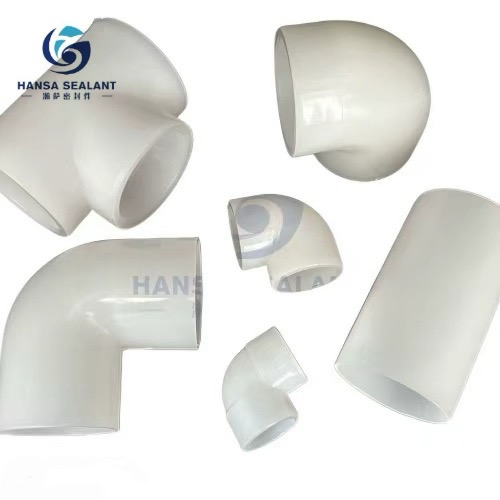
Professional Introduction to PVDF Machined Parts
PVDF machined parts are various functional components precisely manufactured from polyvinylidene fluoride (PVDF) through mechanical machining. As high-end engineering plastic products, they perfectly inherit the excellent properties of PVDF material while achieving more complex structural designs and stricter dimensional accuracy requirements through precision machining.
Core Performance Advantages
PVDF machined parts possess three core advantageous characteristics:
Exceptional Chemical Resistance: Can withstand highly corrosive media such as 98% concentrated sulfuric acid and 68% nitric acid, making them irreplaceable in chemical anti-corrosion applications.
Excellent Mechanical Properties: Maintain a tensile strength of 40-50 MPa after machining, coupled with outstanding impact resistance.
Outstanding Temperature Resistance: Long-term service temperature range of -40°C to 150°C, with short-term tolerance up to 180°C.
Primary Manufacturing Processes
PVDF machined parts are mainly produced through the following processes:
Precision Injection Molding: Suitable for mass production of small, complex parts, achieving dimensional accuracy up to ±0.05mm.
CNC Machining: Ideal for low-volume, high-precision part machining, achieving surface roughness down to Ra 0.8.
Thermoforming: Used for manufacturing large shell-type parts, with maximum processing dimensions up to 2000×1000mm.
Welding: Utilizes hot plate welding or hot air welding techniques, achieving weld seam strength up to 85% of the base material.
Typical Application Scenarios
Chemical Anti-Corrosion Field
Pump and Valve Components: Impellers, valve cores, sealing rings, etc.
Piping Systems: Flanges, pipe fittings, sight glasses, etc.
Reaction Equipment: Agitator blades, lining plates, etc.
Electronics and Electrical Field
Semiconductor Equipment: Wafer clamps, cleaning tanks.
Lithium Battery Production: Electrolyte delivery components.
Ultrapure Water Systems: Pipeline connectors.
Environmental Engineering Field
Exhaust Gas Treatment: Scrubber tower packing.
Water Treatment: Membrane module supports.
Solid Waste Treatment: Containers for corrosive media.
Key Quality Control Points
High-quality PVDF machined parts require strict control over:
Dimensional Accuracy: Tolerances for critical mating parts controlled within ±0.1mm.
Surface Quality: Ra ≤ 1.6μm, free from machining stress concentrations.
Material Purity: Metal ion content ≤ 50ppb (for electronic grade requirements).
Pressure Testing: Leak-free under 1.5 times working pressure.
Selection Considerations
Media Compatibility: Chemical compatibility with specific media must be confirmed.
Temperature & Pressure: Long-term operating temperature is recommended not to exceed 140°C.
Mechanical Load: Glass fiber-reinforced grades are recommended for dynamic load applications.
Certification Requirements: FDA or USP Class VI certification is required for food and medical applications.
With advances in machining technology, PVDF machined parts are developing towards higher precision and more complex structures. Their application breadth and depth are continuously expanding in high-end manufacturing fields such as new energy and semiconductors.
Detailed Material Property Parameters Table
Performance Indicator
Standard Grade
Glass Fiber Reinforced Grade (30%)
Carbon Fiber Reinforced Grade (20%)
Electronic Grade (E-Grade)
Medical Grade (M-Grade)
Test Method
Density (g/cm³)
1.78 ± 0.01
1.88 ± 0.02
1.82 ± 0.02
1.77 ± 0.01
1.78 ± 0.01
ISO 1183-2019
Tensile Strength (MPa)
48 ± 2
75 ± 5
85 ± 5
52 ± 2
50 ± 2
ISO 527-2:2012
Elongation at Break (%)
25 ± 5
8 ± 2
6 ± 1
20 ± 3
22 ± 3
ISO 527-2:2012
Flexural Modulus (GPa)
2.0 ± 0.1
3.2 ± 0.2
4.0 ± 0.3
2.2 ± 0.1
2.1 ± 0.1
ISO 178:2019
Notched Impact Strength (kJ/m²)
18 ± 2
30 ± 3
28 ± 3
20 ± 2
19 ± 2
ISO 179-1:2010
Heat Deflection Temp. (℃)
142 ± 2
158 ± 3
165 ± 3
145 ± 2
143 ± 2
ISO 75-2:2013
Linear Expansion Coef. (10⁻⁵/℃)
12 ± 1
8 ± 0.5
7 ± 0.5
11 ± 1
12 ± 1
ASTM E831-19
Volume Resistivity (Ω·cm)
>10¹⁶
>10¹⁶
10³-10⁶
>10¹⁷
>10¹⁶
IEC 60093:1980
Product Specification Ranges
| Product Type | Outer Diameter / Length Range | Wall Thickness / Thickness Range | Tolerance Grade |
| Pipe Fittings | Φ10 - 500 mm | 2 - 30 mm | ISO 2768-m |
| Flanges | DN15 - DN300 | 5 - 50 mm | EN 1092-1 |
| Shells/Enclosures | 100 - 2000 mm | 3 - 60 mm | ISO 2768-f |
| Precision Parts | 1 - 200 mm | 0.5 - 20 mm | ISO 2768-c |
Application Field Reference
Application Industry
Typical Components
Critical Requirement (Performance)
Recommended Material Grade
Chemical Anti-Corrosion
Pump Housings, Valve Seats
Resistance to 98% Sulfuric Acid
Glass Fiber Reinforced
Semiconductors
Wafer Clamps
Metal Ions < 50 ppb
Electronic Grade
Lithium Batteries
Electrolyte Distributors
UL94 V0 Flame Retardant
Standard Grade
Environmental Engineering
Exhaust Gas Scrubber Packing
Resistance to Alternating Acid/Alkali at 80°C
USP Class VI Certification
Medical Equipment
Dialyzer Housings
USP Class VI Certification
Medical Grade


