
Productscpzx

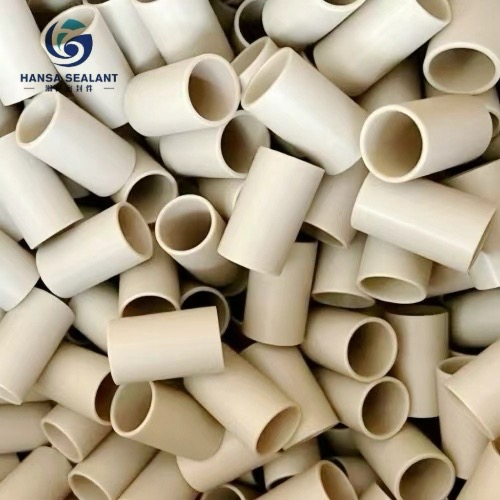
Professional Introduction to PEEK Tube (Polyetheretherketone Tube)
PEEK tubes are engineering plastic tubes made from the high-performance thermoplastic material polyetheretherketone (PEEK). Renowned for their exceptional overall properties, they serve as an ideal replacement for metal tubing. This specialty engineering plastic tube maintains excellent mechanical strength and dimensional stability, with a continuous service temperature of up to 260°C and the ability to withstand short-term exposure to 300°C.
In terms of mechanical properties, PEEK tubes achieve a tensile strength of 90-100 MPa and a flexural modulus of 3.6-4.0 GPa, maintaining good creep resistance even in high-temperature environments. Their chemical stability is particularly outstanding, as they can withstand corrosion from most strong acids, strong bases, and organic solvents, offering significant advantages in the chemical industry.
Based on the type of reinforcement, PEEK tubes are mainly categorized into three types: Standard, Glass Fiber Reinforced, and Carbon Fiber Reinforced. Standard PEEK tubes are suitable for general industrial applications. Adding 30% glass fiber increases the flexural modulus to 8.0-9.5 GPa. Carbon fiber reinforced types further elevate the tensile strength to 170-200 MPa, making them especially suitable for high-pressure environments.
Regarding application fields, PEEK tubes are widely used in corrosive fluid transfer systems within chemical processing equipment, where they can completely replace traditional stainless steel piping. In the semiconductor industry, their ultra-pure grade is used for high-purity chemical delivery systems. The medical field utilizes their biocompatibility to manufacture various surgical catheters and implantable device components. In aerospace, they are primarily applied in fuel and hydraulic systems, effectively reducing equipment weight.
Processing PEEK tubes requires specialized techniques, with thermoforming temperatures needing to be controlled between 360-400°C. For thin-walled tubes used in precision medical devices, laser welding processes can be employed, while thick-walled tubes for industrial use are better suited for machining. During installation, it is particularly important to allow for a 0.1% thermal expansion margin to accommodate dimensional changes caused by temperature variations.
Currently, leading brands in the market include international names such as Victrex (UK) and Solvay (Belgium), as well as domestic leaders like Kingfa Science & Technology. Domestic PEEK tubes offer price advantages of up to 40% and shorter lead times while achieving performance close to that of imported products.
With advancements in material technology, PEEK tubes are continually expanding into new application fields. Their high-temperature and corrosion-resistant properties are fully leveraged in emerging industries like semiconductor manufacturing and new energy batteries. In the future, as costs decrease further, PEEK tubes are expected to replace traditional metal piping in even more sectors.
Material Characteristics
PEEK (Polyetheretherketone) tubes are engineering plastic tubes made from high-performance thermoplastic polymer, possessing the following core characteristics:
High-Temperature Resistance
Continuous Service Temperature: Up to 260°C (short-term up to 300°C)
Glass Transition Temperature (Tg): 143°C
Melting Point (Tm): 343°C
Mechanical Properties
Tensile Strength: 90-100 MPa
Flexural Modulus: 3.6-4.0 GPa
Creep Resistance: Maintains dimensional stability under high temperature and pressure.
Chemical Resistance
Resistant to strong acids (except concentrated sulfuric acid), strong bases, and organic solvents.
Hydrolysis resistant (stable performance in steam environments).
Other Characteristics
Flame Retardancy: UL94 V-0 rating (at 1.5mm thickness)
Biocompatibility: Complies with ISO 10993 medical-grade standards.
Product Types & Specifications
| Type | Characteristics | Typical Specification Range |
| Standard Tube | Unreinforced, general purpose | OD: 1-200mm, Wall Thickness: 0.5-20mm |
| Glass Fiber Reinforced Tube | Contains 30% Glass Fiber, increased rigidity | OD: 2-150mm, Wall Thickness: 1-15mm |
| Carbon Fiber Reinforced Tube | Contains 30% Carbon Fiber, excellent wear resistance | OD: 5-100mm, Wall Thickness: 2-10mm |
| Medical Grade Tube | Ultra-pure material, non-leachable | OD: 0.5-50mm, Wall Thickness: 0.2-5mm |
Processing & Joining Techniques
| Process | Parameter Requirements | Applicable Tube Types |
| Thermoforming | Heating temperature: 360-400°C | Standard tubes with wall thickness <10mm |
| Machining | Turning feed: 0.1-0.3 mm/rev | Reinforced thick-walled tubes |
| Welding | Laser welding (wavelength 808nm) | Medical grade thin-walled tubes |
| Bonding | Epoxy resin / PEEK-specific adhesives | Non-pressure bearing connections |
Basic Performance Parameter Table
| Performance Indicator | Standard PEEK Tube | 30% Glass Fiber Reinforced | 30% Carbon Fiber Reinforced | Test Standard |
| Density (g/cm³) | 1.30 - 1.32 | 1.45 - 1.50 | 1.40 - 1.43 | ISO 1183 |
| Tensile Strength (MPa) | 90 - 100 | 140 - 160 | 170 - 200 | ISO 527 |
| Flexural Modulus (GPa) | 3.6 - 4.0 | 8.0 - 9.5 | 12 - 15 | ISO 178 |
| Heat Deflection Temp. (°C @1.82 MPa) | 152 | 315 | 320 | ISO 75 |
| Burst Pressure (MPa, Ø10mm x 1mm) | 25 | 45 | 55 | ISO 1167 |
| Surface Resistivity (Ω) | >10¹⁵ | 10⁴ - 10⁶ | 10² - 10⁴ | IEC 60093 |
Chemical Resistance Performance Table
| Chemical Medium | Concentration | Resistance (23°C) | Maximum Service Temperature |
| Hydrochloric Acid | 37% | Excellent | 60°C |
| Sulfuric Acid | 50% | Good | 40°C |
| Sodium Hydroxide | 40% | Excellent | 80°C |
| Acetone | 100% | Excellent | 50°C |
| Diesel Fuel | - | Excellent | 120°C |


