
Productscpzx

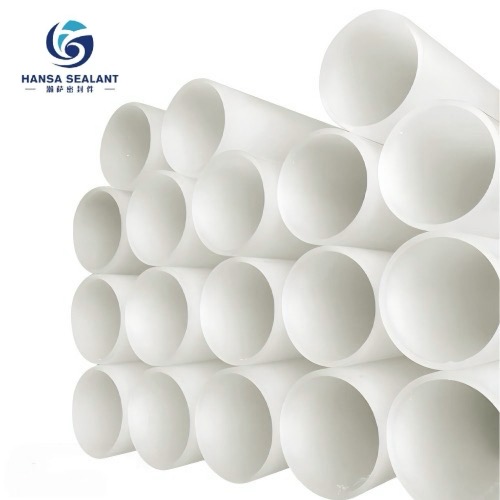
Professional Introduction to PVDF Pipes (Polyvinylidene Fluoride Pipes)
PVDF pipes are high-performance engineering plastic pipes primarily made from polyvinylidene fluoride. Due to their excellent overall properties, they have become one of the preferred piping materials for corrosive media transport systems.
Material Characteristics
PVDF pipes possess the following outstanding characteristics:
Exceptional Chemical Resistance: Can withstand most strong acids, strong alkalis, and organic solvents, including corrosive media such as 70% sulfuric acid, 37% hydrochloric acid, and 40% sodium hydroxide.
Excellent Temperature Resistance: Long-term service temperature range from -40°C to 140°C, with short-term tolerance up to 150°C.
Good Mechanical Strength: Tensile strength of 45-55 MPa, flexural strength of 60-75 MPa, combining rigidity and toughness.
Outstanding Weather Resistance: Excellent UV resistance, with an outdoor service life exceeding 15 years.
Excellent Electrical Properties: Volume resistivity >10¹⁶ Ω·cm, dielectric strength 20-25 kV/mm.
Product Types
Based on application needs, PVDF pipes are mainly divided into:
Standard Grade PVDF Pipes: Basic model, suitable for general corrosive media transport.
Glass Fiber Reinforced PVDF Pipes: Contain 30% glass fiber, increasing mechanical strength by over 50%.
Conductive PVDF Pipes: Possess anti-static functionality, with adjustable surface resistance.
Ultrapure PVDF Pipes: Metal ion content <50 ppb, suitable for the semiconductor industry.
Main Application Areas
Chemical Industry: Transport systems for corrosive media like acids and alkalis.
Electronics Industry: Ultrapure water transport, chemical distribution systems.
Environmental Engineering: Wastewater treatment, exhaust gas purification equipment.
Pharmaceuticals & Food: Pharmaceutical equipment, food processing pipelines.
New Energy: Lithium battery electrolyte transport systems.
Installation and Maintenance
PVDF pipes can be connected using the following methods:
Hot Melt Butt Fusion: Suitable for pipe diameters DN20-DN315.
Flange Connection: Suitable for pipe diameters DN50-DN400.
Socket Fusion Welding: Suitable for small-diameter pipes.
Important installation considerations:
Support spacing should not exceed 1.5m (for pipes below DN50).
Thermal expansion compensation is required (expansion coefficient 0.12mm/m·°C).
Pressure testing should be at 1.5 times the working pressure.
Quality Certifications
PVDF pipes have obtained numerous international certifications:
Drinking Water Certification: NSF/ANSI 61
Food Contact Certification: FDA 21 CFR 177
Semiconductor Standard: SEMI F57
Flame Retardant Certification: UL94 V-0
With advancements in material technology, the application of PVDF pipes continues to expand in emerging fields such as new energy and semiconductors. Their excellent corrosion resistance and cost advantages compared to metal pipes ensure broad development prospects in chemical anti-corrosion applications.
Basic Physical Property Parameters Table
| Performance Indicator | Standard Grade | Glass Fiber Reinforced Grade | Conductive Grade | Ultrapure Grade | Test Standard |
| Density (g/cm³) | 1.78 | 1.85 | 1.82 | 1.77 | ISO 1183 |
| Tensile Strength (MPa) | 48 | 75 | 52 | 50 | ISO 527 |
| Burst Pressure (MPa) | 12.5 | 18.0 | 14.0 | 13.0 | ISO 1167 |
| Thermal Conductivity (W/m·K) | 0.19 | 0.25 | 0.22 | 0.18 | ASTM E1530 |
| Vicat Softening Point (°C) | 140 | 155 | 145 | 142 | ISO 306 |
Standard Specification Dimensions
| Nominal Diameter (mm) | Outside Diameter (mm) | Wall Thickness (mm) | Pressure Rating (PN) |
| 16 | 16.0 ± 0.2 | 1.5 ± 0.2 | 6.3 |
| 20 | 20.0 ± 0.3 | 1.9 ± 0.2 | 6.3 |
| 25 | 25.0 ± 0.3 | 2.3 ± 0.3 | 6.3 |
| 32 | 32.0 ± 0.3 | 2.9 ± 0.3 | 6.3 |
| 40 | 40.0 ± 0.4 | 3.7 ± 0.4 | 6.3 |
| 50 | 50.0 ± 0.5 | 4.6 ± 0.5 | 6.3 |
Chemical Resistance
| Chemical Medium | Concentration | Temperature (°C) | Resistance |
| Sulfuric Acid | ≤70% | 60 | Excellent |
| Hydrochloric Acid | ≤37% | 80 | Excellent |
| Nitric Acid | ≤40% | 40 | Good |
| Sodium Hydroxide | ≤40% | 80 | Excellent |
| Acetone | 100% | 25 | Acceptable |
| Ethanol | 100% | 60 | Excellent |
Pipe Specification Parameters
| Nominal Diameter (mm) | OD Tolerance (mm) | Wall Thickness Series (mm) | Out-of-Roundness Tolerance | Straightness (mm/m) |
| 10-32 | ±0.2 | 1.5 / 2.0 / 3.0 | 0.5% | ≤2 |
| 40-63 | ±0.3 | 2.0 / 3.0 / 4.0 | 0.4% | ≤1.5 |
| 75-160 | ±0.5 | 3.0 / 4.0 / 6.0 | 0.3% | ≤1 |
| 200-400 | ±0.8 | 5.0 / 8.0 / 10.0 | 0.2% | ≤0.8 |
PEEK ROD


