
Productscpzx

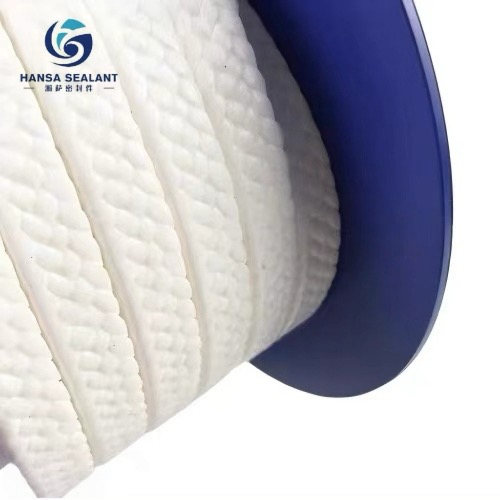
Professional Introduction to Acrylic Packing (Acrylic Fiber Sealing Packing)
Acrylic packing is a new type of environmentally friendly sealing material made from modified acrylic fibers through special weaving processes. It combines the sealing performance of traditional packing with modern environmental characteristics.
Material Composition:
Base Material: High-purity acrylic polymer fibers
Impregnating Agent: Silicone-based or PTFE composite lubricants
Reinforcing Materials: Some models include graphite or mica fillers
Performance Parameters:
Temperature Range: -40℃ to 200℃ (short-term up to 230℃)
Pressure Tolerance: ≤3.5 MPa (rotary) / ≤15 MPa (reciprocating)
Linear Speed: ≤12 m/s (in water media)
Friction Coefficient: 0.08–0.12 (dynamic)
Key Advantages:
Environmentally friendly and non-toxic; free of asbestos and heavy metals
Excellent chemical resistance; suitable for pH 2–12
High fiber strength and good extrusion resistance
Long-lasting self-lubrication with extended maintenance cycles
Model
Applicable Media
Features
Industry Certification
AM-100
Water/Oil
General-purpose
ISO 9001
AM-200
Acid/Alkali Solutions
Enhanced corrosion resistance
CE Certification
AM-300
High-Temperature Steam
Enhanced corrosion resistance
API 622
AM-400
Food/Pharmaceutical
Fully FDA-compliant materials
FDA 21 CFR
Petrochemical equipment: Pump and valve seals in refineries
Power industry: Boiler feed pump shaft seals
Food processing: Dynamic seals in filling equipment
Pharmaceutical machinery: Reactor agitator shaft seals
Environmental engineering: Sewage treatment pump seals
Pre-treatment Requirements:
Surface roughness of shaft/rod: Ra ≤ 0.8 µm
Stuffing box cleanliness: Sa2.5 grade
Installation Process:
Use spiral progressive compression method
Preload per ring: 30–50 N/cm
Total compression: 18–22%
Running-in and Commissioning:
Initial leakage: ≤100 ml/min
Temperature rise during run-in: ≤35℃
Re-check tightness after 24 hours
Routine Inspections:
Measure leakage changes monthly
Replenish lubricant quarterly (food-grade requires specific grease)
Replacement Criteria:
Continuous leakage >300 ml/min
Packing hardness increases by >50%
Visible fiber pulverization
Compared to traditional grease-impregnated packing, acrylic packing offers:
Service life extended by 2–3 times
Friction power consumption reduced by 40%
Maintenance cycles extended to 12–18 months
Full compliance with RoHS 2.0 environmental standards
Media Compatibility:
Avoid contact with ketones, esters, and organic solvents
Special models required for strongly oxidizing media
Operating Conditions:
Square cross-section recommended for high-pressure applications
Water seal rings required for high-speed rotating equipment
Certification Requirements:
AM-400 series mandatory for food/pharmaceutical industries
REACH compliance proof required for exported equipment
Acrylic packing represents the development direction of modern sealing materials. While maintaining excellent sealing performance, it meets increasingly stringent environmental requirements, making it particularly suitable for industrial scenarios requiring long-term stable operation.
Performance Indicator
AM-100 Standard
AM-200 Corrosion-Resistant
AM-300 High-Temperature
AM-400 Food Grade
Test Standard
Density (g/cm³)
1.15–1.25
1.20–1.30
1.35–1.45
1.10–1.20
ASTM D792
Operating Temp. (°C)
-40–180
-30–200
-20–230
-40–160
ISO 6068
Operating Pressure (MPa)
≤3.0
≤3.5
≤4.0
≤2.5
ISO 6003
Linear Speed (m/s)
≤10
≤8
≤12
≤6
DIN 24960
Friction Coefficient
0.10–0.12
0.08–0.10
0.06–0.08
0.12–0.15
ASTM D1894
Component
AM-100 Content
AM-200 Content
AM-300 Content
AM-400 Content
Acrylic Fiber
85%
80%
75%
90%
PTFE Impregnant
10%
15%
10%
5%
Graphite Additive
–
–
10%
–
Mica Powder
5%
5%
5%
5%
Heavy Metal Content
≤50 ppm
≤30 ppm
≤100 ppm
≤5 ppm


