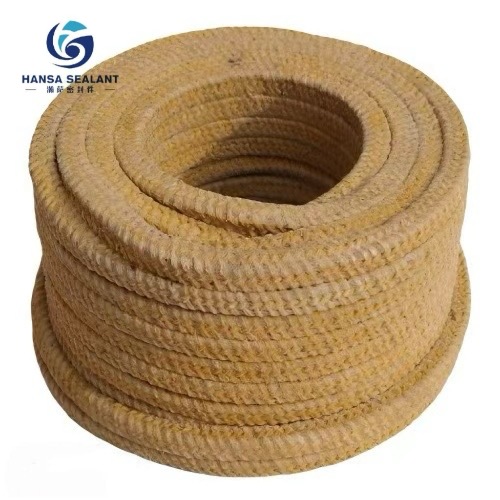
Professional Introduction to Grease-Impregnated Packing
Grease-impregnated packing is a traditional mechanical sealing packing made by impregnating a fiber substrate with lubricating grease. It is widely used in various rotating equipment and valve seals. As an economical and reliable sealing solution, it maintains an important position in the industrial field.
Core Characteristics
Grease-impregnated packing is woven from high-quality natural or synthetic fibers and treated with special grease impregnation, resulting in the following characteristics:
Excellent Self-Lubrication: Continuous grease exudation reduces shaft sleeve wear.
Good Sealing Performance: Fiber structure adapts to minor surface imperfections on the shaft.
Temperature Adaptability: Standard type: -20°C to 120°C; High-temperature type: up to 280°C.
Pressure Resistance: Can meet sealing requirements for reciprocating motion up to 10 MPa.
Cost-Effectiveness: Cost is only 1/5 to 1/3 of mechanical seals.
Main Types
Depending on the usage environment and medium, it is mainly divided into four categories:
General Purpose: Ramie fiber + mineral grease, suitable for normal-temperature clean water media.
Corrosion-Resistant Type: PTFE fiber + fluorinated grease, resistant to acid/alkali media.
High-Temperature Type: Asbestos fiber + synthetic grease, specialized for steam environments.
Food Grade: Pure cotton fiber + food-grade white oil, compliant with hygiene standards.
Typical Applications
Pump Shaft Seals: Main shaft seals for IS, SH type centrifugal pumps.
Valve Seals: Stuffing box seals for gate valves, globe valve stems.
Agitation Equipment: Dynamic seals for reactor agitator shafts.
Marine Machinery: Seals for steering gears, bilge pumps, and other damp environments.
Installation Key Points
Correct installation is crucial for ensuring sealing effectiveness:
Preparation: Thoroughly clean the stuffing box; check shaft surface smoothness.
Cutting to Size: Cut at a 45° angle; measure length precisely.
Layered Installation: Compress each ring tightly; stagger adjacent ring cuts by 90°.
Preload Adjustment: Retain 20% compression allowance; tighten further after operation begins.
Maintenance Recommendations
Initial operation requires a 4-8 hour run-in period.
Normal leakage should be controlled at 40-60 drops/minute.
Regularly replenish lubricating grease (recommended cycle: 3-6 months).
Check packing condition quarterly for high-temperature applications.
Selection Guide
Key considerations during selection:
Medium characteristics (acidity/alkalinity, solid content, etc.)
Operating temperature and pressure ranges
Shaft motion type (rotary/reciprocating) and linear speed
Industry-specific requirements (e.g., food, pharmaceutical hygiene standards)
With advancements in sealing technology, grease-impregnated packing is gradually being replaced by mechanical seals, but it still holds advantages in the following scenarios:
Low-speed, heavy-duty equipment
Operating conditions with limited maintenance access
Budget-constrained retrofit projects
Emergency situations requiring rapid repair
Properly selected and installed grease-impregnated packing can achieve a service life of 1-2 years, making it a highly cost-effective sealing solution.
Basic Performance Parameters
Material Composition Analysis
Specification & Dimension Parameters