
Productscpzx

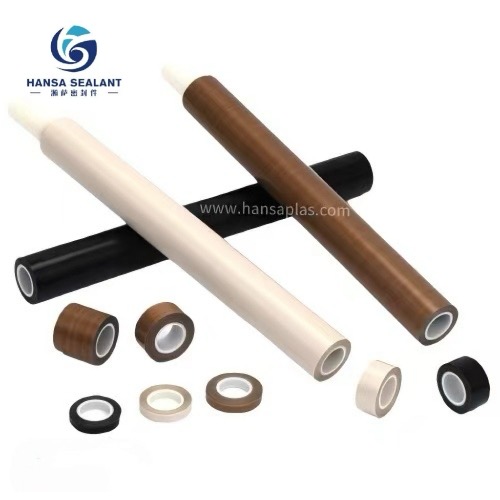
Professional Introduction to PTFE High-Temperature Fabric (PTFE Fabric)
Material Definition
PTFE fabric is a specialized industrial textile made with polytetrafluoroethylene (PTFE) as the core material, achieved through the following two processes:
Pure PTFE Woven Fabric: Directly woven/knitted from PTFE fibers.
Composite Fabric: Glass fiber/aramid base material treated with PTFE impregnation or coating.
Core Performance Advantages
Extreme Environment Tolerance
Temperature Range: Continuous use from -200°C to +260°C (short-term up to 300°C).
Chemical Stability: Resistant to 98% concentrated sulfuric acid, 50% sodium hydroxide, and all organic solvents.
Weather Resistance: Strength retention >95% after 2000 hours of UV exposure.
Unique Surface Properties
Low Friction Coefficient: As low as 0.05 (excellent self-lubrication).
Low Surface Energy: 18 mN/m (non-stick performance surpasses Teflon coatings).
Adjustable Physical Properties
Thickness Range: 0.05 mm (ultra-thin) to 5 mm (heavy-duty liner).
Tensile Strength: Up to 1500 N/cm (aramid-based reinforced type).
Typical Industrial Applications
Application Field
Specific Examples
Key Requirements
Chemical Corrosion Protection
Reactor linings, pickling tank seals
Hydrofluoric acid resistance + anti-permeation
Environmental Engineering
Filter bags for waste incineration plants (260°C)
Acid corrosion resistance + 99% PM2.5 capture efficiency
Food & Pharmaceutical
Baking conveyor belts, pharmaceutical packaging liners
FDA certification + non-leachable
Energy Equipment
Nuclear power plant seals, fuel cell membranes
Radiation resistance + proton conductivity >0.1 S/cm
Technological Frontiers
Functional Integration
Conductive Type: Added carbon nanotubes (surface resistivity 10³ Ω).
Medical Grade: Expanded PTFE (ePTFE) for vascular patches.
Process Innovation
PTFE fabric via nanofiber electrospinning (filtration precision down to 0.1 μm).
3D woven reinforced structure (PV value exceeding 3 MPa·m/s).
Selection Considerations
Mechanical Strength Matching
Choose aramid-based PTFE fabric for dynamic sealing applications (anti-creep).
Glass fiber-based fabric can be used for static sealing at lower cost.
Certification Requirements
Food Industry: Must comply with FDA 21 CFR 177.1550.
EU Market: Must pass REACH SVHC testing.
Cost Control
Domestic alternatives offer ~80% of import performance at ~40% lower cost.
Special specifications (e.g., <0.1mm) require 8-week lead time.
This material is gradually replacing traditional asbestos and rubber products, demonstrating unique value in emerging fields such as new energy battery separators and semiconductor cleanrooms. Customized selection based on specific operating parameters (temperature/medium/pressure) is recommended.
Basic Performance Parameter Comparison
Performance Indicator
Pure PTFE Woven Fabric
PTFE-Coated Glass Fiber Fabric
PTFE-Impregnated Aramid Fabric
Test Standard
Thickness (mm)
0.2 - 5.0
0.3 - 1.5
0.5 - 3.0
ISO 5084
Weight (g/m²)
300 - 1200
400 - 1500
600 - 2000
ISO 3801
Tensile Strength (N/cm) (Warp/Weft)
300-800 / 250-700
200-500 / 180-400
800-1500 / 700-1200
ISO 13934-1
Elongation at Break (%)
15 - 40
10 - 30
8 - 25
ISO 13934-2
Air Permeability (L/m²·s)
>500
5 - 25 (Controllable)
N/A
ISO 9237
Friction Coefficient
0.05 - 0.1
0.08 - 0.15
0.03 - 0.08
ASTM D1894
Environmental Resistance Performance Table
Environmental Condition
Pure PTFE Woven Fabric
PTFE Composite Fabric
Ultimate Tolerance
Long-term Temperature (°C)
-200 ~ +260
-180 ~ +280
Short-term 300°C
Acid Resistance
Resists 98% Sulfuric Acid
Resists conc. HCl + HF
Except molten alkali metals
Alkali Resistance
Resists 50% NaOH
Resists saturated alkali
Below 80°C
Solvent Resistance
All organic solvents
Partial swelling (acetone type)
Does not dissolve
UV Aging (2000h)
Strength retention >95%
Surface chalking <5%
10-year outdoor lifespan
Functional Product Parameters
Type
Conductive PTFE Fabric
Food-Grade PTFE Fabric
Reinforced PTFE Fabric
Surface Resistivity (Ω)
10³ - 10⁶
N/A
N/A
FDA Certification
N/A
Complies with 21 CFR 177
N/A
Reinforcement Method
Carbon fiber blending
No additives
Glass fiber/aramid base fabric
PV Value (MPa·m/s)
-
-
>2.0
Color
Black
Pure white
Gray/Brown
Industrial Application Selection Table
Application Scenario
Recommended Type
Key Parameter Requirements
Service Life
Chemical Pipeline Lining
2mm Impregnated Aramid Fabric
HF resistance + anti-creep
5-8 years
High-Temperature Flue Gas Filtration
1.5mm Coated Fabric
0.5μm pore size @260°C
3-5 years
Food Conveyor Belt
0.8mm Food-Grade Fabric
Non-leachable + easy to clean
2-3 years
Nuclear Power Plant Seals
3mm Reinforced Woven Fabric
Gamma radiation resistance >10⁶ Gy
Over 10 years
Aerospace Seals
0.3mm Expanded Fabric
Density 0.6 g/cm³
Replaced per flight h
Tel:13852950345
Email:sandy@hansasealant.com


