
Productscpzx

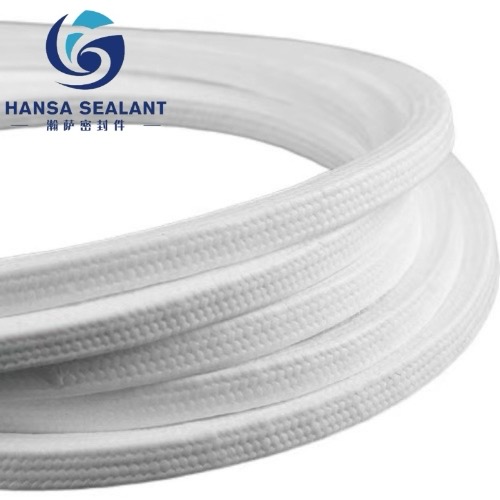
Introduction to Oil-Impregnated PTFE Packing
Oil-impregnated PTFE packing refers to braided packing made from polytetrafluoroethylene (PTFE) that contains or is impregnated with lubricating agents. It is a high-performance dynamic/static sealing material specifically designed for shaft seals and valve stem seals in equipment such as rotary pumps, valves, and agitators.
Its core concept is to combine the excellent chemical inertness and low friction properties of PTFE with the additional lubrication and filling effects of lubricants, thereby achieving lower wear, reduced shaft power loss, and longer seal life.
Core Structure and Characteristics
This packing is not pure PTFE but a composite material:
Base Materials:
PTFE Fibers or Filaments: Form the structural skeleton of the packing, providing unparalleled resistance to chemical corrosion and high/low temperatures (-200°C to +260°C).
Lubricant: Typically impregnated with special greases, silicone oils, or PTFE dispersions. This is the key to its "oil-impregnated" nature.
Working Principle:
After installation and compression, the internal lubricant slowly exudes to the friction surface between the packing and the shaft (or valve stem).
This lubricating film significantly reduces startup and running torque, minimizes frictional heat generation, and protects equipment sleeves from wear.
PTFE fibers themselves have an extremely low coefficient of friction, working synergistically with the lubricant to achieve excellent sealing and lubrication.
Main Features and Advantages:
Low Friction & High Lubrication: Low startup and running torque, saves energy, extends equipment life.
Excellent Chemical Stability: Resistant to almost all strong acids, alkalis, organic solvents, and chemicals (except molten alkali metals and fluorine gas).
Clean and Non-Polluting: Does not produce black contamination like graphite packing, suitable for industries with high cleanliness requirements like food, pharmaceuticals, and papermaking.
Long Service Life: Good wear resistance, self-lubricating properties reduce wear, service life is typically several times longer than ordinary natural fiber packing.
Easy to Use: Good flexibility, easy to cut and install, does not require pre-soaking like dry packing.
Main Application Fields
Due to its cleanliness and corrosion resistance, oil-impregnated PTFE packing is widely used in applications where contamination is prohibited or conditions are highly corrosive:
Food & Beverage Processing: Seals for pumps, mixers, filling equipment (requires FDA-approved food-grade lubricants).
Pharmaceutical & Bioengineering: Seals for reactors, centrifuges, transfer pumps, requiring absolute cleanliness and sterility.
Chemical & Petrochemical Industry: Seals for pumps and valves handling various corrosive media such as acids, alkalis, solvents, and hydrocarbons.
Papermaking Industry: Equipment seals in bleaching, washing, and pulp transfer processes.
Water Treatment: A high-performance, maintenance-free sealing option.
Usage Methods and Precautions
Installation: Use traditional staggered cut (45° or 90°) installation, with each ring's cut offset by 90°~120°. Use dedicated tools to evenly tighten the gland (packing box cover), avoid excessive unilateral tightening.
Adjustment: Initial operation requires slight leakage for cooling and lubrication. After running for a period (e.g., 30 minutes), the gland should be tightened again until ideal minimal leakage or leak-free state is achieved.
Precautions:
Temperature Limitation: While PTFE is heat-resistant, the internal lubricant has an evaporation temperature limit (typically < 200°C). At very high temperatures, the lubricant evaporates quickly, causing the packing to dry out and friction to increase.
Shaft Requirements: High requirements for shaft or sleeve surface hardness (typically HRC ≥ 50) and finish (Ra < 0.8 µm) to minimize wear.
Pressure: Suitable for medium to low-pressure conditions. In high-pressure environments, it may need to be used with flow-restricting rings or similar.
Common Types and Technical Parameters
For a clearer understanding of its technical specifications, please refer to the following tables:
Common Types of Oil-Impregnated PTFE Packing
| Type | Structural Feature | Core Advantage | Applicable Conditions |
|---|---|---|---|
| PTFE Oil-Impregnated Fiber Packing | PTFE long fibers fully impregnated with lubricant | Thorough lubrication, good sealing, strong versatility | Pumps and valves for most corrosive media |
| PTFE Braided Oil-Impregnated Packing | Square braid made from PTFE filaments, impregnated with lubricant | Dense structure, good wear resistance, anti-extrusion | Higher speed, moderate pressure conditions |
| PTFE/White Graphite Composite | Contains PTFE and oxidized graphite, impregnated with lubricant | Better thermal conductivity, suitable for higher linear speeds | Applications requiring heat dissipation |
Typical Performance Parameters of Oil-Impregnated PTFE Packing
| Characteristic | Unit / Description | Typical Value / Range | Remarks |
|---|---|---|---|
| Main Material | - | Polytetrafluoroethylene (PTFE) Fibers + Lubricant | Base material |
| Temperature Range | °C | -200 ~ +200 | Note: Internal lubricant evaporates above 200°C |
| pH Range | - | 0 ~ 14 | Resistant to all acids and alkalis |
| Linear Speed | m/s | ≤ 15 | Suitable for medium to high-speed conditions |
| Pressure Range | MPa (Bar) | ≤ 20 (200) | Medium-low pressure, special design for high pressure |
| Density | g/cm³ | 1.4 ~ 1.6 | |
| Coefficient of Friction | - | Extremely low | Depends on lubricant and operating conditions |
| Suitable Media | - | Almost all chemicals, solvents, food, pharmaceuticals | Except molten alkali metals, fluorine gas, etc. |
| Main Advantages | - | Corrosion-resistant, self-lubricating, clean, non-polluting, long life | No black contamination compared to graphite packing |
Summary
Oil-impregnated PTFE packing is a high-performance sealing product designed to solve dynamic sealing challenges involving highly corrosive media and clean operating conditions. It cleverly combines the chemical inertness of PTFE with the friction-reducing properties of lubricants, providing a reliable, clean, and long-lasting sealing solution for critical equipment in industries such as food, pharmaceuticals, and chemicals.
Note for Selection: Its temperature limit is primarily determined by the internal lubricant. For extremely high-temperature conditions, consider using oil-free types of packing such as pure PTFE or graphite-filled PTFE.


