
Productscpzx

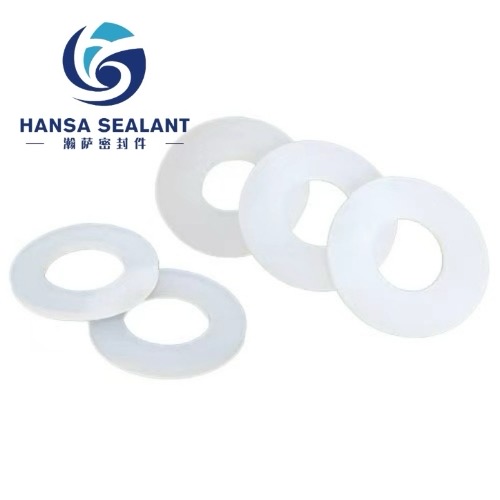
Introduction to Silicone Gaskets
Silicone gaskets, also known as silicone rubber sealing gaskets, are sheet-like sealing components manufactured from silicone rubber through processes such as molding, extrusion, or cutting. They are an extremely versatile and high-performance elastic seal, renowned for their wide temperature tolerance range and excellent chemical stability. They are widely used across various fields, from household appliances to aerospace. The core material—silicone rubber—is a special synthetic elastomer with a molecular backbone composed of alternating silicon and oxygen atoms (-Si-O-Si-). This structure gives it unique properties distinct from ordinary organic rubbers.
Core Characteristics and Advantages
Exceptional High and Low-Temperature Resistance
This is the most prominent advantage of silicone gaskets. Their standard operating temperature range is -60°C to +200°C. Special formulations (e.g., using phenyl silicone rubber) can lower the brittle point below -100°C and allow short-term resistance up to +300°C. They maintain elasticity in extreme temperature environments like baking or freezing without becoming brittle or melting.
Excellent Weather and Aging Resistance
Highly resistant to ozone, ultraviolet (UV) light, and sunlight exposure. They can be used outdoors for long periods without cracking or powdering like ordinary rubbers, offering an extremely long service life.
Good Physiological Inertia, Eco-Friendly, and Non-Toxic
Food-grade and medical-grade silicones are non-toxic, odorless, non-corrosive, and comply with certifications like FDA and LFGB. They can directly contact food and pharmaceuticals, making them widely used in kitchen appliances, mother and baby products, and medical equipment.
Excellent Electrical Insulation Properties
Maintains good insulation even in harsh environments like humidity and high temperatures, making it an important insulating sealing material in the electronics and electrical industries.
Good Gas Permeability
Silicone has selective permeability to gases (e.g., air, nitrogen). This characteristic allows its use in sealing applications requiring "breathing" or ventilation and is also the reason it is not suitable for high-pressure hermetic sealing.
Flexibility and Elasticity
Maintains good elasticity and flexibility across a wide temperature range, effectively filling uneven surfaces between flanges to achieve an effective seal.
Disadvantages:
Low Mechanical Strength: Wear resistance, tear strength, and puncture resistance are generally lower than those of polyurethane (PU) or natural rubber (NR).
Poor Oil and Solvent Resistance: Not recommended for use with fuels, petroleum-based lubricants, concentrated acids/bases, and aromatic hydrocarbon solvents.
High Gas Permeability: Not suitable for high-pressure sealing applications requiring high hermeticity.
Main Application Fields
The properties of silicone gaskets make them suitable for the following scenarios:
Household Appliance Industry: Waterproof sealing for rice cookers, water dispensers, coffee makers, electric kettles; door seals for microwaves and ovens (heat-resistant).
Automotive Industry: Engine cover gaskets, transmission seals, headlight seals, battery pack seals for new energy vehicles (insulation requirements).
Medical Equipment: Seals for breathing masks, medical catheters, pharmaceutical equipment, surgical instruments (requires non-toxicity and ability to withstand high-temperature sterilization).
Food Industry: Sealing rings for food processing equipment, cookware, and food storage containers (food-grade requirements).
Electronics & Electrical: Waterproof seals and insulating gaskets for buttons, remote controls, outdoor junction boxes, and LED lights.
Aerospace: Seals for cabin doors, vibration damping pads for instruments and equipment (resistant to high/low temperatures and aging).
Common Types
Based on manufacturing process and performance, silicone gaskets mainly include the following types:
Molded Silicone Gaskets
The most common type. Vulcanized under high temperature and pressure using metal molds, ensuring precise dimensions and the ability to produce various complex shapes and structures (e.g., with bosses, inserts).
Cut / Die-Cut Silicone Gaskets
Processed by die-cutting or CNC milling from silicone sheets or rolls. Suitable for small batches, large sizes, or prototype production where mold-making is not feasible.
Extruded Silicone Gaskets
Formed into long strips, tubes, or profiles via an extruder and then cut to length as needed. Commonly used as sealing strips for doors, windows, and cabinets.
Sponge / Foam Silicone Gaskets
Contain numerous micropores, are very soft, and offer excellent compression resilience, providing superior sealing for uneven surfaces.
Technical Parameters and Data Tables
For a clearer understanding of its performance, please refer to the typical parameter table below for silicone gaskets (using a general-purpose type as an example):
Typical Performance Parameters for Silicone Gaskets
| Characteristic | Test Standard | Unit | Typical Value Range | Remarks |
|---|---|---|---|---|
| Hardness | ASTM D2240 | Shore A | 20 - 80 | Common range: 50°A ~ 70°A, adjustable |
| Tensile Strength | ASTM D412 | MPa | 5 - 12 | Mechanical strength is a key weakness |
| Tear Strength | ASTM D624 | kN/m | 10 - 40 | |
| Elongation at Break | ASTM D412 | % | 200 - 700 | Good elasticity |
| Operating Temperature | - | °C | -60 to +200 (short-term up to 300) | Core Advantage |
| Volume Resistivity | ASTM D257 | Ω·cm | 10¹³ - 10¹⁵ | Excellent electrical insulator |
| UV/Ozone Resistance | - | - | Excellent | No aging with long-term outdoor use |
| Compression Set | ASTM D395 | % (22h @ 175°C) | 10 - 30 | Lower value indicates better resilience retention |
| Common Colors | - | - | Transparent, White, Red, Black, etc. | Easy identification |
Selection Guide by Function
| Type | Main Characteristics | Applicable Standards/Certifications | Typical Applications |
|---|---|---|---|
| General-Purpose Silicone Gasket | Balanced overall performance, cost-effective | - | General industrial sealing, dust/waterproofing for electronics |
| Food-Grade Silicone Gasket | Non-toxic, odorless, suitable for food contact | FDA 21 CFR 177.2600, LFGB | Kitchenware, food processing equipment, containers |
| Medical-Grade Silicone Gasket | Ultra-high purity, good biocompatibility | USP Class VI, ISO 10993 | Medical devices, pharmaceutical machinery, implantable components |
| Flame-Retardant Silicone Gasket | Self-extinguishing, improved safety | UL94 V-0 | Automotive, aerospace, electrical power equipment |
| Conductive/Insulating Silicone Gasket | Contains conductive/insulating fillers for EMI shielding or high insulation | - | EMI shielding in electronics, insulation for high-voltage equipment |
Summary
Silicone gaskets are high-performance elastic seals whose core advantages are exceptional temperature resistance and outstanding weather resistance. They are an irreplaceable choice for applications requiring a wide operating temperature range, outdoor use, food/medical contact, or high insulation.
Key Considerations for Selection:
Leverage Advantages: Prioritize its high-temperature resistance, aging resistance, and non-toxicity.
Mind the Disadvantages: Avoid applications requiring high mechanical strength or involving oils/solvents.
They are one of the most reliable material choices for engineers solving sealing, insulation, and vibration damping challenges in special environments.


