
Productscpzx

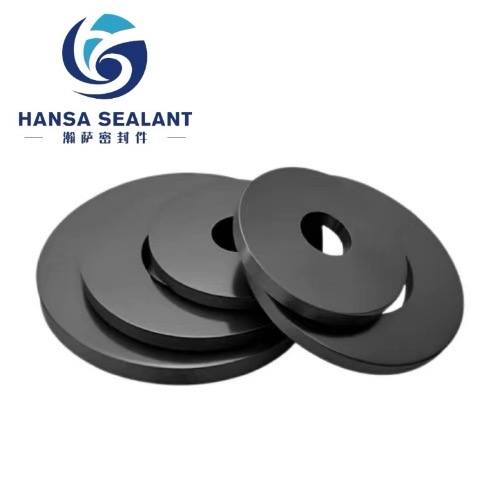
Introduction to Rubber Gaskets
Rubber gaskets are thin sheet-like or ring-shaped components made from rubber materials, used to fill the space between two or more mating surfaces to achieve sealing, vibration damping, cushioning, or insulation. They are among the most common and fundamental seals found in mechanical equipment, electronic products, the automotive industry, and even daily life.
Their core function is to utilize the unique elastic deformation capability of rubber materials to compensate for minor surface irregularities in flanges or connections, thereby blocking the leakage of internal media (liquids, gases) or the ingress of external contaminants (dust, moisture).
Core Characteristics and Advantages
The performance of a rubber gasket depends primarily on the chosen rubber material, but they generally share the following advantages:
Excellent Elasticity and Resilience
Capable of deforming under pressure to fill gaps and returning to their original shape once pressure is released, maintaining consistent sealing force.
Good Sealing Performance
Effectively prevents leakage of various media such as water, air, and oil.
Vibration Damping and Cushioning
Rubber's damping properties absorb mechanical vibration and shock energy, protecting equipment.
Electrical Insulation
Most rubbers are good insulators, suitable for electrical sealing and insulation applications.
Broad Media Compatibility
By selecting different rubber materials (e.g., NBR, FKM, EPDM), resistance to oils, water, chemicals, weathering, and other media can be achieved.
Cost-Effective
Easily mass-produced at relatively low cost, suitable for a wide range of applications.
Main Application Fields
Rubber gaskets are found almost everywhere:
Automotive Industry: Seals for engines, transmissions, oil pans, headlights, doors, windows, etc.
Electronics & Electrical Appliances: Waterproof seals for appliance housings, junction box seals, remote control buttons (conductive rubber).
Industrial Equipment: Pump, valve, and pipe flange connections; vibration-damping feet for machinery.
Household Appliances: Water dispensers, coffee makers, washing machine door seals, refrigerator gaskets.
Medical Devices: Equipment housing seals, breathing masks, bottle/container seals.
Common Rubber Material Types and Selection Guide
Selecting the correct rubber material is key to ensuring the successful application of a gasket. The table below lists the most common types:
Rubber Gasket Material Comparison Table
| Characteristic | Nitrile Rubber (NBR) | Fluororubber (FKM) | EPDM Rubber (EPDM) | Silicone Rubber (VMQ) | Neoprene (CR) |
|---|---|---|---|---|---|
| Common Name/Alias | Oil-Resistant Rubber | Fluororubber / Viton® | - | Silicone | Neoprene |
| Oil Resistance | Good | Excellent | Poor | Poor | Fair |
| Fuel Resistance | Fair | Excellent | Poor | Poor | Fair |
| High-Temp Resistance | ★★★☆☆ (120°C) | ★★★★★ (200°C) | ★★★★☆ (150°C) | ★★★★★ (200°C) | ★★★☆☆ (100°C) |
| Low-Temp Resistance | ★★★☆☆ (-30°C) | ★★☆☆☆ (-20°C) | ★★★★☆ (-50°C) | ★★★★★ (-60°C) | ★★★☆☆ (-40°C) |
| Weather/Ozone Resistance | Fair | Good | Excellent | Excellent | Good |
| Hot Water/Steam Resistance | Poor | Fair | Excellent | Fair | Fair |
| Key Advantages | Cost-effective, good oil resistance | King of high-temp, oil & chemical resistance | Excellent water vapor & weather aging resistance | Excellent high/low-temp resistance, non-toxic | Good weather & flame resistance, balanced overall properties |
| Typical Applications | Oil seals, fuel lines, general hydraulic systems | Automotive engines, chemical plants, high-end seals | Automotive cooling systems, door/window seals, outdoor products | Food/medical, high-temp seals, appliances | HVAC systems, firefighting equipment, outdoor seals |
Manufacturing Processes
Molding: The most common method. Pre-mixed rubber is placed into a metal mold and vulcanized under heat and pressure. High precision, allows for complex shapes.
Cutting / Die-Cutting: Produced by stamping or CNC cutting from rubber sheets or rolls. Suitable for small batches, large sizes, or prototypes.
Extrusion: Rubber is continuously forced through a die to create a long strip with a specific cross-section, which is then cut to length. Often used for sealing strips.
Factors to Consider When Selecting Rubber Gaskets
Media Compatibility: What needs to be sealed? Oil, water, chemical solvents, or gases? This is the primary factor.
Operating Temperature: What are the maximum and minimum operating temperatures?
Pressure: What is the working pressure of the sealing system?
Hardness (Shore A): Typically 50-80°. Lower hardness offers easier compression and better sealing but is more prone to extrusion; higher hardness resists extrusion better but requires greater clamping force.
Application Environment: Indoors or outdoors (requires UV/Ozone resistance)?
Regulatory Requirements: Are food-grade (FDA), medical-grade (USP Class VI), or flame-retardant (UL94 HB/V-0) certifications needed?
Summary
Rubber gaskets are fundamental components that achieve sealing through elastic deformation. Their performance varies widely, with the core determinant being material selection.


