
Productscpzx

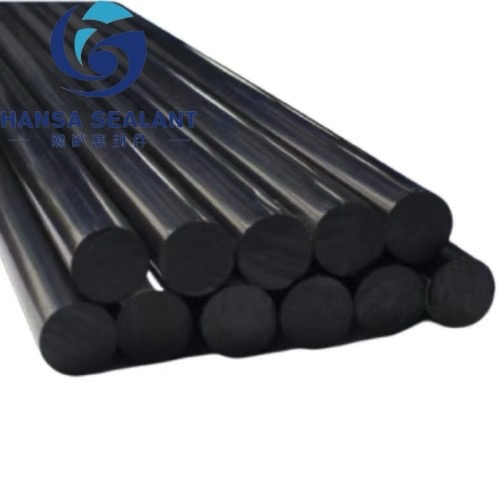
Introduction to Carbon Fiber Reinforced PEEK Rod
Carbon Fiber Reinforced PEEK (CF/PEEK) Rod is a high-performance thermoplastic composite rod manufactured through specialized processes such as extrusion or pultrusion. It consists of polyetheretherketone (PEEK) as the matrix resin and carbon fiber (CF) as the reinforcing material. This is not a simple physical mixture; it is the synergistic combination of the high strength and modulus of carbon fiber with the outstanding overall properties of PEEK resin, creating a "peak-level" engineering material that represents one of the highest standards in current polymer composite technology.
Core Composition Analysis
Matrix Material: PEEK (Polyether Ether Ketone)
The Performance King: PEEK is a semi-crystalline, ultra-high-performance specialty engineering plastic, often called the "pinnacle" of the plastics industry. It inherently possesses:
Exceptionally high mechanical strength and fatigue resistance.
Outstanding heat resistance: Long-term service temperature up to 250°C, short-term tolerance exceeding 300°C.
Excellent chemical resistance: Resistant to most organic solvents, acids, alkalis, and oils; soluble only in a few strong solvents like concentrated sulfuric acid.
Self-lubrication and wear resistance: Low friction coefficient, excellent wear performance.
Flame retardancy: Inherently UL94 V-0 rated, producing very low smoke upon combustion.
Superior hydrolysis resistance: Suitable for long-term use in high-pressure steam or high-temperature water environments.
Reinforcement Material: Carbon Fiber
Reinforcing Skeleton: Carbon fiber is renowned for its extremely high specific strength (strength-to-density ratio) and specific modulus (stiffness-to-density ratio). When added to PEEK, its primary functions are to:
Dramatically increase the material's rigidity (elastic modulus) and strength.
Further reduce the friction coefficient and wear rate, improving dimensional stability.
Enhance the material's creep resistance, minimizing deformation under long-term load.
Modify the material's electrical and thermal conductivity (typically to a semi-conductive range).
Basic Performance Data Table
The carbon fiber content is typically between 20% - 30%. The table below shows the typical performance of Carbon Fiber Reinforced PEEK (CF/PEEK) rod within this content range, compared to unfilled PEEK.
| Performance Indicator | Unit | CF/PEEK Rod (30% CF) | Unfilled PEEK | Comparative Analysis |
|---|---|---|---|---|
| Density | g/cm³ | 1.40 - 1.50 | 1.30 - 1.32 | Slightly higher, but still very light (~1/5 of steel, ~1/2 of aluminum) |
| Tensile Strength | MPa | 200 - 250 | 90 - 100 | ~150% increase; extremely high load-bearing capacity |
| Flexural Strength | MPa | 280 - 350 | 140 - 170 | ~100% increase; significantly enhanced bending resistance |
| Flexural Modulus | GPa | 15 - 22 | 3.5 - 4.0 | ~400% increase! Most significant improvement; extremely high rigidity |
| IZOD Notched Impact Strength | J/m | 50 - 80 | 80 - 100 | Toughness somewhat reduced, but still superior to most engineering plastics |
| Heat Deflection Temp. (1.8 MPa) | °C | > 300 | 160 | Greatly increased; maintains shape at very high temperatures |
| Continuous Service Temperature | °C | 250 - 300 | 240 - 260 | Higher maximum use temperature |
| Coefficient of Friction (vs. Steel) | - | 0.10 - 0.20 | 0.35 - 0.45 | Extremely low, excellent self-lubrication, close to PTFE |
| Wear Rate | - | Extremely Low | Low | Wear resistance improved by an order of magnitude; exceptionally long service life |
Main Characteristics and Advantages Summary
Exceptionally High Specific Strength & Specific Modulus: Achieves ultra-high strength and stiffness while being extremely lightweight, making it a premier solution for weight reduction.
Outstanding Fatigue and Creep Resistance: Ideal for manufacturing precision structural components subjected to long-term cyclic loads.
Exceptional Wear Resistance and Self-Lubrication: Can operate long-term in oil-free, dry friction, or harsh media environments, with a lifespan far exceeding metals and other plastics.
Excellent High-Temperature Resistance and Thermal Stability: Extremely wide operating temperature range; maintains superior mechanical properties at elevated temperatures.
Superb Chemical Stability and Radiation Resistance: Capable of withstanding harsh chemical and radiation environments (e.g., aerospace, semiconductor industries).
Good Dimensional Stability: Low moisture absorption, low coefficient of thermal expansion, minimal dimensional change with environment, ensuring high precision.
Typical Application Fields
Due to its high cost and top-tier performance, it is primarily used in high-end industrial and cutting-edge technology sectors with extreme performance demands.
Aerospace: Aircraft fuselage structural components, UAV propeller hubs, engine internal parts, bearing cages, connectors.
Medical Devices: Surgical instruments, implants (e.g., bone plates, screws), dental drill bits, MRI equipment components, robotic arms (requires biocompatibility certification).
Semiconductor Manufacturing: Wafer carriers, fixtures, robotic arms, precision components in vacuum environments (excellent cleanliness and chemical resistance).
Industrial Equipment: High-performance bearings, gears, piston rings, seals, compressor valve plates, textile machinery parts, robotic joints.
Energy & Electronics: Deep well exploration components, insulating parts, ultra-thin, ultra-strong structural components in consumer electronics.
Processing and Considerations
Processing Methods: Can be shaped using CNC machining processes like turning, milling, drilling, and grinding. Can also be injection molded into more complex parts (using CF/PEEK pellets).
Important Considerations:
Very High Cost: Both raw material and processing costs are extremely high.
Tool Wear: Carbon fiber is hard and causes significant tool wear. Diamond or carbide-coated tools are recommended.
Material Anisotropy: In rods, carbon fibers are oriented axially, leading to different properties in the radial and axial directions. This must be considered during design.
Dust Handling: Carbon fiber dust generated during machining must be properly collected and handled to avoid inhalation.
Conclusion
Carbon Fiber Reinforced PEEK (CF/PEEK) Rod is a "crown jewel" in the field of engineering materials. It perfectly integrates the strengths of two top-tier materials—PEEK and carbon fiber—achieving a synergistic effect where 1+1 >> 2. It combines exceptional properties such as ultra-high strength, ultra-high rigidity, extreme heat resistance, superior wear resistance, and chemical corrosion resistance. It is one of the ultimate material solutions for addressing challenges like structural lightweighting, extended service life for moving parts, and equipment precision under extreme operating conditions. Despite its high cost, its value is irreplaceable in high-precision, advanced fields that demand peak performance.


