
Productscpzx

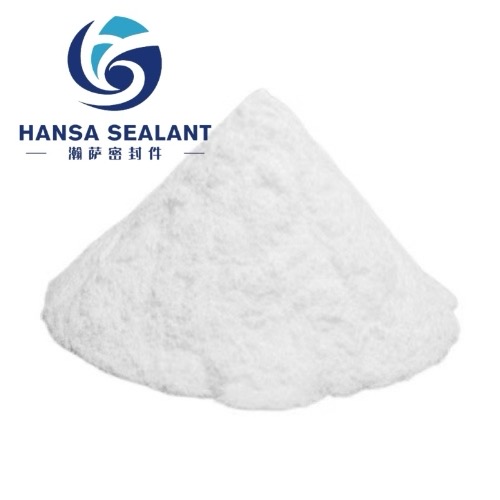
Introduction to Polytetrafluoroethylene (PTFE) Resin
Polytetrafluoroethylene (PTFE) resin refers to the primary form of PTFE obtained through chemical synthesis, used for subsequent processing (such as molding, extrusion, filler modification, etc.) into various finished products. It typically appears as a fine white powder or a milky liquid (dispersion) and is the starting point for manufacturing all PTFE products (e.g., sheets, rods, tubes, seals, non-stick coatings, etc.).
Commonly known as the "king of plastics," the value of PTFE resin lies in its unparalleled combination of properties. Through different post-processing techniques, it can be transformed into products that meet the demands of extreme operating conditions.
Core Characteristics and Advantages
The properties of PTFE resin directly determine the characteristics of the final product:
Excellent Chemical Stability
Resistant to almost all strong acids, strong alkalis, strong oxidizing agents, and organic solvents, including aqua regia. Only a very few substances like molten alkali metals, fluorine, and chlorine trifluoride can react with it.
Exceptional High and Low-Temperature Resistance
Extremely wide continuous service temperature range, from -200°C to +260°C. It does not soften at high temperatures or become brittle at low temperatures.
Extremely Low Coefficient of Friction
One of the lowest coefficients of friction among solid materials (approx. 0.04-0.1), providing excellent self-lubrication.
Completely Hydrophobic and Non-Stick
Extremely low surface energy, preventing adhesion of almost all substances. It is also non-absorbent.
Superb Electrical Insulation
Excellent dielectric properties across a wide range of frequencies, unaffected by humid environments.
Flame Retardancy
Non-flammable, with an extremely high Limiting Oxygen Index (LOI) of about 95%. Upon exposure to fire, it only softens and decomposes.
Primary Forms and Applications
PTFE resin mainly exists in two forms, corresponding to different processing methods and end uses:
1. Suspension Polymerization Resin (Granular)
Form: White, fibrous fine powder.
Processing Methods: Primarily used for compression molding and ram extrusion.
Final Products: Used to manufacture large sheets, rods, tubes, films, and various machined parts (e.g., sealing rings, gaskets, valve components). These products require sintering (fusing into a whole at high temperatures) to achieve their final properties.
Characteristics: Larger particle size, harder resin particles.
2. Dispersion / Emulsion Polymerization Resin
Form: Milky white, liquid emulsion; a colloidal suspension of very fine PTFE particles in water.
Processing Methods:
Paste Extrusion: Mixed with a lubricant (oil) and extruded to form thin-walled tubes, fine rods, or wire insulation.
Coating: Applied directly via dipping, spraying, or brushing, then sintered at high temperature to form non-stick coatings (e.g., for cookware, baking molds).
Spinning: Can be processed into PTFE fibers.
Filled Film: Used to produce expanded PTFE (ePTFE) membranes.
Characteristics: Extremely fine particle size, suitable for forming complex shapes and thin films.
Common Modified (Filled) PTFE Resins
To overcome the shortcomings of pure PTFE, its powder is often mixed with various fillers to produce filled PTFE compounds, significantly improving specific properties:
| Filler Material | Main Properties Improved | Typical Applications |
|---|---|---|
| Glass Fiber (GF) | Wear resistance, compressive strength, creep resistance | Guide rails, slides, bearings, wear-resistant gaskets |
| Graphite (Gr) | Self-lubrication, thermal conductivity | Oil-free lubricated bearings, piston rings |
| Carbon Fiber (CF) | Wear resistance, compressive strength, thermal conductivity, reduced thermal expansion | High-strength bearings, sealing rings, aerospace components |
| Bronze | Compressive strength, thermal conductivity, creep resistance (most significant effect) | Bearings for heavy machinery, bearing seats, valve seats |
| Molybdenum Disulfide (MoS₂) | Lubricity (especially under high load) | High-load bearings |
| Polyimide (PI) | High-temperature resistance, mechanical strength | Components for high-temperature, high-speed environments |
Technical Parameters & Data Table
The following table lists typical performance parameters for pure PTFE resin:
Typical Performance Parameters for PTFE Resin
| Characteristic | Test Standard | Unit | Typical Value | Remarks |
|---|---|---|---|---|
| Density | ASTM D792 | g/cm³ | 2.14 - 2.20 | |
| Melting Point | - | °C | 327 | |
| Continuous Service Temp. | - | °C | -200 to +260 | Core Advantage |
| Heat Deflection Temp. | ASTM D648 | °C | 55 - 120 (at 0.45 MPa) | |
| Tensile Strength | ASTM D638 | MPa | 20 - 35 | Moderate mechanical strength |
| Elongation at Break | ASTM D638 | % | 200 - 400 | |
| Coefficient of Friction | ASTM D1894 | - | 0.04 - 0.1 | Extremely low |
| Volume Resistivity | ASTM D257 | Ω·cm | >10¹⁸ | Excellent insulator |
| Dielectric Strength | ASTM D149 | kV/mm | 20 - 60 | |
| Limiting Oxygen Index (LOI) | ASTM D2863 | % | ~95 | Very high, flame-retardant |
| Water Absorption | ASTM D570 | % | <0.01 | Almost non-absorbent |
Conclusion
Polytetrafluoroethylene (PTFE) resin is a high-performance polymer base material with extreme, specialized properties. Its value lies not in being "easy to use," but in its "irreplaceable" ultimate performance.
When you need to withstand the strongest chemical corrosion -> Choose PTFE.
When you need to maintain performance over the widest temperature range -> Choose PTFE.
When you need absolute non-stick properties and the lowest friction -> Choose PTFE.
The two primary forms of the resin (suspension and dispersion) lead to two main processing paths: compression molding and paste extrusion/coating. Furthermore, through filler modification, its mechanical weaknesses can be targeted to create composites that meet various demanding requirements.
It is one of the indispensable strategic materials in high-end industrial sectors such as aerospace, semiconductors, chemical processing, medical, and electronics.


