
Productscpzx

Typical Application Fields
| Application Field | Application Field | Key Requirements |
| Biologics | Monoclonal antibody, Vaccine prefilled syringes | Extremely low protein adsorption, Silicone oil-free |
| High-Value Drugs | Growth hormone, Peptide drug syringes | High barrier properties, Oxidation prevention |
| Self-Administration | Insulin pens, Autoinjectors | Dose accuracy, Ease of operation |
| Contrast Agents | CT/MRI contrast agent syringes | High transparency, Pressure resistance |
| Aesthetic Medicine | Hyaluronic acid, Botox syringes | Fine graduations, Low dead space |
Technological Frontiers
1. Advanced Coating Technologies
Non-Silicone Coatings: Utilizing Cyclic Olefin Polymer (COP) or fluoropolymer coatings.
Hydrophilic Coatings: Reduce activation/glide force, improving patient comfort.
Active Coatings: Heparin coatings for anticoagulation, used for specific drugs.
2. Smart Integration
RFID Tagging: Records drug information, batch number, expiration date.
Dose Lockout: Prevents accidental overdose, enhancing safety.
Injection Feedback: Auditory/tactile signals to indicate completion of injection.
3. Eco-friendliness & Sustainability
Thin-Wall Design: Reduces plastic usage by 15%-20%.
Bio-based PET: Partial use of renewable raw materials.
Recycling Initiatives: Exploring closed-loop recycling systems for medical plastics.
Material and Structure Classification
| Syringe Type | Structural Features | Material Composition | Primary Use |
| Standard PET Syringe | Barrel + Plunger + Stopper + Needle | PET / Rubber / Stainless Steel | General Injection |
| Prefilled Syringe | Ready-to-use, pre-filled with drug | PET + Special Coating + Stopper | Biologics |
| Safety Syringe | Needle protection / Self-disable feature | PET + Safety Mechanism | Needlestick Injury Prevention |
| 1mL Precision Syringe | Ultra-fine graduations (0.01mL) | High-clarity PET | Insulin, Pediatrics | Large-Volume Syringe |
| Large-Volume Syringe | 10mL - 60mL capacity | High-rigidity PET | Contrast Agents, Nutrient Solutions |
Key Performance Parameters Table
| Performance Indicator | Standard Requirement | Test Method | Notes |
| Biocompatibility | Passes USP Class VI | USP <87> <88> | Cytotoxicity, Sensitization, Irritation |
| Light Transmittance | ≥90% | ASTM D1003 | Facilitates visual inspection |
| Particulate Matter | ≤100 particles/mL (≥10µm) | USP <788> | Injectable grade requirement |
| Total Heavy Metals | ≤10 ppm | USP <231> | Includes Pb, Cd, Hg, etc. |
| Ethylene Oxide Residue | <4 µg/g (for EO sterilization) | ISO 10993-7 | One of the terminal sterilization methods |
| Bacterial Endotoxins | <0.25 EU/mL | USP <85> | Requirement for sterile syringes | |
| Leakage | No leakage (negative/positive pressure) | ISO 7886-1 | Prevents contamination and drug loss |
| Break-loose/Glide Force | 2-10N (varies by spec.) | ISO 7886-1 | Key usability indicator |
Specifications and Capacity Parameters
| Nominal Capacity (mL) | Actual Fill Volume (mL) | Dead Space Volume (µL) | Total Length (mm) | Barrel Diameter (mm) | Suitable Needle Gauge |
|---|---|---|---|---|---|
| 0.5 | 0.5-0.55 | ≤15 | 55-65 | 6.5 | 29G-31G |
| 1 | 1.0-1.1 | ≤30 | 65-75 | 8.0 | 27G-30G |
| 2 | 2.25-2.5 | ≤50 | 75-85 | 10.0 | 25G-27G |
| 3 | 3.0-3.3 | ≤60 | 85-95 | 12.0 | 22G-25G |
| 5 | 5.0-5.5 | ≤80 | 95-110 | 14.0 | 21G-23G |
| 10 | 10.0-11.0 | ≤150 | 110-130 | 16.0 | 20G-22G |
Market Trends and Challenges
Growth Drivers
Rapid growth of the biologics market.
Trend towards self-administration (homecare).
Increasing adoption of prefilled formats (from manufacturer to patient).
Technical Challenges
Surface engineering to meet ultra-low protein adsorption requirements.
Ensuring smooth injection for highly concentrated/viscous drug formulations.
Maintaining material stability under extreme storage conditions (-80°C to 40°C).
Sustainable Development
Developing recyclable/biodegradable medical-grade PET.
Reducing energy consumption and waste during production.
Establishing recycling and regeneration systems for medical plastics.
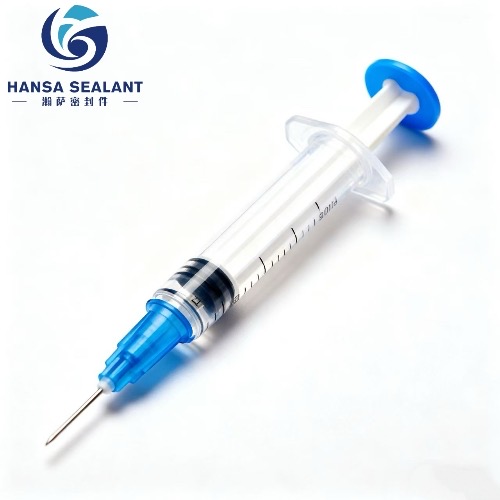
PET disposable syringes are steadily gaining market share in both high-end biologics and conventional drug delivery segments due to their excellent transparency, drug compatibility, cost-effectiveness, and safety. With advancements in coating technologies, smart design, and sustainable materials, PET syringes are poised to replace traditional glass syringes in an expanding range of applications.
Note: The above data is based on industry standards and typical product parameters.


