
Productscpzx

Typical Application Fields
Application Field
Specific Components
Key Requirements
Automotive Industry
Window regulator gears, Seat adjustment gears
Fatigue resistance + Low noise
Home Appliances
Washing machine planetary gears, Coffee maker transmissions
Moisture & heat resistance + Long service life
Office Equipment
Printer/Copier transmission gears
High precision + Wear resistance
Industrial Drives
Small reducer gears, Conveyor drive gears
High load capacity + Impact resistance
Medical Devices
Infusion pump gears, Ventilator transmission gears
Low noise + Sterilization tolerance
Technological Frontiers
1. High-Performance Composite Technologies
Nano-Reinforced PET: Incorporates carbon nanotubes/graphene, improving strength by >30%.
Hybrid Reinforcement: Combines glass fiber + carbon fiber for balanced performance and cost.
Synergistic Wear Resistance: MOS₂ + PTFE + Silicone oil composite lubrication system.
2. Precision Molding Technologies
Microcellular Foam Molding: Reduces weight by 10%-20% and internal stress.
Gas-Assisted Molding: Improves shrinkage deformation in thick-walled gears.
Stack Mold Technology: Increases production efficiency for small module gears.
3. Intelligent Manufacturing
In-line Dimensional Monitoring: Vision systems for real-time tooth profile error detection.
In-mold Stress Sensing: Optimizes process parameters to minimize deformation.
Digital Twin: Simulates gear service performance to predict lifespan.
Key Performance Parameter Table
| Performance Indicator | PET-GF30 | PET-GF45 | PET+30GF+PTFE | Test Standard |
| Density (g/cm³) | 1.56 | 1.69 | 1.58 | ISO 1183 |
| Tensile Strength (MPa) | 160 | 180 | 140 | ISO 527 |
| Flexural Strength (MPa) | 230 | 270 | 190 | ISO 178 |
| Flexural Modulus (GPa) | 9.0 | 12.0 | 7.5 | ISO 178 |
| Impact Strength (kJ/m²) | 10 | 12 | 9 | ISO 179 |
| Heat Deflection Temp. (°C) @1.82MPa | 225 | 240 | 215 | ISO 75 |
| Friction Coefficient (vs. Steel) | 0.20 | 0.22 | 0.12 | ASTM D1894 |
| Wear Rate (×10⁻⁶ mm³/N·m) | 35 | 30 | 15 | ASTM G99 |
Key Gear Design Parameters
Design Parameter
Recommended Range
Notes
Module (mm)
0.5 - 4.0
Small modules require high-flow materials.
Face Width (mm)
5 - 50
Face width ratio ≤ 8:1 (to prevent warping).
Gear Accuracy
Gear Accuracy
Can achieve DIN Grade 5 with high-precision molds.
Minimum Wall Thickness (mm)
≥0.8 (≥1.2 recommended)
Avoids short shots.
Draft Angle (°)
0.5 - 1.5
Tooth flank can be 0.25° (high precision).
Shrinkage Rate (%)
0.2-0.4 (flow dir.) / 0.8-1.2 (perp. dir.)
Requires mold compensation.
Quality Control Standards
Inspection Item
Test Method
Acceptance Criteria
Frequency
Dimensional Accuracy
Gear Measuring Center
ISO 1328 Class 7-8
Per batch
Tooth Profile & Lead
Gear Profilometer
Error ≤ 0.01 mm
Per batch
Radial Runout
Runout Tester
≤ 0.03 mm (Module 1
Every 2 hours
Material Density
ISO 1183
Nominal value ±0.02 g/cm³
Per raw material batch
Mechanical Properties
Injection-molded test bar
Conforms to material specs
Per batch/color
Thermal Aging Resistance
150°C / 1000 hrs
Strength retention >80%
Quarterly
Future Development Trends
1. Enhanced Material Performance: Development towards higher strength, lower friction, and increased temperature resistance.
2. Digitalized Manufacturing: Integration of IoT for intelligent monitoring and optimization of the injection molding process.
3. Integrated Design: One-piece molding of gears with other functional components.
4. Sustainability: Application of bio-based PET and high-percentage recycled content.
5. Miniaturization: Micro-molding technology for gears with modules below 0.2 mm.
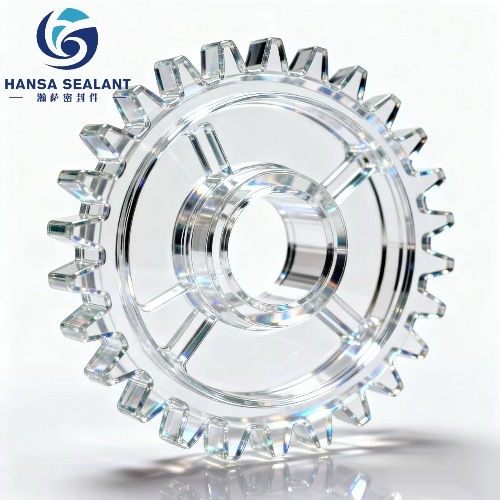
PET gears have become a significant choice for engineering plastic gears due to their excellent mechanical properties, heat resistance, dimensional stability, and cost-effectiveness. With advancements in modification and precision molding technologies, PET gears are continuously expanding their applications in high-performance, high-precision transmission fields.
Note: The above data is based on industry standards and typical application experience. Actual gear design and material selection require detailed calculation and validation based on specific load conditions, rotational speed, environmental factors, and service life requirements.


