
Productscpzx

Typical Application Fields
Application Category
Specific Products
Key Requirements
Carbonated Beverages
Carbonated Beverages
Pressure resistance + CO₂ barrier
Hot-Fill Foods
Tea drinks, Juices
Heat resistance (85°C) + Anti-vacuum deformation
Edible Oils
Cooking oil bottles
Oxygen barrier + Leak prevention
Condiments
Soy sauce, Vinegar bottles
Soy sauce, Vinegar bottles
Dry Foods
Nuts, Candy jars
Moisture barrier + Seal integrity
Instant Foods
Ready-to-eat soups, Pudding cups
Microwave suitability + Heat resistance
Technological Frontiers
1. High-Barrier Technologies
Multi-layer Co-extrusion: PET/EVOH/PET structure improves oxygen barrier by 10x.
Plasma Coating: Internal SiOₓ coating improves barrier properties by 20-30x.
Nanocomposites: Addition of nano-clay improves barrier by 3-5x.
2. Lightweighting Technologies
Preform Optimization: Wall thickness distribution simulation analysis enables 15% weight reduction.
Ultra-lightweighting: 500ml bottle weight <10g (traditional: 15-20g).
3. Smart Packaging
Temperature Indicators: Thermochromic inks to display cold chain status.
Freshness Indicators: Oxygen-sensitive labels for real-time monitoring.
Material Classification & Characteristics
| PET Type | Characteristics | Suitable Process | Main Applications |
| Standard PET (APET) | High transparency, Good hardness | Injection Stretch Blow | Mineral water, Beverage bottles |
| Crystallized PET (CPET) | Heat resistant (120-200°C) | Injection Molding / Thermoforming | Microwave meals, Baking containers |
| Modified PET (PETG) | High toughness, Easy processing | Extrusion Blow Molding | Condiment bottles, Cosmetic jars |
| Recycled PET (rPET) | Eco-friendly, Cost-effective | Injection Stretch Blow | Non-food contact layers |
| High-Barrier PET | Excellent oxygen barrier | Excellent oxygen barrier | Juices, Health food products |
Key Performance Parameters Table
Performance Indicator
Standard PET
Hot-Fill PET
Heat-Resistant PET
Test Standard
Density (g/cm³)
1.33-1.38
1.34-1.39
1.35-1.40
ASTM D792
Melting Point (°C)
250-260
250-260
250-260
ASTM D3418
Glass Transition Temp. (°C)
70-80
75-85
80-90
ASTM D3418
Tensile Strength (MPa)
50-70
55-75
60-80
ASTM D638
Elongation at Break (%)
30-70
25-60
20-50
ASTM D638
Light Transmittance (%)
≥90
≥88
≥88
ASTM D1003
Haze (%)
≤2.0
≤2.5
≤3.0
ASTM D1003
Filling Process Adaptability Table
Filling Type
Temperature Condition
PET Requirement
Neck Finish
Shelf Life
Cold Fill
0-25°C
Standard PET
28mm / 38mm
9-12 months
Warm Fill
65-75°C
Hot-Fill PET
Reinforced neck
9-12 months
Hot Fill
85-95°C
Heat-Resistant Crystallized PET
Crystallized neck + Reinforced ring
12 months
Aseptic Fill
Ambient temp.
High-cleanliness PET
Aseptic valve / seal
12-18 months
Pasteurization
Pasteurization cycles
Heat-Resistant PET
Pressure-resistant neck
6-12 months
Special Functional PET Food Jars/Cans
Product Type
Special Technology
Functional Feature
Main Applications
UV-Blocking PET
UV absorbers
Blocks UV-A/B, protects light-sensitive contents
Olive oil, Beer
Antimicrobial PET
Silver/Zinc ions
Inhibits bacterial growth >99.9%
Baby food, Medical nutrition
Tamper-Evident PET
Tamper-proof ring / Special seal
Opening indicator, Anti-counterfeit marking
Premium foods, Pharmaceuticals
Microwaveable PET
Crystallization treatment
Heat resistant (120-150°C), Microwave safe
Ready-to-eat meals, Convenience foods
Low-Temperature PET
Copolymer modification
No brittle fracture at -40°C
Frozen foods, Ice cream
Market Trends & Development Directions
1. Advancing Lightweighting: Moving towards "gram-weight competition," aiming below 9g for 500ml bottles.
2. Smart Integration: Incorporating RFID, QR code traceability systems.
3. Personalized Customization: Small-batch flexible production supporting custom designs.
4. Sustainable Innovation: Breakthroughs in bio-based PET, chemical recycling technologies.
5. Functional Expansion: Active packaging, smart release technologies.
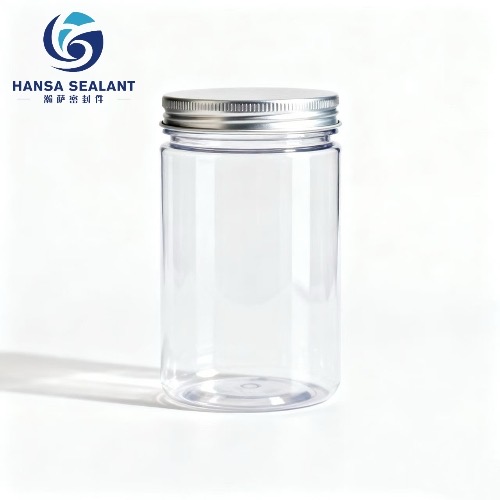
PET Food Jars/Cans have become a mainstream choice in food packaging due to their excellent transparency, lightweight nature, safety, and recyclability. With continuous advancements in high-barrier technologies, lightweight design, and sustainable development requirements, PET packaging is evolving towards smarter, more environmentally friendly, and higher-performance solutions.
Note: The above data is based on industry standards and practices. Specific product design and material selection should be optimized according to the characteristics of the filled contents, shelf-life requirements, and filling process conditions.


