
Productscpzx

Typical Application Fields
Application Field
Specific Components
Key Requirements
Aerospace
Aircraft engine auxiliary pumps, fuel control valves
Fuel resistance, wide temperature range, long life
Automotive Industry
Turbochargers, transmission pistons, brake systems
High-temperature oil resistance, anti-knock, low friction
Industrial Compressors
Oil-free air compressors, process gas compressors
Dry running, high temperature resistance, anti-seizure
Hydraulic Systems
High-pressure hydraulic pumps, servo cylinders
Hydraulic oil resistance, anti-extrusion, low leakage
Special Machinery
Vacuum pumps, cryogenic pumps, food machinery
Cleanliness, no contamination, extreme temperature resistance
Technology Development Frontiers
1. Nanocomposite Technology
Graphene-reinforced PI: Friction coefficient reduced by 30%, wear rate reduced by 50%.
Nano-ceramic filling (Si₃N₄/Al₂O₃): Temperature resistance increased to 350°C, hardness increased by 40%.
Carbon nanotube composite: Thermal conductivity >1.5 W/m·K, improving heat dissipation.
2. Structural Innovation Design
Spring-energized Piston Rings: PI ring body + metal spring, compensating for thermal expansion.
Functionally Graded Piston Rings: Hard inside, tough outside, optimizing stress distribution.
Multi-layer Composite Structure: Lamination of different materials, balancing various properties.
3. Intelligent Monitoring Integration
Embedded Sensors: Real-time monitoring of ring temperature and wear status.
Wireless Transmission: Remote monitoring and early warning of wear data.
Piston Ring Types and Structures
Ring Type
Structural Characteristics
Suitable Operating Conditions
Typical Material Composition
Rectangular
Standard rectangular cross-section
General sealing, oil control
PI + 15% Graphite + 10% MoS₂
Taper Face
Outer diameter with taper (0.5°-1.5°)
Run-in period, reducing oil consumption
PI + 20% Carbon Fiber + 5% PTFE
Twist (Napier)
Asymmetrical cross-section
Improved sealing, preventing blow-by
PI + 25% Glass Fiber + 15% Graphite
Barrel Face
Outer diameter convex arc-shaped
Reducing cylinder scuffing, adapting to deformation
PI + Nano-ceramics + Graphene
L-Type
Step structure
High-pressure sealing, anti-extrusion
PI + 40% Carbon Fiber + Metal Skeleton
Composite
Multi-ring combination
Ultra-high pressure, extreme conditions
Combination of different PI formulations
Key Performance Parameters Table
Performance Indicator
Standard PI Piston Ring
Reinforced PI Piston Ring
High-Temp PI Piston Ring
Test Standard
Density (g/cm³)
1.40-1.45
1.60-1.75
1.70-1.85
ASTM D792
Hardness (Shore D)
80-85
85-90
85-90
ASTM D2240
Tensile Strength (MPa)
100-130
180-250
200-280
ASTM D638
Flexural Modulus (GPa)
3.0-4.0
8.0-12.0
10.0-15.0
ASTM D790
Heat Deflection Temp. (°C)
>360
>350
>340
ASTM D648
CTE (×10⁻⁶/°C)
45-55
15-25
10-20
ASTM E831
Dry Friction Coefficient
0.20-0.30
0.15-0.25
0.12-0.20
ASTM D1894
Limiting PV Value (MPa·m/s)
2.0-3.0
3.0-5.0
4.0-6.0
ASTM D3702
Manufacturing Process Control
Process Type
Key Steps
Control Parameters
Quality Requirements
Compression Molding
Pre-pressing, curing, post-processing
Pressure 50-100MPa, Temp. 360-380°C
Uniform density, no porosity
Machining
Rough turning, finish turning, deburring
Rough turning, finish turning, deburring
Dimensional accuracy IT7, Ra <0.8μm
Heat Treatment
Gradient heating/curing
Heating rate 1-2°C/min, staged dwell
Eliminate internal stress, full curing
Surface Treatment
Plasma/laser treatment
Energy density, treatment time
Improve wettability, reduce friction
Inspection
Dimension, roundness, elasticity
CMM, roundness tester, spring tester
100% key dimension inspection
Pairing Test
Simulated bench test
Simulated pressure, temperature, speed
Verify friction and wear performance
Application Selection Guide
Application Scenario
Recommended Type
Key Parameters
Expected Life
Aircraft Fuel Pump
Carbon Fiber Reinforced L-Type Ring
JP-8 fuel resistant, -55~+200°C, 25MPa
5000 Flight Hours
Turbocharger
Nano-ceramic Reinforced Barrel Face Ring
300°C resistance, 15m/s, good run-in
300,000 km
Oil-free Air Compressor
High Graphite Content Rectangular Ring
Dry running PV >3 MPa·m/s
8000-12000h
Construction Machinery Hydraulic Pump
Standard Taper Face Ring
Hydraulic oil resistant, shock resistant, 15MPa
10000h
Cryogenic Helium Compressor
Special Cryogenic Rectangular Ring
Maintains elasticity at -196°C, low cold contraction
5+ Years
F1 Racing Engine
Graphene Reinforced Composite Ring
Instantaneous 400°C resistance, ultra-high speed
One Season
Food Packaging Machinery
Food-Grade PI Ring
FDA certified, non-contaminating, cleaning agent resistant
3-5 Years
Special Function PI Piston Rings
Product Type
Special Technology
Functional Characteristics
Main Applications
Conductive Piston Ring
Carbon fiber/metal powder filling
Surface resistivity 10²-10⁵Ω, prevents static accumulation
Compressors for flammable/explosive media
High Thermal Conductivity Piston Ring
Carbon nanotube/diamond powder filling
Thermal conductivity >2 W/m·K, improves heat dissipation
High power density compressors
Low-Friction Coated Ring
PI substrate + surface coating
Friction coefficient <0.1, PV value increased by 50%
High-speed precision equipment
Radiation-Resistant Ring
Special stabilizers
Gamma radiation resistance >10⁶ Gy
Nuclear facilities, space applications
Self-Healing Piston Ring
Microcapsule lubricants
Releases lubricant upon wear, extending life
Remote equipment difficult to maintain
Color-Coded Identification Ring
Food-grade color masterbatch
Different colors for different pressure levels/media
Food, pharmaceutical machinery
Variable-Section Elastic Ring
FEA-optimized design
Uniform radial pressure distribution, optimized sealing
Large compressors
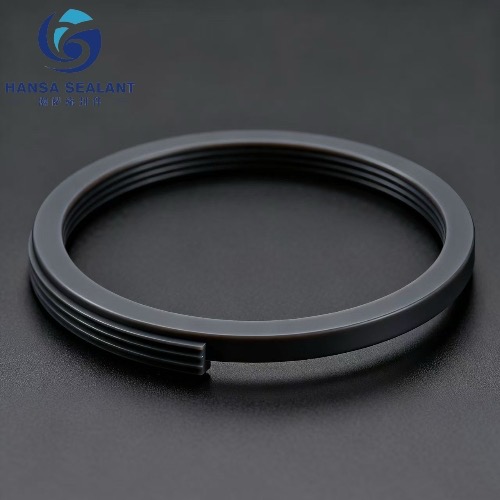
PI piston rings, with their unique combination of wide temperature range adaptability, excellent self-lubrication, low wear rate, and long service life, are gradually replacing traditional metal rings and ordinary plastic rings, demonstrating significant advantages in high-end and demanding applications. With advancements in material composite technology, design optimization, and intelligent monitoring, PI piston rings are developing towards higher performance, greater intelligence, and longer life.
Note: The above data is based on industry standards and typical application experience.


