
Productscpzx

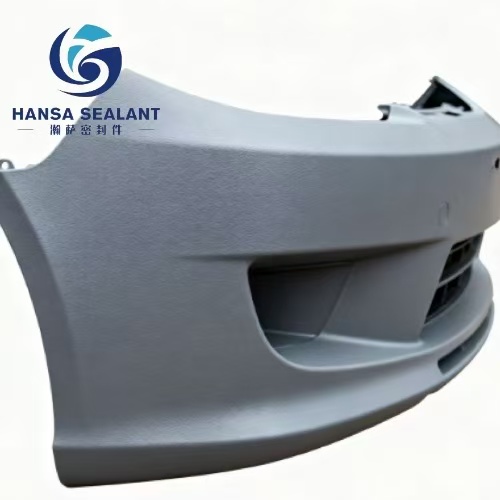
Professional Introduction to PP Automotive Body Panels
Material Definition
PP automotive body panels are lightweight, impact-resistant vehicle exterior cover parts manufactured primarily from modified polypropylene (PP) through injection molding, thermoforming, or stamping processes. Main types include:
Bumper Systems: Inner structure + outer skin, typically using PP+EPDM or PP+mineral fillers.
Wheel Arches/Side Skirts: PP+talc reinforced for stone chip resistance and weatherability.
Door Panels/Fenders: Long glass fiber reinforced PP (LFT-PP) for balanced high rigidity and toughness.
Core Performance Advantages
Exceptional Lightweighting Benefits
Low Density: 0.9-1.1 g/cm³ (60-70% lighter than steel, 15-20% lighter than ABS)
Integrated Design: Multi-component integration into a single molded part, reducing part count and weight.
Wall Thickness Optimization: CAE-driven thin-wall design with uniform strength (2.5-3.5mm).
Superior Impact Resistance & Safety Performance
Low-Temperature Toughness: Notched impact strength >15 kJ/m² at -30°C (suitable for cold climates).
Low-Speed Crash: Bumper systems can absorb 5-15 km/h impact energy, offering low repair costs.
Pedestrian Protection: Design of hood, bumper etc., considers leg/head impact protection.
Excellent Overall Cost-Effectiveness
Low Material Cost: PP raw material price is 30-50% lower than ABS, PC/ABS, etc.
Short Molding Cycle: Good flowability, fast cooling, high production efficiency.
Easy Recyclability: Single material or compatible materials, recycling rate >95%.
Typical Application Components
| Application Area | Specific Parts | Key Performance Requirements | Typical Materials |
|---|---|---|---|
| Front/Rear Bumper | Skin, energy absorber, reinforcement | Impact resistance, weatherability, paintability | PP+EPDM-TD20 |
| Side Trim | Wheel arch, side skirt, rocker panel | Stone chip resistance, scratch resistance, dimensional stability | PP+Talc20-40 |
| Interior Cover Panel | Door panel substrate, A/B/C pillar trim | Stiffness, heat resistance, low odor | PP+LGF20-30 |
| Engine Bay | Engine cover, radiator support | Heat resistance, oil resistance, creep resistance | PP+LGF30-40 |
| Underbody Protection | Undershield, splash guard | Impact resistance, corrosion resistance, lightweight | PP+Mineral30 |
| Exterior Functional Parts | Mirror housing, door handle | Dimensional stability, UV resistance, platable | PP+GF/Weathering Grade |
Technological Frontiers
High-Performance Material Systems
LFT-PP (Long Glass Fiber Reinforced): Fiber length 10-25mm, mechanical properties close to short-glass-fiber nylon, 30% cost reduction.
Microcellular Foamed PP: MuCell technology, 10-20% weight reduction, reduced warpage, improved acoustic insulation.
Paint-Free PP: Pearlescent/metallic effects molded directly, eliminating painting and VOC emissions.
Advanced Molding Processes
In-Mold Decoration (IMD): Film/fabric integrated with PP in molding for complex patterns and textures.
Multi-Material Injection Molding: Soft/hard combinations (PP+TPE), transparent/opaque combinations.
3D Printed Repair Tools: Specialized repair welding rods and processes developed for PP parts.
Smart & Functional Integration
Integrated Sensors: Bumpers integrating radar/camera mounts for ACC, automated parking.
Adaptive Components: Active grille shutters, PP vanes opening/closing based on temperature.
Self-Healing Coatings: Microcapsule technology allowing minor scratches to self-repair.
Key Performance Requirements (vs. Industry Standards)
| Performance Indicator | Bumper System | Exterior Trim | Interior Structural Part | Test Method |
|---|---|---|---|---|
| Drop Ball Impact | No fracture (-30°C, 1kg, 1m) | - | - | GM 9504P |
| Gravelometer Test | - | No coating loss (4bar, 500g gravel) | - | SAE J400 |
| Heat Aging Resistance | 120°C/500h, property retention >80% | 120°C/1000h, color ΔE <2.0 | 100°C/500h, no deformation | ISO 188 |
| Damp-Heat Cycle Resistance | 40°C/95%RH, 20 cycles no cracking | Same as left | Same as left | VDA 621-415 |
| Chemical Resistance | No abnormality after immersion in gasoline, oil, washer fluid | Acid rain, bird droppings resistance | Cleaner, sweat resistance | VDA 621-412 |
| Paint Adhesion | Cross-cut test 0-1 grade | Same as left | - | ISO 2409 |
| Odor | ≤ Grade 3.5 | ≤ Grade 3.0 | ≤ Grade 2.5 (strict) | VDA 270 |
Future Development Trends
Extreme Lightweighting: Topology optimization, thin-wall high-stiffness design, targeting >40% weight reduction.
High Functional Integration: Integration of lighting (full-width light bars), sensors, aerodynamic functions into body panels.
Sustainable Materials: Increased use of bio-based PP (from sugarcane, corn) and chemically recycled PP (>30%).
Smart Manufacturing: Industry 4.0-based smart injection molding cells enabling real-time quality monitoring and predictive maintenance.
Personalization & Customization: Digital painting, rapid mold change technologies supporting small-batch, multi-color/texture customization.
Ease of Repair: Modular design for quick replacement of wear parts, reducing user repair cost and time.
PP automotive body panels, with their outstanding lightweighting potential, impact resistance, design freedom, and cost advantages, have become a significant alternative to traditional metal panels. With continuous advancements in material modification, molding processes, and joining technologies, the application of PP in automotive exteriors is expanding from non-structural parts like bumpers and wheel arches to semi-structural parts like fenders and door panels. In the future, it may even challenge larger body panels, providing crucial support for the automotive industry's lightweighting and sustainable development goals.


