
Productscpzx

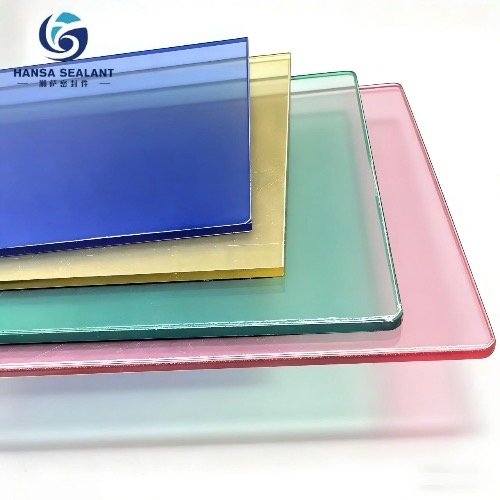
Color System & Optical Characteristics
| Color Type | Transmittance Range | Haze Range | Visual Effect | Typical Applications |
| Light Tint (Ice Blue/Light Pink) | 85-92% | 1-3% | Fresh, clear, soft light | Lightboxes, decorative partitions |
| Medium Tint (Royal Blue/Amber) | 70-85% | 2-5% | Vivid color, strong ambiance | Commercial displays, art installations |
| Dark Tint (Dark Gray/Forest Green) | 40-70% | 3-8% | Stable, mysterious, privacy/light control | Architectural facades, high-end windows |
| Pearlescent/Metallic | 50-80% | 10-30% | Sparkling texture, luxurious effect | Sparkling texture, luxurious effect |
| Gradient Color | Gradient | Gradient | Natural color transition | Feature walls, signage systems |
| Iridescent (Color-Shift) | 60-85% | 5-15% | Color changes with viewing angle, dynamic effect | Artistic creations, fashion decor |
Typical Application Fields
| Application Field | Specific Products | Recommended Colors | Recommended Colors |
| Architectural Decoration | Colored facades, skylights, partitions | Blue/gray series, amber, green | Solar shading, privacy, aesthetics |
| Advertising & Signage | 3D letters, illuminated signs, lightboxes | High-saturation red, blue, yellow | Visual impact, accurate brand colors |
| Interior Design | Screens, furniture, stair railings | Soft light tints, wood-grain effects | Space division, light modulation |
| Commercial Display | Display cases, shelves, storefronts | Black transparent, gold | Premium feel, product highlighting |
| Art Installations | Sculptures, light art, interactive pieces | Full spectrum, gradients, special effects | Creative expression, light interaction |
| Transportation | Train windows, aircraft interiors, yacht windows | Smoked gray, blue | Privacy, thermal insulation, aesthetics |
| Electronics | Phone cases, smart speaker panels, keyboards | Translucent black, iridescent | Tech aesthetic, personalization |
Technological Frontiers
1. Smart Color-Changing Technologies
Electrochromic: Changes transparency/color with applied voltage (transmittance adjustable 10-80%).
Thermochromic: Color changes with temperature (e.g., becomes clear above 31°C).
Photochromic: Darkens under UV exposure, reverts to clear indoors.
2. Advanced Optical Effects
Holographic Diffraction: Surface micro-structures create rainbow diffraction effects.
Deep Space Effect: Special pigments simulate starry sky/cosmic depth.
Liquid Metal Texture: Fluid metallic color effect with strong dynamism.
3. Eco-Friendly & Functional Integration
Photocatalytic Self-Cleaning: TiO₂ coating decomposes organics under sunlight.
Antimicrobial Colored Sheet: Silver/copper ion infusion, antibacterial rate >99%.
Recyclate-Based Colored Sheet:** Uses post-consumer recycled PMMA while maintaining color stability.
Key Performance Parameters Table (Example: Medium Blue Transparent Sheet)
| Performance Indicator | Light Tint (3mm) | Medium Tint (3mm) | Medium Tint (3mm) | Medium Tint (3mm) |
| Light Transmittance (%) | 80-90 | 70-80 | 50-70 | ASTM D1003 |
| Haze (%) | 1-3 | 2-5 | 3-8 | ASTM D1003 |
| CIE Color Coordinates (x, y) | 0.150, 0.060 | 0.180, 0.120 | 0.220, 0.180 | CIE 1931 |
| UV Blocking Rate (%) | 30-50 | 50-70 | 70-90 | ASTM D1003 + Filter |
| Visible Light Reflectance (%) | 7-9 | 8-10 | 9-12 | ASTM E903 |
| Solar Heat Gain Coefficient (SHGC) | 0.6-0.7 | 0.5-0.6 | 0.4-0.5 | ISO 9050 |
| Color Durability (1000h UV) | ΔE < 2 | ΔE < 2.5 | ΔE < 3 | ISO 4892-2 |
Color Standardization Systems
| Standard System | Color Library Size | Matching Accuracy (ΔE) | Main Industries | Main Industries |
| Pantone (PMS) | 200+ transparent colors | < 1.5 | Branding, Graphic Design | Branding, Graphic Design |
| RAL Classic | 30+ transparent colors | < 2.0 | Architecture, Industrial Design | European Standard |
| NCS (Natural Color System) | Full spectrum adjustable | < 2.5 | Architecture, Interior Design | Based on visual perception |
| China Architectural Color Card | 50+ recommended colors | < 2.5 | Chinese Construction | GB/T 18922 Standard |
| Custom Color | Unlimited | < 1.0 | High-end Brands, Art Projects | Requires prototyping/approval |
Optical & Building Physical Parameters
| Color Category | Visible Light Transmittance (Tv) | Total Solar Transmittance (Tsol) | Shading Coefficient (SC) | UV Blocking Rate | Suitable Climate |
| Light Tints (Ice Blue/Light Green) | 0.75-0.85 | 0.65-0.75 | 0.70-0.80 | 50-70% | Temperate/Cold Regions |
| Medium Tints (Gray/Brown) | 0.60-0.75 | 0.55-0.65 | 0.60-0.70 | 60-80% | Most Regions |
| Dark Tints (Navy Blue/Bronze) | 0.40-0.60 | 0.40-0.55 | 0.45-0.60 | 70-90% | Hot/Sunny Regions |
| Metallic Tints (Gold/Silver) | 0.50-0.70 | 0.45-0.60 | 0.50-0.65 | 60-85% | Primarily decorative; thermal calculation needed |
Design Selection Guide
| Design Objective | Recommended Color Properties | Thickness Suggestion | Precautions |
| Maximize Light Transmission | Light, high-transmittance tint (>85%) | 3-8 mm | Avoid excessive thickness; consider support structure. |
| Atmosphere Creation | Medium tints (Blue/Amber/Purple) | 5-12 mm | Coordinate with lighting design; consider color temperature. |
| Privacy & Light Control | Dark tint or frosted translucent | 8-15 mm | Balance daylighting with privacy needs |
| Brand Identity | Accurate Pantone color match | 3-10 mm | Confirm with physical sample; consider different lighting effects. |
| Outdoor Durability | Weatherable dark/mid tints | 5-12 mm | Account for thermal expansion; professional installation recommended. |
| Artistic Expression | Gradient/Special Effect/Custom colors | Structure-dependent | Close collaboration with artist/manufacturer is key. |
| Energy-Efficient Building | Colors optimized for low SHGC | 8-15 mm | Holistic energy modeling; consult with specialists. |
Future Development Trends
1. Dynamic Color Adjustment: Electrochromic/Thermochromic tech enabling one panel with multiple colors, changeable on demand.
2. Interactive Color: Integrated sensors change color based on ambient light, temperature, or human interaction.
3. Biomimetic Colors: Mimicking nature's structural colors (e.g., butterfly wings) – environmentally friendly and fade-resistant.
4. Metasurface Colors: Colors generated by nanostructures, eliminating dyes, offering high color purity.
5. Energy-Harvesting Colored Panels: Transparent colored photovoltaics, providing both color and power generation.
6. AI-Enabled Color Design: Intelligent color recommendation and simulation systems based on scenario and function.
Colored transparent acrylic sheet perfectly combines practical functionality with artistic expression. While retaining the excellent physical properties of PMMA, it unlocks infinite design possibilities. From building energy efficiency to brand communication, from artistic creation to product design, colored acrylic is becoming a vital material for designers to express creativity and solve problems. Advancements in coloring technology and smart materials promise a future where colored acrylic sheets are even more vibrant, intelligent, and sustainable.


