
Productscpzx

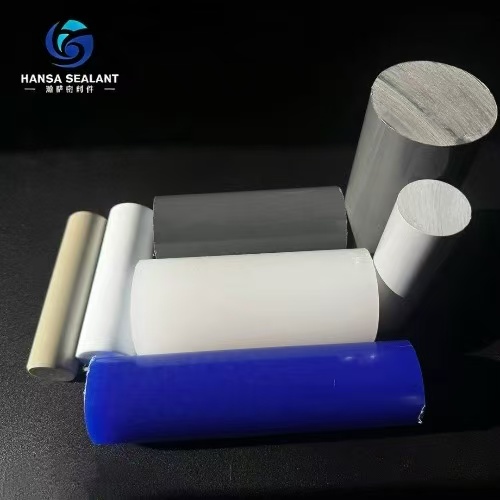
Material Types & Performance Comparison
Type
Density (g/cm³)
Tensile Strength (MPa)
Flexural Modulus (MPa)
HDT @0.45 MPa (°C)
Key Characteristics
Typical Applications
Homopolymer PP Rod
0.90-0.91
30-35
1300-1500
105-110
High rigidity, good hardness, low cost
Structural parts, supports, spacers
Copolymer PP Rod
0.90-0.91
25-30
1000-1200
95-105
Good toughness, impact resistance, low-temp resistance
Containers, handles, impact parts
Glass Fiber Reinforced PP Rod
1.05-1.20
60-90
3000-6000
140-155
High strength & rigidity, low creep
Load-bearing structures, gears, bearings
Mineral Filled PP Rod
1.20-1.40
25-35
2000-3000
120-130
Dimensional stability, low shrinkage, economical
Chemical tanks, panel supports
PP Foam Rod
0.50-0.70
10-20
400-800
85-95
Lightweight, thermal insulation, damping, buoyancy
Buoys, packaging, insulation layers
Typical Application Fields
Application Field
Specific Products/Components
Recommended Type
Functional Requirements
Chemical Corrosion Protection
Valve liners, pump parts, packing tower support grids
Homopolymer PP, GF Reinforced PP
Acid/alkali corrosion resistance, low creep, long lifespan
Water & Environmental Treatment
Filter brackets, aerator parts, tank baffles
Copolymer PP, Food-Grade PP
Chlorine corrosion resistance, non-toxic, odorless, anti-aging
Food & Pharmaceutical
Conveyor rollers, work surfaces, container supports
Food-Grade PP Rod, High-Gloss Finish
Food safety compliance, smooth easy-clean surface
Electronics & Electrical
Insulating standoffs, cable trays, appliance housings
GF Reinforced PP, Flame Retardant PP
High insulation, flame retardancy UL94 V-2/V-0
Marine & Maritime
Cabin partitions, buoys/floats, pipe supports
PP Foam Rod, Weather-Resistant PP
Low water absorption, seawater corrosion resistance, buoyancy retention
Laboratory Equipment
Instrument stands, reagent racks, fume hood parts
Chemically Pure PP, Easy-Machining Grade
Solvent resistance, dimensional stability, easy forming
Sports & Leisure
Sports equipment handles, javelin shafts, display stands
Copolymer PP, Colored PP Rod
Good toughness, vibrant colors, weather resistance
Technology Frontiers
1. High-Performance Modification
Long Glass Fiber Reinforced PP (LFT-PP): Glass fiber length 10-25mm, mechanical properties approaching engineering plastics.
Nano-Composite PP Rod: Adding nano-clay, carbon nanotubes to enhance strength and barrier properties.
Antibacterial PP Rod: Adding silver ions, zinc ions, etc., achieving >99.9% antibacterial rate.
2. Functional Integration
Conductive PP Rod: Filled with carbon black, carbon fiber, surface resistivity 10³-10⁶ Ω/sq.
Anti-Static PP Rod:Surface resistivity 10⁶-10⁹ Ω/sq, preventing static accumulation.
Low Smoke Zero Halogen (LSZH) Flame Retardant PP: Meets stringent flame retardancy standards for rail transit, ships, etc.
3. Green & Sustainable
Bio-Based PP Rod: Using PP derived from renewable resources (e.g., sugarcane).
High Recyclate Content PP Rod: Using >50% Post-Consumer Recycled (PCR) PP content.
Biodegradable Modified PP: Adding degradation accelerators to enhance environmental breakdown.
Key Performance Parameters Table (Example: Typical Homopolymer PP Rod)
| Performance Indicator | Typical Value/Range | Test Standard |
| Density | 0.91 g/cm³ | ISO 1183 |
| Tensile Strength | 33 MPa | ISO 527 |
| Elongation at Break | >50% | ISO 527 |
| Flexural Strength | 45 MPa | ISO 178 |
| Flexural Modulus | 1400 MPa | ISO 178 |
| Charpy Notched Impact Strength (23°C) | 4 kJ/m² | ISO 179/1eA |
| Heat Deflection Temperature (HDT, 0.45MPa) | 108°C | ISO 75-2 |
| Vicat Softening Temperature | 155°C | ISO 306 |
| Coefficient of Linear Thermal Expansion | 1.5×10⁻⁴ /K | ISO 11359-2 |
| Volume Resistivity | >10¹⁶ Ω·cm | IEC 60093 |
| Dielectric Strength | 30 kV/mm | IEC 60243-1 |
| Water Absorption (24h) | <0.01% | ISO 62 |
Application Cases
Project/Product
Application Scenario
PP Rod Type Used
Solution & Outcome
Chemical Reactor Stirrer Shaft Bushing
Continuous operation in strong acid/alkali media
30% Glass Fiber Reinforced PP Rod
Replaced stainless steel, resisted 98% sulfuric acid corrosion, extended service life 3x, reduced weight 60%, lowered energy consumption.
Municipal Wastewater Aeration System
24/7 underwater aeration
Weather & UV-Resistant Copolymer PP Rod
Fabricated aeration pipe supports, resistant to sewage corrosion and algae adhesion, no cracking after 10 years of outdoor use.
Food-Grade Conveyor Line Rollers
Dairy product filling line
Food-Grade High-Gloss PP Rod
CNC machined into rollers, smooth non-porous surface, easy to clean and sterilize, meeting HACCP requirements.
New Energy Battery Pack Insulating Supports
EV battery module isolation
Flame Retardant V0 PP Rod (Halogen-Free)
Precision machined into insulating blocks and supports, meets UL94 V0, no ignition at 950°C glow wire, ensures safety.
Precision machined into insulating blocks and supports, meets UL94 V0, no ignition at 950°C glow wire, ensures safety.
Long-term floating in seawater environment
Closed-Cell PP Foam Rod
Replaced traditional foam floats, non-absorbent, resistant to marine organism adhesion, recyclable, service life exceeds 15 years.
Industry Solutions
Industry
Core Challenges
Recommended PP Rod Solution
Application Points & Value
Chemical Equipment Manufacturing
Fast metal corrosion, frequent maintenance, high costs
GF Reinforced PP Rod, Acid-Resistant PP Rod
Fabricating pump/valve liners, tower packings, pipe supports, significantly extends equipment life, reduces total lifecycle cost.
Semiconductor Wet Process
Ultra-high purity requirements, resistance to mixed acids, low extractables
Ultra-Pure PP Rod (Metal ions <1ppm)
Used for wafer carriers, chemical bath liners, no contaminant leaching, resistant to DHF, SC1/SC2 cleaning solutions.
Cold Chain Logistics & Warehousing
Material embrittlement at low temps, condensation corrosion
Low-Temperature Copolymer PP Rod (No fracture at -30°C)
Making shelf posts, pallets, handles, good low-temp toughness, condensation-free surface, hygienic and easy to clean.
Pool & Spa Equipment
Long-term chlorine water immersion, slip resistance, aesthetic colors
Chlorine-Resistant Copolymer PP Rod, Anti-slip surface treatment
Used for handrails, steps, massage nozzles, chlorine-resistant colorfast, anti-slip design ensures safety, color options available.
Outdoor Advertising & Display
Weather/UV resistance, lightweight easy installation, controlled cost
Weather-Resistant Colored PP Rod (with UV stabilizers)
Making trusses, connectors, sign posts, over 5 years of outdoor use without discoloration or embrittlement, easy installation.
Technology Comparison Guide
Technology Comparison Guide
Main Composition/Process
Max Continuous Use Temp
Key Advantages
Alternative/Competing Materials
Homopolymer PP Rod
Pure Polypropylene Homopolymer
90-100°C
Best cost-performance, highest rigidity, excellent chemical resistance
PVC, HDPE Rods
Copolymer PP Rod
Propylene-Ethylene Copolymer
80-95°C
Excellent toughness, low-temp impact resistance, easy welding
ABS, Impact-modified PVC
GF Reinforced PP Rod
PP + 20-40% Glass Fiber
110-130°C
High strength & rigidity, low creep, dimensional stability
Nylon (PA), POM Rods
PP Foam Rod
PP + Blowing Agent
70-80°C
Very lightweight, good insulation, high buoyancy, damping
Polyurethane Foam, EPS
Food-Grade PP Rod
Medical/Food-Grade PP Resin
90-100°C
Non-toxic, odorless, autoclavable, easy to clean
Food-Grade PE, POM
Machining & Design Selection Guide
Machining Method
Suitable PP Rod Types
Key Process Parameters
Precautions
Turning
Homopolymer, GF Reinforced PP
Speed: 300-600 rpm; Feed: 0.1-0.3 mm/rev
Use sharp tools with large rake angle; clear chips promptly to prevent melting; GF reinforced wears tools faster.
Milling/Drilling
All Types
Cutting Speed: 200-400 m/min; Cooling: Air
Avoid overheating causing material softening; deep hole drilling needs frequent chip removal; foam PP requires low speed to prevent tearing.
Heat Bending
Copolymer, Homopolymer PP
Heating Temp: 150-160°C; Time: ~1-2 min per mm thickness
Heat evenly to avoid local overheating; cool in mold to minimize springback.
Welding
Copolymer PP is best
Hot Plate Temp: 200-220°C; Ultrasonic: 20-40kHz
Surfaces must be clean and oil-free; maintain pressure after hot plate welding; consistent material grades preferred.
Bonding
Applicable after surface treatment
Surface Prep: Flame or corona treatment; Adhesive: PP-specific or epoxy
Low surface energy necessitates treatment; test adhesive compatibility with service media.
Future Development Trends
1. High-Performance Engineering: Through molecular design and composite technology, PP Rod performance approaches or even surpasses some engineering plastics (e.g., Nylon, POM).
2. Multifunctional Integration: Developing smart composite PP rods integrating structural support with functions like thermal conduction/dissipation, EMI shielding, etc.
3. Circular Economy Closed Loop: Establishing a complete system for PP Rod from production and use to recycling and remanufacturing, increasing PCR content to over 80%.
4. Digitalized Machining: Combining 3D scanning and CNC machining to offer rapid customization and precision machining services for PP Rods.
5. Online Monitoring & Prediction: Smart PP Rods embedded with sensing fibers for real-time monitoring of structural stress, corrosion status, and lifetime prediction.
Conclusion
PP Rod, as a versatile engineering plastic profile offering excellent cost-performance, good chemical resistance, outstanding processability, and reliable hygiene/safety, plays an irreplaceable role in numerous sectors of the economy. From traditional chemical corrosion protection to emerging new energy vehicles, from stringent food & pharmaceutical production to vast marine engineering, PP Rod continuously expands its application boundaries through ongoing material innovation and modification. With the deepening trends of high-performance, functionalization, and greening, PP Rod will continue to evolve towards higher performance, greater sustainability, and smarter integration, providing superior material solutions for lightweighting, corrosion resistance, insulation, and safety across various industries.


