
Productscpzx

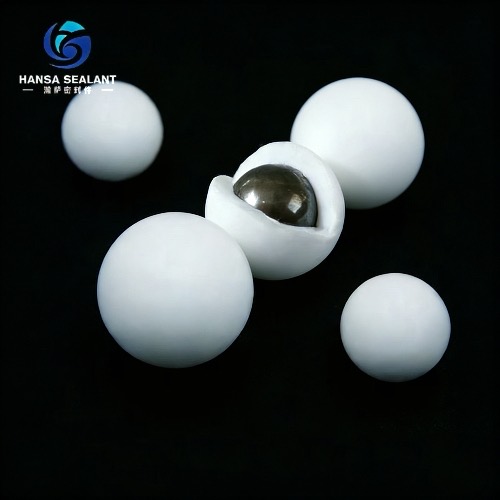
Specifications and Parameters
Parameter Category
Details
Notes
Basic Specifications
Nominal Diameter (DN)
6mm - 150mm (common)
Diameter Tolerance
±0.05mm ~ ±0.2mm, depending on precision grade
Sphericity
Sphericity
Material Composition
Core Material
304 Stainless Steel, 316 Stainless Steel, 316L Stainless Steel (increasing corrosion resistance)
Encapsulation Material
Pure PTFE, Filler-modified PTFE (glass fiber, carbon, graphite, etc.)
Pure PTFE, Filler-modified PTFE (glass fiber, carbon, graphite, etc.)
Typically 1.5mm - 5mm (varies with ball diameter), ensures encapsulation integrity
Mechanical Properties
Mechanical Properties
1.0MPa ~ 6.4MPa (standard), special design required for higher pressures
Compressive Strength
Primarily provided by the steel core
Hardness (Shore D, PTFE layer)
50 - 65
Temperature Performance
Continuous Service Temperature
-40°C ~ +200°C (pure PTFE)
Short-term Peak Temperature
Up to +250°C (with filler modification), hardness decreases at high temperatures
Friction and Wear
Coefficient of Friction (against steel)
0.04 - 0.1, excellent self-lubrication
PV Limit Value
1.0 - 2.0 MPa·m/s, depends on filler modification type
Chemical Properties
Chemical Resistance
Resistant to most chemical media except molten alkali metals and fluorides (PTFE property)
Food/Pharmaceutical Contact
Complies with FDA, EU 10/2011, etc. (using compliant materials), suitable for sanitary applications
Typical Application Fields
Application Field
Specific Products/Scenarios
Recommended Type/Material
Functional Requirements
Chemical Valves
Valve core for ball valves, plug valves
316L core + Pure/Modified PTFE
Corrosion resistance, zero leakage, long life
Pharmaceutical & Bioengineering
Valve ball for sterile diaphragm valves, tank valves
316L core + High-purity PTFE (electropolished)
Cleanability, CIP/SIP compatibility, regulatory compliance
Food & Beverage
Control valves for pipelines (wine, dairy, juice)
304/316 core + Food-grade PTFE
Non-toxic, prevents contamination, wear-resistant
Water Treatment & Environmental
Acid/alkali dosing valves, wastewater treatment valves
316 core + PTFE
316 core + PTFE
316 core + PTFE
Valves for high-purity gas delivery, vacuum valves
316L EP core + High-cleanliness PTFE
Ultra-low outgassing, no particle generation, high sealing
Energy & Marine
Valve for offshore platform, ship piping systems
316 core + Reinforced PTFE
Seawater corrosion resistance, high pressure, reliability
Technology Frontiers
1. Material Composite Innovation:
Nano-filled PTFE: Adding nano-scale fillers (e.g., nano-Al₂O₃, SiO₂) significantly enhances wear resistance and mechanical strength while maintaining corrosion resistance.
Functionally Graded Materials: Developing transition layers between the PTFE encapsulation and metal core to improve interfacial bonding and prevent delamination.
2. Precision Manufacturing Processes:
Isostatic Pressing: Using cold/hot isostatic pressing technology creates a denser, more uniform PTFE encapsulation, reducing defects.
Automated Intelligent Sintering: Precise control of sintering temperature profiles and atmospheres optimizes PTFE crystallinity, improving performance consistency.
3. Functionalization and Intelligence:
Conductive PTFE Balls: Filled with conductive materials for valves requiring anti-static properties or electrical current transfer.
Embedded Sensor Elements: Micro-embedding temperature or pressure sensors within the steel core for real-time monitoring of ball status.
Industry Solutions
Industry
Core Challenge
Recommended Steel-Cored PTFE Ball Solution
Application Points & Value
Highly Corrosive Chemical Processing
Strong media corrosion, metal ball valves prone to failure
316L core + thick pure PTFE encapsulation
Fundamentally solves corrosion, multiplies valve core lifespan, ensures continuous production safety.
Pharmaceutical Aseptic Production
Microbial growth in sanitary dead zones, stringent cleaning/sterilization needs
316L mirror-polished core + electropolished high-purity PTFE layer
Meets ASME BPE standards, supports SIP, ensures sterile product quality.
Food & Beverage
Frequent valve cleaning, media may contain particulates
304/316 core + glass-fiber reinforced PTFE
Good wear resistance, withstands corrosion from CIP fluids and mild slurry abrasion.
Semiconductor Specialty Gases
Extreme gas purity requirements, risk of metal ion contamination
316L EP super-polished core + specially purified and processed PTFE
316L EP super-polished core + specially purified and processed PTFE
High-Temperature & High-Pressure Conditions
Combined exposure to high temp, high pressure, and corrosive media
Special alloy steel core + high-temp filler-modified PTFE (e.g., graphite-filled)
Extends the temperature/pressure window of traditional PTFE ball valves, replacing costlier alloy valves.
Design and Selection Guide
Design Goal
Recommended Feature Selection
Material/Process Suggestion
Key Considerations
Highly Corrosive Media
Optimal corrosion resistance
Pure PTFE encapsulation, 316L or higher-grade steel core
Confirm specific media composition, concentration, temperature; avoid filler-modified PTFE.
High Wear Resistance & Long Life
High wear resistance, low friction
Carbon fiber, graphite, or molybdenum disulfide filled PTFE
Assess if media contains hard particles; consider if fillers affect corrosion resistance.
Sanitary Applications
Cleanability, sterility, compliance
Mirror-polished steel core (Ra≤0.38μm), high-gloss PTFE surface, full electropolishing
Provide material compliance certificates (e.g., FDA, EC1935/2004); ensure dead-leg free design
High-Temperature Service
Long-term temperature resistance >200°C
PFA encapsulation or special high-temperature filler-modified PTFE
Clarify continuous operating temp and thermal cycle frequency; recalculate sealing preload for high temps.
High-Precision Control
High sphericity, low actuation torque
Ball sphericity ≤0.01mm, high-polish surface, optimal self-lubricating formula
Compatibility testing with seat material is critical; control assembly tolerances.
Cost-Sensitive Projects
Economic and reliable balance
304 core + standard pure PTFE or general-purpose filled PTFE
Select based on meeting media and temperature requirements, avoiding performance over-specification.
Future Development Trends
1. Extreme Performance Breakthroughs: Developing new composite materials and coating technologies for more extreme conditions: higher temperatures (>300°C), cryogenic applications, and stronger corrosive media (e.g., molten salts).
2. Integration of Digitalization and Intelligence:Combining IoT technology to develop "smart balls" with condition monitoring functions, enabling predictive maintenance for valves.
3. Green and Sustainable Manufacturing: Optimizing PTFE material usage, reducing machining waste; exploring more environmentally friendly alternative coating materials.
4. Customization and Rapid Service: Providing integrated, rapid custom solutions—from material formulation and structural design to performance simulation—based on user operational data.
Conclusion
The steel-cored PTFE ball is the **critical valve component** at the heart of modern chemical processing, advanced manufacturing, and life sciences. It ingeniously combines the strength of metal with the corrosion resistance of plastic, solving sealing challenges in harsh conditions that traditional materials struggle with. From ensuring ultra-high purity in semiconductor production to safeguarding sterility in pharmaceutical processes and resisting strong corrosion in chemical plants, steel-cored PTFE balls play a vital, often unseen role. With continuous advancements in materials science and precision manufacturing, they are evolving towards greater endurance in extreme conditions, longer service life, and smarter functionality, providing a solid foundation for the safe, efficient, and reliable operation of various industrial sectors.


