
Productscpzx

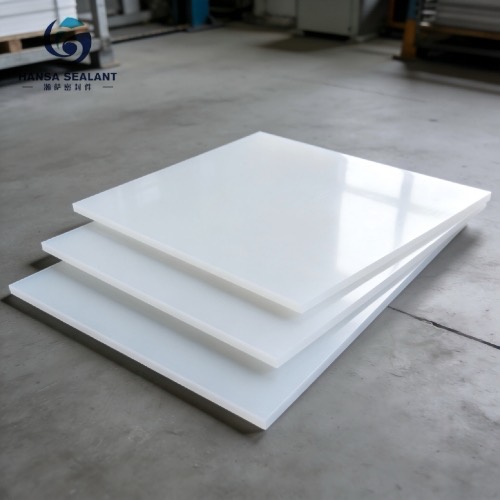
Material Types and Specification System
| Type | Structural Features | Common Thickness Range (mm) | Width/Dimensions (mm) | Primary Production Method | Main Application Scenarios |
| Compression Molded Sheet | Uniform texture, smooth surface, semi-transparent to transparent | 1.0 - 40 | 100x100 - 400x400 | Compression Molding | Gaskets, sight glasses, machined parts, anti-corrosion linings |
| Extruded Sheet | Higher surface smoothness, tighter thickness tolerance | 0.5 - 15 | Up to 1200 wide, length customizable | Extrusion Molding | Equipment lining, welded tanks, electronic/electrical components |
| High Purity PFA Sheet (HP) | Higher purity, extremely low metal ion content | 1.5 - 3.0 | 1200 wide or custom | Extrusion/Compression | Semiconductor wet processes, pharmaceutical/biotech apparatus |
| Glass Backed Laminate | PFA layer + fiberglass/carbon fiber backing | 1.5 - 3.0 (PFA layer) | 1200/1500 wide | Lamination | Large storage tank, tower/tank linings, enhanced structural stability |
Technical Parameters and Performance Indicators
Physical and Mechanical Properties
| Performance Indicator | Typical Value/Range | Test Standard |
| Density (g/cm³) | 2.12 - 2.17 | ASTM D792 |
| Tensile Strength (MPa) | 15 - 31.4 | JIS K6888 |
| Elongation at Break (%) | 250 - 350 | JIS K6888 |
| Hardness (Shore D) | 55 - 65 | ASTM D2240 |
| Mold Shrinkage (%) | 3.1 - 7.7 | Internal Standard |
| Coefficient of Friction (Static) | 0.05 - 0.08 | Internal Method |
Thermal and Electrical Properties
| Performance Indicator | Typical Value/Range | Test Standard |
| Melting Point (℃) | 303 - 313 | ASTM D3307 |
| Long-term Service Temp (℃) | -200 to 260 | — |
| Thermal Decomposition Temp (℃) | ≥415 | — |
| Dielectric Strength (kV/mm) | ≥50 | GB/T 1408 |
| Volume Resistivity (Ω·cm) | 10^18 level | ASTM D257 |
| Saturated Water Absorption (%) | <0.03 | — |
Environmental and Long-term Performance
| Performance Indicator | Typical Value/Range | Test Standard/Method |
| Chemical Corrosion Resistance | Resistant to all except fluorides, molten alkali metals | ASTM D543 |
| Environmental Stress Crack Resistance | Excellent ESCR properties | — |
| Ozone/UV Resistance | Excellent, no significant aging | — |
| Limiting Oxygen Index (%) | ≥95 | ISO 4589 |
Typical Application Fields
| Application Field | Specific Uses | Recommended Type | Key Requirements |
| Semiconductor & Electronics | Wet etching tanks, wafer carriers, high-purity chemical delivery system linings | High Purity PFA Sheet | Extremely low metal ion leaching, resistance to strong acids/oxidizers |
| Chemical Anti-corrosion | Reactor linings, storage tank liners, pipeline sight glasses, valve seals | Compression Molded/Extruded Sheet | Resistance to all chemicals, long-term 260°C resistance |
| Pharmaceutical & Biotechnology | Pharmaceutical equipment linings, medical device components, implant-grade apparatus | High Purity PFA Sheet | Physiological inertness, sterilizable, no toxic leachables |
| New Energy | Photovoltaic cell etching equipment, lithium battery separator line components | Extruded Sheet | Plasma resistance, high cleanliness |
| Aerospace & Military | High-temperature electrical insulation gaskets, fuel system seals | Glass Backed Laminate | Lightweight, resistance to thermal shock, flame retardant |
| General Industry | Welding shields, mechanical wear pads, anti-stick conveyor slide plates | General PFA Sheet | Low friction, easy cleaning, good machinability |
Processing, Joining, and Installation Guide
1. Machining
- Cutting: Use fine-tooth saws, high-speed milling machines, or waterjets to ensure smooth cuts. PFA is soft; use sharp tools and medium speeds to avoid melting from overheating.
- Drilling/Milling: Standard metalworking equipment can be used. Cooling with cold air or cutting fluid is recommended. Thermal expansion coefficient must be considered for tight tolerances.
2. Joining and Welding
- Hot Gas Welding: Uses PFA welding rod and hot air gun (350-400°C). Suitable for lining repairs and manufacturing small containers.
- Butt Fusion: Specialized equipment heats sheet edges to melt, then presses together. High joint strength, suitable for large tank fabrication.
- Surface Lamination: Adhesives or thermal fusion bond PFA sheets to steel or FRP substrates (e.g., GBK backed sheets) to form anti-corrosion linings.
3. Installation
- Lining Construction: Sheets must tightly adhere to the substrate to avoid voids. Corners require rounded fillets; pre-formed parts reduce stress.
- Flange Sealing: When used as gaskets, low bolt torque is recommended to prevent PFA cold flow.
- Static Protection: PFA is insulating. In flammable dust or volatile gas environments, static dissipation measures should be considered.
Selection Decision Matrix
| Application Scenario | Primary Performance Requirement | Recommended Sheet Type | Key Considerations |
| Semiconductor Wet Processes | Ultra-high purity, resistance to hot concentrated acids | High Purity Extruded PFA Sheet | Verify metal ion leaching specifications; prefer HP grade |
| Aggressive Chemical Storage Tanks | Permeation resistance, structural strength | Glass Backed Laminate | Backing weave density affects bond strength |
| High-Temperature Sealing Gaskets | Creep resistance, compression recovery | Compression Molded PFA Sheet (Thick) | Control preload; avoid excessive compression |
| Food/Pharmaceutical Contact Surfaces | Non-toxic, easy to clean, non-stick | Food Grade PFA Sheet | Must meet FDA or USP Class VI certification |
| Precision Machined Components | Dimensional stability, low internal stress | Annealed/Oriented Sheet | Post-molding annealing recommended to relieve stress |
| Long-term Outdoor Exposure Parts | UV resistance, weatherability | Carbon-filled or UV-stabilized natural grade | Natural PFA is already highly weatherable; modification often unnecessary |
Industry Customized Solutions
1. Semiconductor Equipment Localization
- Need: 300mm wafer wet cleaning tanks, high-purity fluid distribution manifolds.
- Solution: >12mm thick high-purity PFA extruded sheets, dimensions up to 1200x2400mm, integrally welded.
- Application: Etching and post-CMP cleaning in 12-inch fabs.
2. Lithium Battery Separator Production Lines
- Need: Extraction tanks, stretching guides, anti-stick roller coverings.
- Solution: Antistatic modified PFA sheets combining electrolyte corrosion resistance and low surface adhesion.
- Application: Wet process separator lines, formation process guide rollers.
3. Green Hydrogen & Nuclear Energy
- Need: High-temperature pure water resistance, radiation-resistant seals.
- Solution: Nuclear grade PFA sheet with optimized radiation resistance formulation.
- Application: Electrolyzer seals, nuclear power plant instrumentation tubing liners.
4. Laboratory Analytical Instruments
- Need: Micro-sample cells, strong acid digestion vessel liners.
- Solution: High-transparency thin-walled compression molded PFA sheets, light transmission >90%.
- Application: Core components for ICP-MS, microwave digestion systems.
Storage and Maintenance
Storage Conditions
- Environment: Clean, dry, dark warehouse; away from heat sources (≥50°C) and sharp objects.
- Stacking: Sheets should be stored flat on level pallets; stack height ≤1m to prevent deformation from prolonged pressure.
- Shelf Life: Indefinite storage; material properties do not significantly degrade (protect from light to prevent minor surface discoloration).
Maintenance
- Cleaning: Surface contaminants can be wiped with mild detergents, alcohol, or acetone; avoid hard tools like steel wool.
- Repair: Surface scratches can be repaired using a hot air welder with matching welding rod, then scraped smooth. For through damage, patching or replacement is recommended.
- **Aging Inspection**: For long-term high-temperature service, inspect every 6-12 months for discoloration (slight yellowing does not affect performance), embrittlement, or stress cracking.
Development Trends
Technological Development Directions
1. Ultra-High Purity: Control of metal ion leaching moving towards ppt (parts per trillion) levels to support sub-10nm semiconductor processes.
2. Functional Modification: Development of antistatic, conductive, thermally conductive, light-transmitting enhanced specialty PFA sheets to expand application boundaries.
3. Large Format & Near-Net Shape: Breakthroughs in wide-width extrusion (>1500mm) and precision die forging to reduce weld seams and improve structural integrity.
4. Green Manufacturing: Research into PFA scrap recycling and reprocessing/pelletizing technologies to reduce full life cycle carbon footprint.
Market Application Expansion
1. Hydrogen Energy: Coatings replacing bipolar plates in fuel cells, liners for hydrogen storage vessel valves.
2. Biopharmaceuticals: Sensor ports for single-use bioreactors, linings for continuous flow pharmaceutical equipment.
3. Advanced Packaging: Interlayer dielectrics for 2.5D/3D packaging, insulating materials for high-frequency substrates.
4. Ocean Engineering: Anti-corrosion liners for deep-sea exploration equipment pressure housings, chlorine-resistant linings for desalination plants.
As the fluoroplastic with the most comprehensive overall performance among engineering sheets, PFA sheet combines PTFE's ultimate corrosion resistance, 260°C-grade temperature resistance, and the processing convenience of thermoplastics. It is an irreplaceable key material in strategic emerging industries such as semiconductors, chemicals, pharmaceuticals, and new energy. As process purity requirements continue to escalate and application scenarios diversify, PFA sheets are evolving from "passive corrosion protection" to "functional integration". Correct grade selection, precise secondary processing, and standardized welding/installation practices are core to realizing its full lifecycle value. Amidst the global trend towards high-end, green industrial transformation, PFA sheets will persistently maintain their core role as the "corrosion-resistant backbone" of high-precision manufacturing.


