
Productscpzx

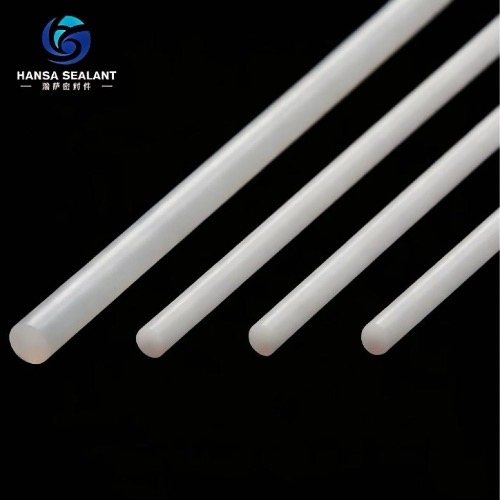
Material Types and Specification System
| Type | Structural Features | Common Diameter Range (mm) | Primary Production Method | Core Performance Characteristics | Main Application Scenarios |
| General Grade Rod | Solid, translucent white/natural | 6 - 300 | Compression Molding, Extrusion | Balanced overall performance, meets general industrial standards | Machined parts, seals, insulators, corrosion-resistant structural components |
| Electronic Grade (High Purity) Rod | Strict purity control | 10 - 200 | Isostatic Molding, Specialized Extrusion | Metal ion leachables ≤0.1ppb, smooth surface | Semiconductor wet process equipment components, wafer handling fixtures, high-purity fluid fittings |
| Welding Rod/Filler Rod | Fine diameter solid or profile | 1.0 - 5.0 | Precision Extrusion | Matched melt flow, high weld joint strength | PFA lining repair, plastic welding filler, valve seat build-up |
| Modified Functional Rod | Contains additives | Custom | Blending Modification + Molding | Anti-static (10³-10⁶Ω), carbon fiber reinforced, etc. | Explosion-proof environments, high load/wear applications |
Technical Parameters & Performance Indicators
Physical & Mechanical Properties
| Property | Typical Value/Range | Standard (Reference) |
| Density (g/cm³) | 2.12 - 2.17 | ASTM D792 |
| Tensile Strength (23°C) | ≥ 28 MPa | ASTM D3307 |
| Elongation at Break (23°C) | ≥ 300% | ASTM D3307 |
| Yield Strength (23°C) | ≥ 15 MPa | ASTM D3307 |
| Flexural Modulus (23°C) | 625 - 700 MPa | ASTM D790 |
| Hardness (Shore D) | D55 - D60 | ASTM D2240 |
| Water Absorption (24h) | < 0.03% | ASTM D570 |
Thermal & Electrical Properties
| Property | Typical Value/Range | Standard (Reference) |
| Melting Point | 302 - 310°C | ASTM D3418 |
| Continuous Service Temperature | -200°C ~ +260°C | - |
| Coefficient of Linear Expansion (21-100°C) | 14×10⁻⁵ mm/mm/°C | ASTM D696 |
| Dielectric Strength (0.25mm thick) | 80 kV/mm | ASTM D149 |
| Dielectric Constant (60-10⁶Hz) | 2.03 | ASTM D150 |
| Volume Resistivity | ≥ 10¹⁸ Ω·cm | ASTM D257 |
Environmental & Long-Term Performance
| Property | Typical Value/Range | Remarks |
| Chemical Corrosion Resistance | Insoluble/unreactive with all known chemicals | Minor swelling in some halogenated solvents at high temp |
| Weathering/UV Resistance | Excellent, no yellowing/aging | Fully fluorinated molecular structure, no additives needed |
| Limiting Oxygen Index (LOI) | > 95% | Does not burn in air |
| Creep Resistance | Superior to PTFE | Significantly reduced long-term deformation under load |
Typical Application Fields
| Application Field | Specific Uses | Recommended Grade | Key Requirements |
| Semiconductor Manufacturing | Wet etch tank components, wafer carriers, baskets, CMP retaining rings, high-purity fluid fitting bodies | Electronic Grade Rod, Dia. 20-200mm | Ultra-low metal leachables, resistance to strong acids/oxidizers, dimensional stability |
| Chemical & Pharmaceutical | Valve stems, pump shafts, seal bushings, flange gaskets, reactor nozzles, pipe supports | General Grade / Welding Rod, High-density molded | Resistance to all media corrosion, creep resistance, long life |
| Resistance to all media corrosion, creep resistance, long life | Lithium battery electrolyte delivery system parts, PV wet process equipment rollers | Modified / High Purity Grade | Resistance to DMC/EMC solvents, anti-crystallization, low friction |
| Medical & Life Sciences | Surgical instrument handles, dialysis equipment connectors, implantable device fixtures | Biocompatible Grade | Physiological inertness, sterilizable (steam/EtO), FDA compliance |
| Aerospace | Fuel system insulation components, LOX/LN2 cryogenic seal seats | High Reliability Grade | Impact toughness across wide temp range, extreme cold resistance, low outgassing |
| Analytical Instruments | Chromatograph flow path fittings, mass spectrometer ion source bases, optical lens holders | Transparent / Low Fluorescence Grade | Visual translucency, no impurity interference, machined surface finish |
Processing, Joining & Installation Guide
1. Machining Essentials
- Turning/Milling: Recommended linear speed 80-120m/min, feed rate 0.05-0.1mm/r. Use sharp carbide tools, adequate cooling (air or water-based coolant), control cutting temperature <150°C to prevent melting/adhesion.
- Drilling: Use peck drilling cycle, withdraw tool regularly for chip evacuation, avoid heat buildup.
- Dimensional Stability: For precision parts, rough machining followed by a 24-hour natural rest period before finishing is recommended to fully release stress.
2. Joining & Assembly
- Butt Fusion: Suitable for permanent joining of PFA rod to PFA pipe/rod. Uses specialized butt welding machine to heat ends to molten state, then press and cool. High joint strength, no particle contamination.
- Flare/Compression Connection: Rods can be machined into flare fitting bodies or compression sleeves for use with PFA tubing; suitable for fluid systems requiring disassembly/maintenance.
- Insert Molding: Pre-heated metal inserts placed in mold, over-molded with PFA via injection molding to create plastic/metal composite components.
- Welding: Using PFA filler rod and hot air welding gun for repairing cracks, building up profiles, or fabricating complex structures.
3. Surface Post-Treatment
- Plasma Treatment: Significantly increases PFA surface energy, enabling bonding with epoxy adhesives, fluoroelastomers, etc. Bond strength can meet ASTM D4541 standards.
- Precision Polishing: Mechanical or chemical polishing can achieve surface roughness Ra ≤ 0.4μm, suitable for ultra-high purity flow paths.
Selection Decision Matrix
| Application Scenario | Primary Performance Requirement | Recommended Rod Type | Key Selection Parameters | Risks to Avoid |
| Semiconductor Wet Etch Components | Ultra-high purity, strong oxidizing acid resistance | Electronic Grade Molded Rod | Metal ion leachables <0.1ppb; Density >2.15 | Contamination from substandard/recycled material |
| Chemical Valve Stems | Creep resistance, high temp resistance, torque transmission | High Density Extruded/Molded Rod | Tensile Strength >28MPa; Heat Deflection Temperature | Stress relaxation from low molecular weight grade |
| -196°C Liquid Nitrogen Seal Seats | Extreme low temp resistance, no cracking | Specialized Cryogenic Grade Rod | No fracture in -200°C Izod impact test | Low-temperature embrittlement from toughening agents |
| Lithium Battery Electrolyte Tubing Fittings | Solvent resistance (DMC), leak-proof | Modified Anti-Swelling Grade | Mass change rate <0.1% after immersion | Swelling of standard grade in carbonate solvents |
| Medical Device Fixtures | Biocompatibility, sterilizable | FDA Compliant Grade | USP Class VI or ISO 10993 | Residual contamination from colorants/release agents |
| High-Temperature Sensor Housings | Electrical insulation, thermal stability | High Purity Extruded Rod | Volume Resistivity >10¹⁷ Ω·cm | Sharp increase in dielectric loss with temperature |
Industry Customized Solutions
1. Sub-3nm Advanced Process Semiconductor Equipment
- Requirement: Resistance to radical corrosion in high-density plasma environments; component dimensional tolerances at micron level.
- Solution: Ultra-high molecular weight PFA resin, isostatic pressing process for large-size dense billets, machined via 5-axis CNC precision.
- Application: Dielectric etcher gas distribution plates, CMP polishing head retaining rings.
2. Hydrogen Energy & Fuel Cells
- Requirement: No hydrogen embrittlement in high-pressure H₂ environment, low permeability; bipolar frame insulation.
- Solution: Glass fiber reinforced modified PFA rod, enhancing creep resistance and dimensional stability.
- Application: Fuel cell stack endplate insulation assemblies, high-pressure valve stem seal bushings.
3. Biopharmaceutical Single-Use Systems
- Requirement: Pressure-resistant, steam-sterilizable connectors compatible with Single-Use Systems (SUS).
- Solution: High-clarity PFA rod machined into dead-leg-free fittings, supports SIP (Steam-In-Place) cycles.
- Application: Single-use bioreactor sensor sheaths, aseptic transfer ports.
4. Optical Communications & Lasers
- Requirement: Low fluorescence background, high light transmission, precision optical support.
- Solution: Ultra-high purity transparent PFA rod, annealed to eliminate birefringence.
- Application: Laser crystal holders, optical communication module insulating standoffs.
Storage & Maintenance
Storage Conditions
- Environment: Store in cool, dry, clean warehouse; avoid mixing with volatile chemicals (plasticizers, solvents).
- Protection: Keep sealed in original packaging, protect from light and long-term dust accumulation. No hygroscopicity, moisture-proofing unnecessary.
- Stacking: Long, thin rods should be supported horizontally or suspended to prevent gravity-induced bending.
Usage Maintenance
- Pre-treatment: Annealing recommended before machining (150-180°C for 2-4h, slow cool) to effectively release internal stress and prevent cracking.
- Cleaning: For ultra-pure applications, ultrasonic degreasing and ultrapure water rinsing required. Avoid solvents like acetone that may leave residues.
- Repair: Surface scratches can be wet sanded with fine grit paper followed by flame polishing; deep cracks can be repaired using hot air welding with PFA filler rod.
- Lifespan Assessment: Under normal operating conditions (<260°C, no high radiation), PFA molecular chains are stable. Component design life often exceeds 10 years.
Development Trends
Technology Development Directions
1. High Molecular Weight Resins: Development of ultra-high viscosity, narrow molecular weight distribution PFA resins to further enhance stress crack resistance and long-term creep modulus.
2. Composite Reinforcement: Carbon fiber, Polyimide (PI) fiber reinforced PFA rods achieving >120MPa flexural strength, expanding structural applications.
3. Functional Intelligence: "Smart rods" with embedded fiber Bragg grating sensors for real-time temperature and strain monitoring.
4. Near-Net Shape Molding: Large-diameter rod molding technology advancing towards Φ500mm+ to reduce material waste.
Market Application Expansion
1. Heterojunction (HJT) Photovoltaics: Replacing traditional metal rollers with corrosion-resistant, non-contaminating PFA transport rollers in texturing and PECVD processes.
2. Low Carbon & Environmental Protection: As a high-performance thermoplastic, PFA rod machining waste can be 100% recycled and re-pelletized for non-critical applications.
3. Nuclear Engineering & Reprocessing: Radiation-resistant modified PFA for seals and insulation components in spent fuel treatment equipment.
4. Deep Space Exploration: Withstanding extreme temperature cycling and cosmic radiation; used for insulation components in satellite propulsion system valves.
PFA rod stock, as the most comprehensively performing melt-processable member of the fluoroplastic family, leverages its core advantages—extreme corrosion resistance + ultra-wide temperature range + ultra-high purity + precision formability—to become an indispensable critical engineering plastic for high-tech industries such as semiconductor manufacturing, chemical pharmaceuticals, and new energy. From core consumables in wafer processing equipment to the sealing cornerstone of fluid control under harsh conditions, PFA rods continuously expand application boundaries through ongoing resin modification and process innovation. Strict adherence to selection logic, implementation of precision machining, and scientific maintenance are fundamental guarantees for the long-term reliable service of PFA components. Amidst the waves of advancing chip process technology, evolving energy structures, and breakthroughs in life sciences, PFA rods, as the "invisible backbone" of microfabrication and clean technology, will see their strategic value and technical depth continue to rise.


